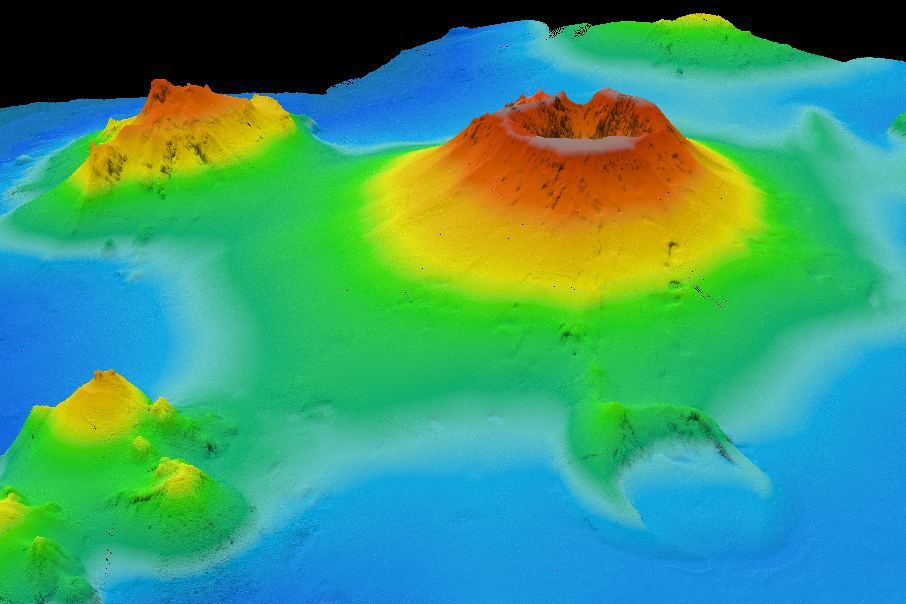
Scientists have confirmed that an almost completely ice-covered area in Antarctica hides an "other world" of rocks and bacteria .
According to scientists' research, this world exists at the junction between ice and rock at the bottom of the ice sheet, this ecosystem is also known as "rock-ice-water".
Although this ecosystem is located in a harsh environment, scientists have found many different types of microorganisms and animals here, including bacteria, viruses, fungi, sponges, bugs, etc. All of these organisms interact with the minerals and liquid water below the ice, and depend on this miniature ecosystem to survive.

Scientists discover rock-ice-water ecosystem at the bottom of Antarctica.
This ecosystem is possible because the rocks beneath the ice are rich in micronutrients and the limited amount of liquid water provides a suitable environment for bacteria to thrive. The discovery of this ecosystem not only helps us understand more about the evolution of life on Earth, but may also help us explore the possibility of life on other alien planets.
However, it should be noted that in the harsh environment where this ecosystem is located, scientific investigation standards and protection guidelines must be followed to ensure that the investigation and research activities of scientists do not cause any harm to this ecosystem. At the same time, it is necessary to ensure the safety of staff and ensure that scientists can conduct research and exploration under safe conditions.
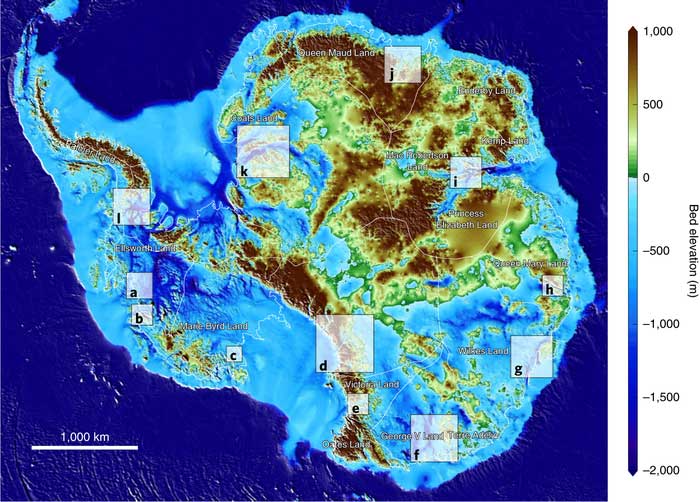
The discovery of this ecosystem could help us explore the possibility of life on alien planets.
How scientists discovered 'other worlds' hidden thousands of meters under the ice in Antarctica
Scientists have discovered another world beneath the Antarctic ice using a technique called "deep ice drilling." Deep ice drilling, which extracts documents and data from beneath the Antarctic ice by drilling holes, is one of the most widely used technologies in Earth science research.
The technique was first used to analyze glacier cores in the 1970s, but over time it has been used to dig deeper. Scientists use special drills to drill thousands of meters below the surface of the Antarctic ice, allowing them to study ice cores in the boreholes and discover another world deep within the ice.
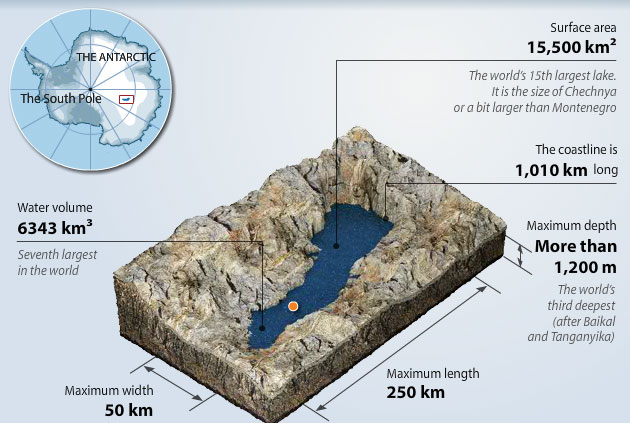
Scientists use special drills to drill deep under the Antarctic ice sheet.
By analyzing these ice core samples, it is possible to learn about climate change over thousands of years, changes in atmospheric composition, and information about biology. Changes in factors such as temperature, rainfall, and atmospheric carbon content. As they drill deeper, using more advanced techniques such as isotope and gas analysis, they can trace climate changes hundreds of thousands of years ago, as well as explain why periods of cold ice and warm temperatures alternated in the past.
Additionally, scientists can search ice core samples for traces of microbes, including information about biological forms such as bacteria and viruses. Not only can these microbes survive in extreme environments, but they can also provide scientists with complex information about the evolution of Earth's environment, such as how microbes living in glaciers have adapted to temperature and nutrient deprivation.
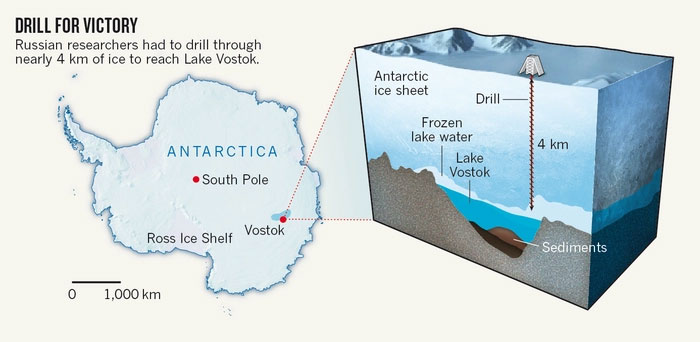
Research under the ice in Antarctica could provide insights into climate change.
Support human development
It is worth noting that research under the Antarctic ice can provide insights into past and future climate change , which is crucial to the climate change issues we face today. By studying past climate change conditions, we can gain a deeper and more lasting understanding of climate change, which will help humans better cope with the challenge of climate change.
It also offers a chance to understand how life adapts to extreme environments. By studying the microbes that survive beneath the ice in Antarctica , scientists can learn how these organisms cope with the cold, water scarcity, and other harsh environmental factors.
Deep ice drilling technology, in particular, is also very important for Earth science research. From ice cores and other samples under the Antarctic ice, scientists can obtain important data about the history, geology, and chemistry of the Earth , among other areas. This data is very useful for developing new technologies and solving various problems facing modern society.
Overall, research under the Antarctic ice will advance environmental science, Earth science, and other fields that can help us better address the challenges facing our planet.
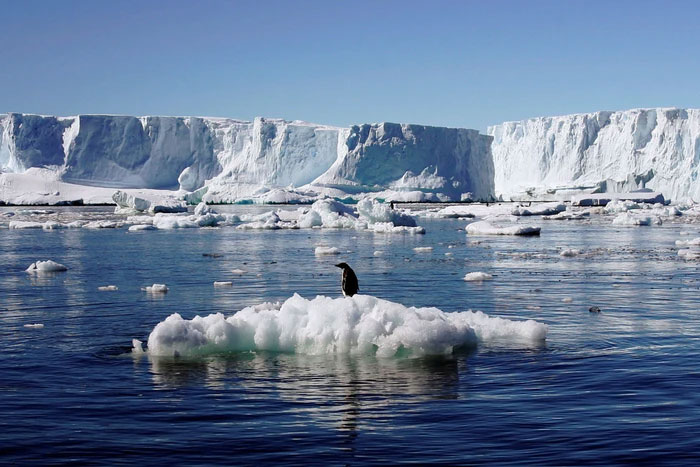
The Antarctic subsurface ecosystem is still under great pressure.
It is undeniable that factors such as climate change and rising sea levels have had a certain impact on the polar ecosystem. Currently, the countries participating in the Antarctic Agreement have begun to take actions in ecological protection policies, including prohibiting the burial and destruction of toxic substances, controlling pests and invasive species, and reducing human disturbance. These policies are all beneficial to protecting the sub-Antarctic ecosystem and avoiding excessive negative impacts on it.
However, due to factors such as increasing global warming and disturbances caused by human activities, the Antarctic subsurface ecosystem is still facing great pressure. For example, the sharp decline in the number of plankton in the polar oceans has contributed to the weakening of the Antarctic subsurface marine ecosystem. The degradation of these ecosystems can affect the ecological balance of the entire marine ecosystem.