As of now, Antarctic shrimp are 'confident' that they won't be eaten.
Antarctic krill, also known as Antarctic krill, are considered the "world's future food storehouse" , with an estimated 30 trillion individuals and 50 to 150 million tons in the ocean. Although more than 300 million tons of Antarctic krill are caught each year, the number of these crustaceans is extremely abundant to maintain a diverse population in the wild.
The habitat of this tiny crustacean is concentrated in the open sea near Antarctica. It is a very small marine shrimp, no more than 6cm long, weighs about 2 grams, less than the length of a piece of chalk, and has a lifespan of about 5 to 6 years. However, they are distributed in the oceans all over the world. There are more than 80 species of Antarctic crustaceans in total, with slightly different body sizes and shapes, but the common point is that they are extremely large in number.
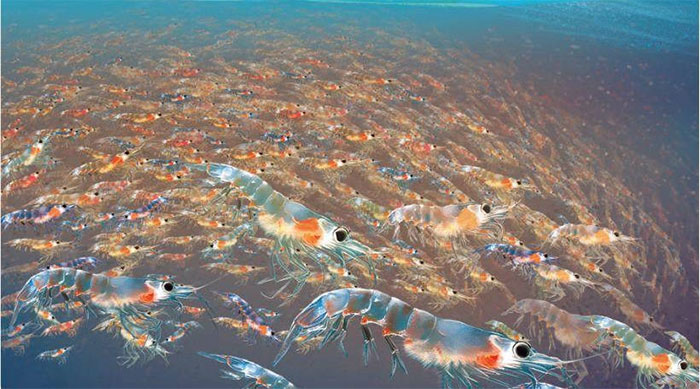
It is estimated that there are about 30 trillion Antarctic shrimp in the ocean.
Few people realize that these tiny creatures are an extremely important link in nurturing the ocean's giant ecosystem. They are one of the world's largest sources of protein.
The largest animals on Earth, such as blue whales, fin whales, etc., rely on Antarctic shrimp as their main source of food. A single blue whale can eat several tons of crustaceans every day, which translates into an estimated number of millions of shrimp. In addition to giant whales, seals, penguins, fish and squid in the Antarctic waters also eat Antarctic shrimp and can consume more than 250 million tons per year. In addition to animals, humans also catch 50 million tons of Antarctic shrimp per year. Therefore, nearly 300 million tons of Antarctic crustaceans disappear every year.
Although Antarctic shrimp are eaten by many living creatures, they are still one of the most numerous species in the ocean. This is mainly due to their strong reproductive ability .
Each female Antarctic shrimp can lay between 6,000 and 10,000 eggs at a time and can lay multiple clutches in a single breeding season. The number of eggs that a group of shrimp produce during a breeding season is so huge that it is almost impossible to count. Antarctic shrimp enter a short maturation cycle, reaching reproductive maturity 24 months after birth.
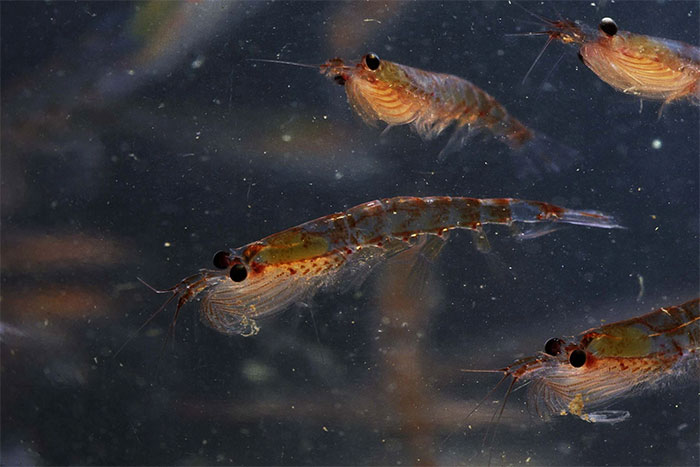
The Antarctic shrimp feeds on phytoplankton in the ocean.
In addition to their extremely strong reproductive ability, the food of the Antarctic shrimp is phytoplankton in the ocean. Phytoplankton is the starting point of the food chain of marine life. Thanks to the process of photosynthesis, they can obtain carbon from carbon dioxide. Therefore, phytoplankton are extremely abundant in the sunlit layer of the sea surface, so the Antarctic shrimp also mainly operates near the sea surface.
Antarctic shrimp lay eggs, due to the lack of adhesives in the seawater, the eggs will float in the water, hatching naturally based on the nutrients in the eggs. The eggs drift aimlessly and gradually sink to a depth of hundreds of thousands of meters in the ocean. There is a lack of light here, the water temperature is also relatively low, and organisms are relatively sparse. At this time, the shrimp eggs hatch and can avoid many natural enemies.
The survival rate is relatively high, combined with the nocturnal nature of the Antarctic shrimp, during this period they can survive healthily. Next, they begin to form a maximum population that moves near the sea surface to feed on phytoplankton. Here, they become food for natural enemies (whales, etc.) and so the cycle continues to operate.
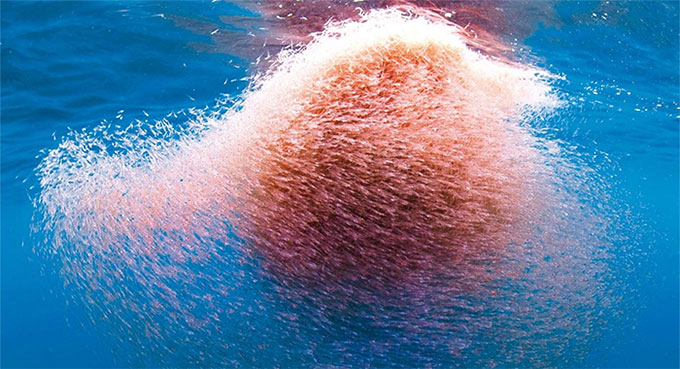
A large number of Antarctic shrimp species support many other species.
Thanks to their strong reproductive ability and abundant food, up to now, Antarctic shrimp have "confidently" ensured that they will not be eaten.
In fact, the Earth's ecosystem is a wonderful balance, with large numbers of Antarctic shrimp supporting countless species of fish, birds, and marine mammals. Without these "specialist predators ," the crustaceans would thrive without end, affecting the balance of the marine ecosystem.
Currently, due to human fishing activities and climate change, the number of whales has decreased significantly, which makes the number of Antarctic shrimp still very large.