Anti-ultra-processed food movements are also increasingly appearing on social media, making this type of food increasingly become a 'sinner' to health.
The concept of 'ultra-processed' food is still quite unfamiliar to many Vietnamese consumers, even though it has appeared for a long time on supermarket shelves, stores, and grocery stores, such as sausages, industrial cakes, bacon, and snacks.
And anti-ultra-processed food movements are also increasingly appearing on social media, making this type of food increasingly become a 'culprit' for consumers' health.
But how good or bad this food is, in fact, is still a matter of debate.
A concept that is still quite vague
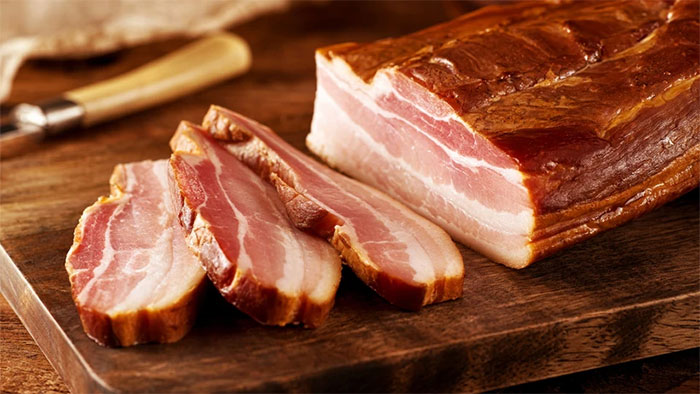
Bacon. (Source: Brasa).
There are many definitions of this type of food, but basically, foods are considered ultra-processed when they are created in factories by adding chemicals and other additives to create color, flavor, texture, and this processing often increases the flavor and calorie content of the food.
By some definitions, ultra-processed foods are foods that contain ingredients that are never or rarely used in the kitchen or contain additives that make the final product palatable.
Even 'processed food' is still a very new concept. Scientists have yet to agree on exactly how to define processed food. If you give two experts the same ingredients list, 'they'll have different opinions on whether something is processed or not, ' says Giulia Menichetti, a principal investigator at Harvard Medical School who studies food chemistry.
Take milk, for example. Some experts consider it a processed food because it goes through a pasteurization process to kill germs. Others don't think it falls into that category because whole milk typically contains few additives other than vitamins.
According to NOVA, processed foods contain added ingredients to make them taste better or last longer, such as many canned goods, bacon, and cheese.
Ultra-processed foods, meanwhile, are made primarily or entirely of oils, sugars, starches , and ingredients you wouldn't buy yourself at the grocery store — things like trans fats, emulsifiers, flavor enhancers, and other additives.
However, this is a rather circular, overlapping definition that makes things even more confusing and vague. Everything from packaged cookies to flavored yogurt to baby formula fits that description.
And as a result, ' you end up with a conclusion that there's no difference between marshmallows and canned beans, ' says Julie Hess, a nutrition research specialist with the US Department of Agriculture (USDA).
Surprisingly contradictory results in experiments
Jessica Wilson, a nutritionist living in the US, is passionate about the processed pupusas she buys from the retail chain Costco. Not only because they are delicious, but also because they have helped her in her fight to 'decriminalize' ultra-processed foods.
It all started in the summer of 2023, when Dr. Chris van Tulleken, an infectious disease specialist in the US, was promoting his book 'Ultra-Processed People' .
While writing the book, van Tulleken spent a month eating mostly foods like chips, soda, prepackaged bread, frozen meals, and cereal. 'What happened to me is exactly what research says happens to everyone,' van Tulleken says.
He said he gained weight, his hormone levels spiked, and before-and-after MRI scans showed changes in his brain.
The experiment highlights the 'terrible urgency' of society's 'romance' with ultra-processed foods, according to van Tulleken.
However, according to Jessica Wilson, van Tulleken's experiment was overstated, and the information has made people who regularly eat processed foods feel ashamed.
In other words, fresh food is often hard for most Americans, especially low-income people and people of color. She argues that not all foods considered ultra-processed are considered harmful, which includes everything from vegan meat substitutes and non-dairy milks to potato chips and candy.
So she conducted her own experiment. Like van Tulleken, for a month, Wilson consumed 80 percent of her daily calories from ultra-processed foods, which is about the same as the average American diet.
She swapped her morning eggs for soy sausage and replaced her pre-made lunches—sometimes simply beans with avocado and hot sauce—with Trader Joe's instant tamales.
She snacked on yogurt, cashew milk, and jam. For dinner, she had one of her favorite Costco pupusas, or maybe chicken sausage with veggies and Tater-Tots.
A strange thing happened. Wilson found that she had more energy and less anxiety. She didn't need as much caffeine to stay awake during the day. She felt better eating the ultra-processed diet than she had before, a change she attributed to taking in more calories by eating full meals, rather than randomly combining whole food ingredients.
Jessica Wilson's views have drawn strong backlash. Many people find it surprising that even a nutrition expert would defend a food group that, according to a 2024 study, has been linked to dozens of poor health outcomes in consumers, from depression and diabetes to cancer, cardiovascular disease and cognitive decline.
However, she stands by her views, saying recommendations to avoid all ultra-processed foods can leave consumers confused and unsure about their diets.
How can two people eat the same food and have such different experiences? And is it true that not all ultra-processed foods deserve their bad rap?
In a 2023 study, USDA nutritionist Julie Hess and colleagues created a mock diet consisting almost entirely of ultra-processed foods like pre-made cakes, canned soups, and instant oatmeal.
This diet is high in sodium and low in whole grains, but surprisingly it scores 86 out of 100 on how well it adheres to the US dietary guidelines, significantly better than the American average of 59.
This experiment demonstrates that there are nutritious ultra-processed foods, and some can 'make it easier and more convenient for people to follow healthy diets because they have a longer shelf life, are more cost-effective, and are sometimes more accessible,' Hess said.
Another study in 2024 also supported the idea that people who eat processed foods are still in good health. Although the researchers found a link between a diet high in processed foods and an increased risk of early death, they concluded that the quality of the overall diet may be more important than the amount of processed foods a person eats. In other words, a person can eat a lot of processed foods if they are nutritious.
This study aims to correct ' the misconception that all ultra-processed foods need to be limited and avoid oversimplification when developing dietary recommendations ,' the study authors said.
And even fierce critics of ultra-processed foods like Van Tulleken agree that not all are created equal. But Tulleken still stresses that there's a difference between cooking at home with salt, sugar, and fat and consuming 3,000 calories of those things in a half-hour burst of ultra-processed food.
These hotly debated questions come at a crucial time. In 2025, the U.S. government will release an updated version of the Dietary Guidelines for Americans, which tell people what to eat and shape things like school lunches and education programs.
The new version could include the first guidance on ultra-processed foods. Officials at the U.S. Food and Drug Administration are also said to be considering new regulatory approaches to these products.
Good or bad?
The food industry often argues that ultra-processed foods are part of an unhealthy diet.
Even the very definition of ultra-processed foods puts them somewhat on the 'unhealthy' list.
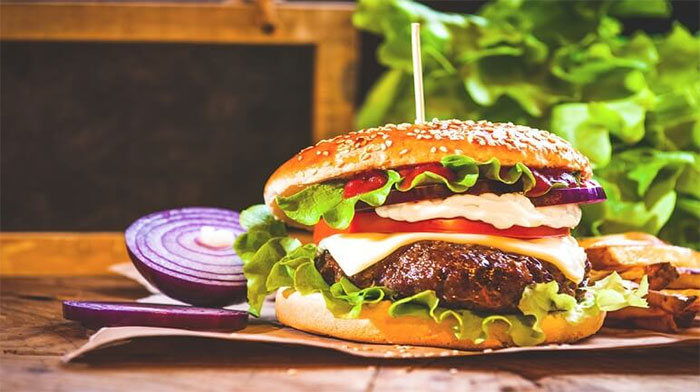
Hamburger.
And because most people who care about their health have the same question about processed foods: Are they killing me?
And really, up to now, scientists and policy makers have not yet come up with the best answer.
But from a scientific perspective, Menichetti, a food chemist, says industrial production means that the ingredients in food have undergone complex chemical changes whose effects researchers have yet to fully appreciate. 'We co-evolve with our food, so if we are used to certain chemicals within a certain range, changing the composition of foods through processing can change how they affect our health ,' she says.
Additionally, some studies have shown that ultra-processed foods affect the body differently than unprocessed foods, regardless of their nutritional content. A 2024 study found that plant-based foods, traditionally considered healthy, lose many of their benefits and even contribute to an increased risk of heart disease when they are ultra-processed (from whole grains to store-bought bread, for example).
A 2020 paper concluded that adverse health conditions such as cancer, heart disease, depression, etc. were associated with ultra-processed diets, and no studies linked them to better health. And the paper's authors concluded that the degree of processing of a food may be related to how 'healthy' it is.
Another study conducted by the National Institutes of Health (NIH) in 2019 provided some of the strongest evidence yet that ultra-processed foods can directly cause health problems. In the study, 20 adults in the United States lived in an NIH lab for a month. Half of them ate minimally processed foods like vegetables and nuts. The other half ate ultra-processed foods like bagels and boxed pasta.
Both diets had similar amounts of calories, sugar, salt, and nutrients per serving, but people could eat more or less of their portion sizes depending on their preferences. And on the ultra-processed diet, people ate more and gained weight. Meanwhile, on the less-processed diet, they lost weight and had positive changes in hormones and reduced markers of inflammation.
Those findings suggest there's something about ultra-processed foods that makes people overeat them and may cause health problems, said author Kevin Hall, but it's not yet clear why.
There are many different theories for this problem, such as the combination of ingredients that manufacturers use to make food taste better, the influence of additives, or the production process that reduces the quality of food.
The irreplaceable role of ultra-processed foods
Even though there are still many unanswered questions, we do know that some ultra-processed foods are harmful, said Kendra Chow, a registered dietitian and director of policy and public affairs at the World Cancer Research Fund, a nonprofit organization.
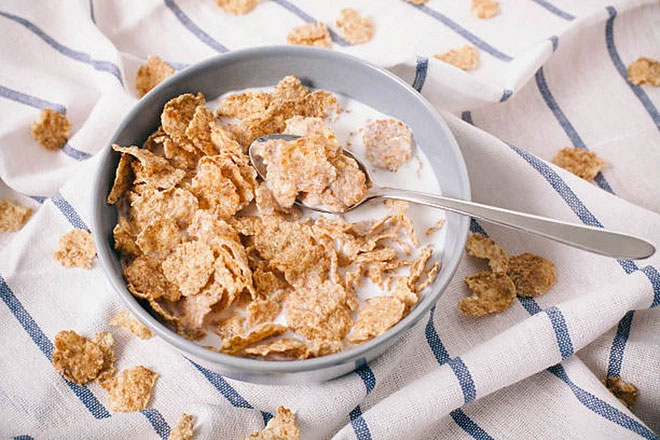
Breakfast cereals contain quite a lot of sugar. (Photo: iStock).
These are 'junk foods' formulated with high levels of salt, sugar or saturated fat, such as chips, candy and hot dogs. These foods have long been linked to health problems such as cancer and heart disease. She said the science on these foods is clear enough that people should limit how often they eat them.
What's more difficult, Chow said, is figuring out how to deal with ultra-processed foods that appear to have better nutritional value, like flavored yogurts and store-bought plant-based pasta sauces.
And given the current campaign against ultra-processed foods, van Tulleken argues that a ban on them would be unworkable, as it would essentially wipe out the modern food system, with particularly dire consequences for those in lower socioeconomic positions. While Tulleken maintains that ultra-processed foods are contributing to the modern public health crisis, he concedes that they still play an important, if imperfect, role in a world where many people are short on time and money.
Even Hall, the NIH researcher, eats ultra-processed foods on a regular basis. Most of his lunches are frozen meals that he reheats in the microwave. He says he tries to choose meals that are high in fiber, whole grains, and beans, and low in sodium, saturated fat, and sugar, but he's also aware that it's still technically a form of ultra-processed food.
After her experiment last summer, Wilson continued to eat a lot of ultra-processed foods and felt comfortable with it. For her, the debate was not just about food, but about practical living in a country where food prices are skyrocketing and many people don't have the resources to cook three meals a day with fresh ingredients.
Wilson says people often think of nutritionists as telling people to eat less. But in reality, she spends her time helping people figure out how to eat more, whether they're trying to feed a family on a tight budget or simply don't have the time or energy to cook or find ways to add nutrient-dense foods to their diets.