Dadu was stranded on one of the world's most remote islands for nearly a year and survived on an unlikely food source: sharks.
Tucked away in one of the most remote corners of the central Pacific Ocean is a tiny uninhabited atoll called Palmyra . Comprising 50 islets no more than 2 meters high, the U-shaped atoll of Palmyra is surrounded by 6,475 hectares of shallow, submerged reefs, 1,600 kilometers south of the Hawaiian Islands. With more sharks than humans, Palmyra is not the ideal home for a dog. But for nearly two decades, Dadu the short-haired dog has lived on the island alongside scientists, residents, and short-term visitors, according to IFL Science .
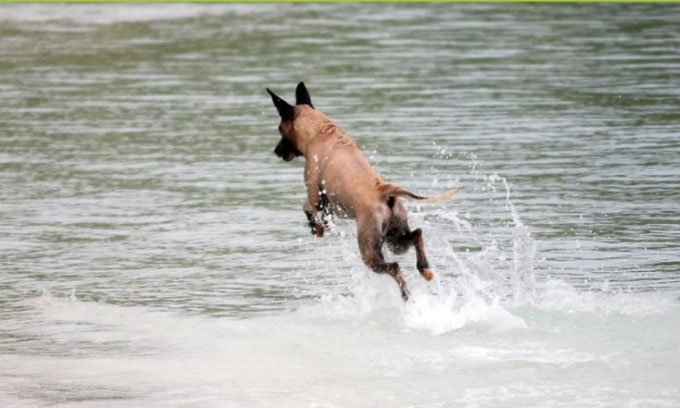
Dadu is famous for his shark hunting skills on Palmyra Island. (Photo: Nature Conservancy).
Dadu was brought to Palmyra by French sailor Roger Lextrait, who managed and cared for the island from 1992 to 1999. During his stay, Lextrait was accompanied by several dogs. At one point, for some reason, Lextrait left the island, leaving the dogs behind for nearly a year. Dadu was forced to wander around the island's lagoons, which are home to many reef sharks .
Alex Wegmann, a scientist at the Nature Conservancy, has told of Dadu's shark-hunting prowess. He said the dog had several shark bites on his legs. During a 2004 trip to Palmyra for the U.S. Fish and Wildlife Service, Dadu frequently greeted him and accompanied him throughout his research. Dadu's role on the island highlights conservation issues and the human impact on remote places.
About 70 million years ago, underwater volcanoes formed Palmyra and the nearby Line Islands, providing a home for marine animals and birds. Scientists and explorers regularly visited Palmyra and many of the nearby atolls to catalog their flora and fauna. During the 19th and 20th centuries, the island was heavily impacted by humans.
One of the biggest impacts on the island, according to Kydd Pollock, a scientist who began working on Palmyra in 2008, has been the planting of the Cocos nucifera palmyrensis palm . Because of its ability to absorb water efficiently during droughts, the palm competes with native vegetation, including the canopy trees used by migratory seabirds. During World War II, soldiers brought rats to the island, which disrupted the terrestrial ecosystem and native fauna.
Wegmann's research focuses primarily on interactions between rats and local species such as land crabs. Despite a series of impacts, Palmyra was designated a protected island in 2009 and today serves as a living laboratory on the equator.
According to Pollock and Wegmann, Dadu still enjoyed fish at the end of his life. He also maintained a friendship with Rambo, a giant trevally. Every evening, Dadu would come down to the water's edge and bark loudly. Rambo would surface and wag his tail, driving Dadu crazy. The Palmyra Atoll Research Alliance announced Dadu's death on October 19, 2013. He and the other dogs were buried on the island.