Eating one freshwater fish caught in a US river or lake is equivalent to drinking a month's worth of water contaminated with extremely toxic "forever chemicals," a new study says.
Forever Living Chemicals , or PFAS for short , are a group of more than 4,500 non-biodegradable chemicals that have been used in a wide range of consumer and industrial products since the 1940s due to their resistance to grease, oil, water and heat. They are still used today in household items such as non-stick pans, textiles, firefighting foams and food packaging.
But the near-indestructible nature of PFAS means these contaminants accumulate over time in our air, soil, lakes, rivers, food, drinking water, and even our bodies.
Worldwide, there are growing calls for tighter regulation of PFAS, as they have been linked to a range of serious health problems including liver damage, high cholesterol, reduced immune response and certain types of cancer.

PFAS are substances that are virtually non-biodegradable.
And to find out the impact of PFAS contamination in locally caught fish, a team of researchers analyzed more than 500 samples from rivers and lakes across the United States between 2013 and 2015. The results, published recently in the journal Environmental Research Letters, showed that the average level of PFAS in fish was 9,500 nanograms per kilogram.
Nearly three-quarters of the 'forever chemicals' detected were PFOS , one of the most common and dangerous of the thousands of forms of PFAS.
Researchers have calculated that eating just one freshwater fish is equivalent to drinking water with PFOS concentrations of 48 parts per trillion for a month. To put that number in perspective, last year the U.S. Environmental Protection Agency lowered the PFOS level considered safe in drinking water to 0.02 parts per trillion. That means eating one fish is even more toxic than drinking contaminated water for a month.
Additionally, the study found total PFAS levels in freshwater fish were 278 times higher than those found in commercially sold fish.
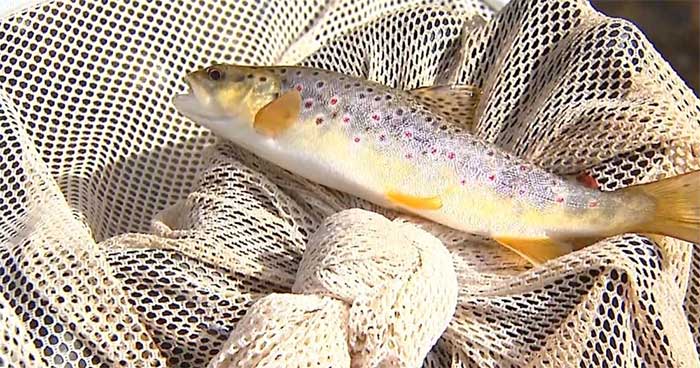
Wild-caught fish are no longer safe for consumption in the United States.
David Andrews, a senior scientist at the nonprofit Environmental Working Group who led the study, said he grew up catching and eating fish.
'Now I can't look at a fish without thinking about PFAS contamination,' the scientist shared.
'These findings are particularly concerning given the impact on disadvantaged communities who rely on fish as a source of protein or for social or cultural reasons,' he added. 'This study makes me extremely angry that companies that produce and use PFAS are polluting the globe and are not being held accountable.'
Patrick Byrne, an environmental pollution researcher at Liverpool John Moores University in the UK who was not involved in the study, also said PFAS is "probably the biggest chemical threat facing humanity in the 21st century."
'This study is important because it provides the first evidence of widespread transfer of PFAS directly from fish to humans,' he said.
Researcher Andrew is calling for stricter regulations to end all unnecessary use of PFAS.
The study comes after Denmark, Germany, the Netherlands, Norway and Sweden submitted a proposal to ban PFAS to the EU's European Chemicals Agency. The agency later said in a statement that the proposal was "one of the broadest in the EU's history ," and came after the five countries found that PFAS were not sufficiently regulated and that bloc-wide regulation was needed.