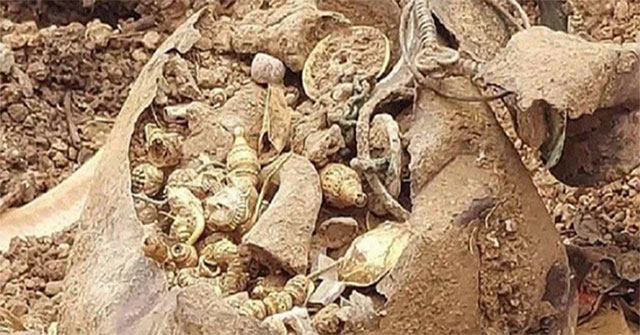
This is considered the most important archaeological discovery of the Qin Dynasty after the Terracotta Army was excavated in 1973 in Xi'an .
Xiangxi (Hunan, China) is an area home to many ethnic minorities, the Miao people have lived here for generations and have many ancient buildings with unique styles.
In 2002, an archaeological team excavating in Xiangxi, in the ruins of the ancient city of Lijia, discovered a well. This well dates back to the Qin Dynasty , so experts planned to go down to investigate.
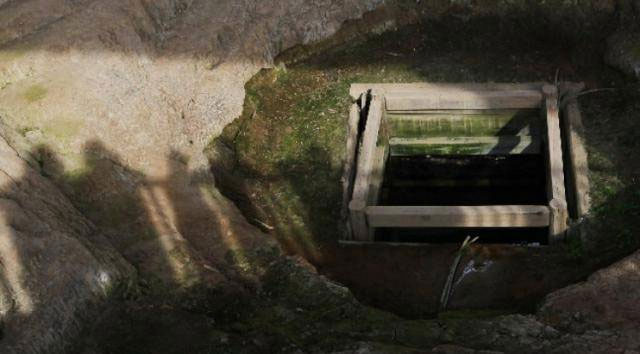
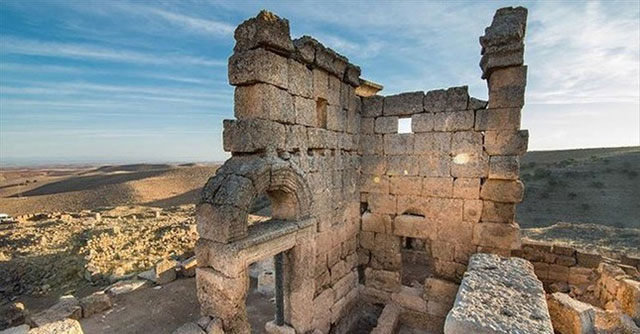
Ancient well of the Qin Dynasty. (Illustration).
After careful planning and execution, archaeologists entered this ancient well, and the discovery that followed shocked the nation.
Finally, experts found a large number of inscriptions in the ancient well, written on 37,000 bamboo slips from the Qin Dynasty. These bamboo slips were buried in mud, some of the writings were still clear, but some were broken by time. Archaeologists named this collection of inscriptions "Lijia Bamboo Slips", causing a stir across the country, one of the most important archaeological discoveries in China in the 21st century.
Why did the discovery of the Ly Gia Bamboo Card create such a big buzz?
Because the Ly Gia Bamboo Slips contain much information that is different from the official history , it is even said to "have the ability to change history".
During the Qin Dynasty, a major event called 'Burning Books and Burying Confucian Scholars' occurred . Qin Shi Huang ordered the burning of many types of books and the burial of many Confucian scholars alive, which took place in 213-212 BC. The goal was to eliminate all the ideologies and doctrines that existed during the Spring and Autumn and Warring States periods, and to exclusively uphold the Legalist doctrine to serve the rule of the Qin Dynasty kings.
This move by Qin Shi Huang unified the country's ideology but also caused gaps in history.
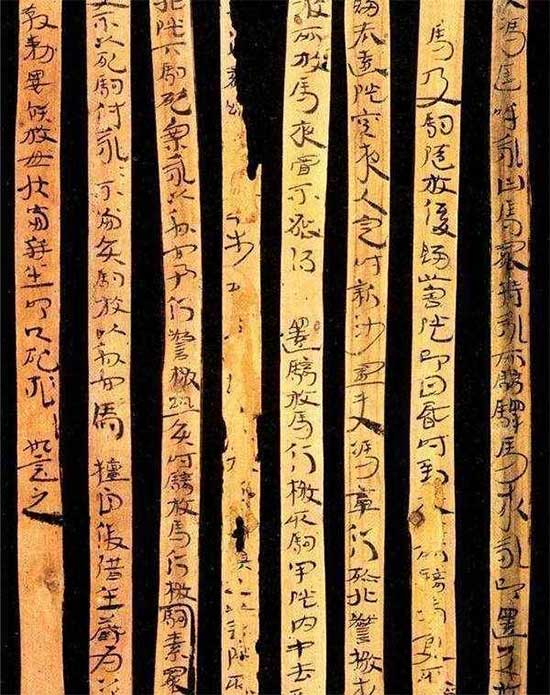
Part of the Ly Gia Bamboo Card collection.
Among the 37,000 bamboo slips from the Qin Dynasty, experts have compiled about 200,000 texts, most of which reflect the history of the pre-Qin and Qin Dynasties, recording the administrative and legal documents of the Qin Dynasty. This is considered the most important archaeological discovery of the Qin Dynasty after the Terracotta Army unearthed in 1973 in Xi'an.
This is not the first time that ancient texts with the potential to 'change history' have been discovered in China, but the Lijia Bamboo Slips are the largest and most significant collection of ancient documents.
In 1972, two Han Dynasty tombs were discovered in Yinque Mountain, Linyi City, Shandong Province. Both tombs had been severely damaged by tomb robbers, however, after archaeologists arrived, they still found some very valuable things. That was the famous Yinque Mountain Bamboo Slips . This set of bamboo slips recorded many very rare ancient military texts, including 16 chapters of the "Sun Tzu's Art of War" written by Sun Tzu during the Warring States period, which had long been lost, 5 previously unknown chapters of the "Sun Tzu's Art of War" and 7 chapters of the book Liu Tao, which had only had titles before.
In 2012, the work 'The Art of War by Sun Tzu' from the Silver Sparrow Mountain Tomb was considered one of China's nine national treasures.
The appearance of the Silver Bird Mountain Bamboo Slip confirmed the real existence of "Sun Tzu's Art of War" and also confirmed that "Sun Tzu's Art of War" was not written by Sun Tzu. In this way, a historical mystery was solved.
However, in general, the discovery of the Ly Gia Bamboo Stick is even more valuable. For example, the 'Mathematical Table' (calculation table) containing the earliest multiplication in the world was discovered in the Ly Gia Bamboo Stick. However, the full content of the Ly Gia Bamboo Stick has not been fully published, the archaeologists said: 'We absolutely do not dare to publish these contents!'.
There are up to 200,000 characters in the Lijia Bamboo Slips, many of which have not been deciphered due to their decay. Some of the content in the Lijia Bamboo Slips does not conform to official history, and archaeologists do not fully understand the content of these ancient writings, so they dare not publish them in full. Currently, the Lijia Bamboo Slips are on display in the museum in Lijia, Hunan. Although only a small part of the content is revealed, it is still very interesting and meaningful.