In a new study published in the Canadian Journal of Zoology, scientists report unusual behavior they observed from a female killer whale they had been tracking for years.
For more context, see For the first time, record killer whales 'kissing lips' to reconcile.
The killer whale, named "Sædís," is part of a pod of killer whales that live off the west coast of Iceland. It appears to be sterile, or for some reason researchers say it has never had a calf.
But suddenly, one day in August 2021, they saw Sædís swimming with a small whale. The researchers almost felt happy for him, until they realized: The little individual was not a killer whale, but a young pilot whale .
" It's possible that she [Sædís] kidnapped this calf from a group of pilot whales ," said Elizabeth Zwamborn, a whale researcher at Dalhousie University in Canada.
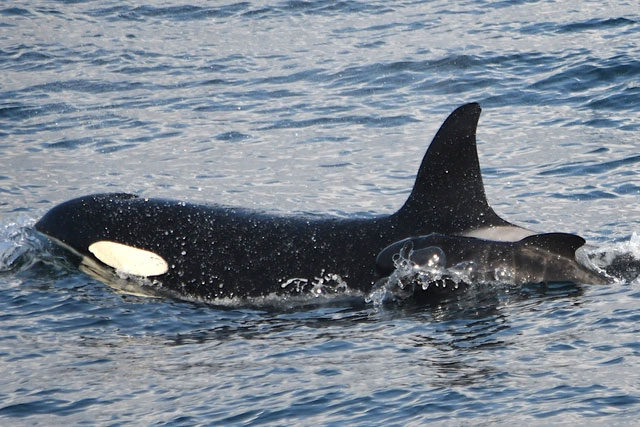
Female killer whale Sædís leads a young pilot whale - Photo: Newsweek.
Observations made throughout the fall of 2021 showed that the young pilot whale was always with Sædís and two other killer whales. During that time, there was no other pod of pilot whales around them. This is clearly unusual because both killer whales and pilot whales are pod-living creatures.
One possibility is that the pilot whale became separated from its mother and Sædís adopted it. But looking at the history of the killer whale pod off Iceland, Zwamborn is more inclined to believe that the calf was abducted.
The " mine mother " on the sea
From 2015 to 2021, researchers observed killer whales being chased by pilot whales in these waters. There is no plausible explanation given that killer whales are clearly at the top of the food chain, hunting great white sharks and eating other whales.
It is the pilot whales that should fear the killer whales and the killer whales that should hunt them. There is evidence in the stomachs of killer whales that they eat pilot whales.
But in the waters off Iceland, scientists say, this never happens. The killer whales there have an abundance of herring to eat, while the pilot whales eat squid. There is essentially no reason for the two species to compete for food, chase each other, or otherwise engage in such aggression.
"We don't know the reason for it, but if there was a female killer whale here trying to take a calf from a pod of pilot whales, that would certainly give them a reason to chase, " Zwamborn said.
It is not known when the killer whale named Sædís " kidnapped " the young pilot whale. But scientists observed that ever since the baby was with her, Sædís has always shown concern and care for it.
" The killer whale always swims next to the pilot whale calf, placing it under the fin. This means the calf is swimming right behind the killer whale's pectoral fin," said Marie Mrusczok, a killer whale researcher at the West Iceland Nature Center.
" The sub-fin position allows a young whale to make fewer tail movements than when swimming alone and overcomes the physical limitations of moving at high speeds—in other words, the young whale is being 'carried' by the pressure waves created by the adult's larger body . "
The pilot whale's cruel fate, Sædís later tried to kidnap another whale
Despite her affection, Sædís had no milk to feed her " baby ." This was because she had never been a mother before. The young pilot whale was therefore very emaciated, Zwamborn said.
Some time later, researchers no longer saw it with Sædís. It may have died of starvation.
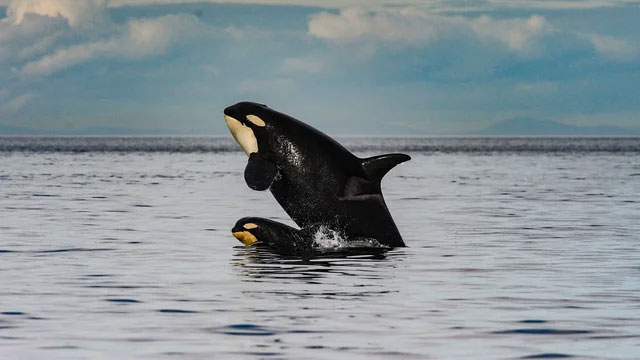
Killer whales often hold their calves under their fins, in a "cuddle" action - (Photo: Nytimes).
Fast forward to 2022, and scientists saw the female killer whale Sædís clashing with a pod of pilot whales. It's possible that the killer whale was trying to kidnap another young pilot whale in the pod, the study says.
But this time, Sædís was not successful. The pilot whales chased him away, and scientists have not observed Sædís adopting another whale calf.
While interspecific parenting has been documented in some marine creatures before, for example in 2019 scientists observed a bottlenose dolphin nursing a melon-headed whale calf, this is the first time killer whales have been documented nursing a pilot whale.
Killer whales also do not raise the calves of other species. They only raise and care for their own calves. So this is most likely a rare event, stemming from the infertile female killer whale's desire to become a mother.
This further suggests that killer whales are complex social creatures, with thoughts and behaviors motivated by emotions similar to humans. There has also been previous evidence that killer whales care for each other, and grieve the deaths of their own kind.