Through raids and massacres, Genghis Khan's army caused huge amounts of carbon dioxide to disappear from the atmosphere, possibly making the Earth colder.
Using an Antarctic ice core, scientists from the Carnegie Institution in the US determined that there was a sudden drop in atmospheric carbon (about 3 ppm) between 1200 and 1470 (ppm stands for parts per million, meaning one part per million, used to measure the density of a substance in a very small mass or volume). This time corresponds to the Mongol invasion of Asia and the Black Death pandemic in Europe. A second drop of 4.6 ppm was also detected between 1560 and 1680 , coinciding with the colonization of the Americas and the fall of the Ming Dynasty in China, IFL Science reported on November 16. The research team published the findings in the journal The Holocene.

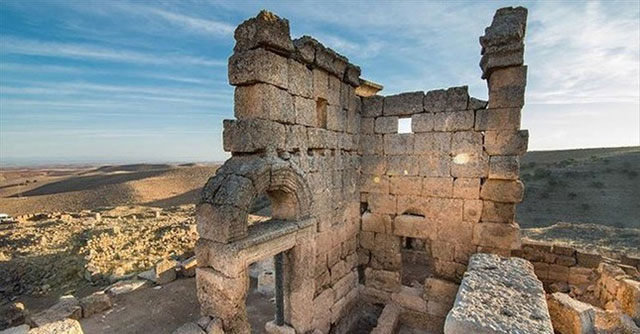
Genghis Khan was the commander of the Mongol invasions of Asia. (Photo: Yusuf Sami Kamadan).
All four events claimed countless lives, leading researchers to wonder whether the sudden decline in global population contributed to the change in CO2 levels . They suggest that the reduction in human numbers led to less deforestation, allowing more trees to grow and act as a carbon sink.
To find out, the team reconstructed changes in global land use patterns from 800 to the present, combining published agricultural maps and population data. Of the four events, the Mongol invasion initiated by Genghis Khan in 1200 and lasting until 1380 had the greatest impact on climate.
The Mongol army killed about 30 percent of the 115 million people it encountered along the way, resulting in 142,000 square kilometers of reforestation, according to researchers . The sudden increase in vegetation removed 684 million tons of carbon from the atmosphere, resulting in a global decrease of 0.183 ppm. In contrast, the Black Death pandemic only reduced atmospheric carbon by 0.026 ppm. The colonization of the Americas and the fall of the Ming Dynasty, meanwhile, reduced carbon by 0.013 and 0.048 ppm, respectively.
None of these historical events, however, could explain the climate changes in the ancient ice cores. That's because trees typically take decades to mature, the team says. Populations would recover and continue to clear forests long before the new trees had a chance to impact carbon levels.
Furthermore, while each event reduced the number of people in a particular part of the world, emissions from elsewhere on the planet likely offset much of the carbon loss from reduced deforestation. The researchers concluded that the Mongol invasion only temporarily halted CO 2 levels.