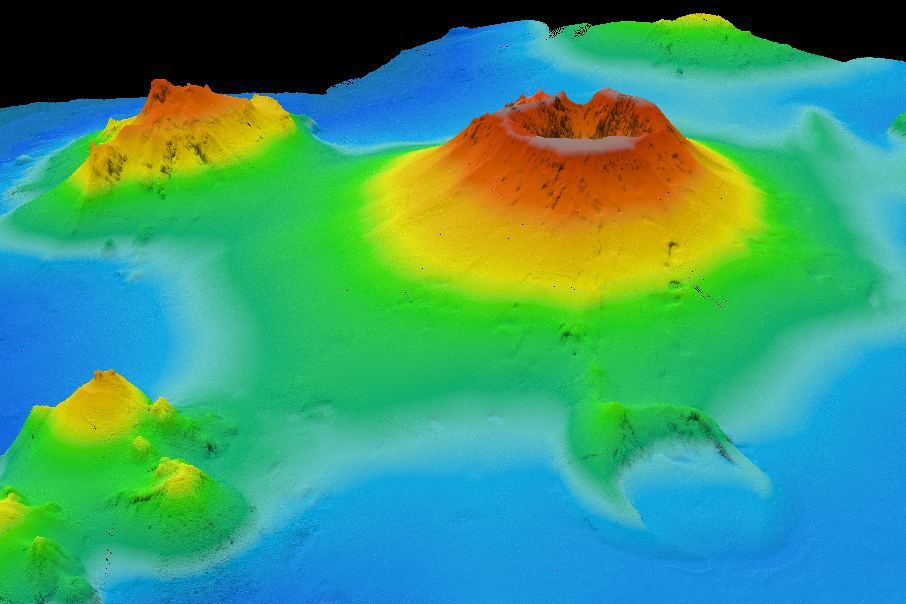
The US and Canadian Coast Guards are racing against time to find a tourist submarine that went missing on June 19 while touring the wreck of the Titanic.
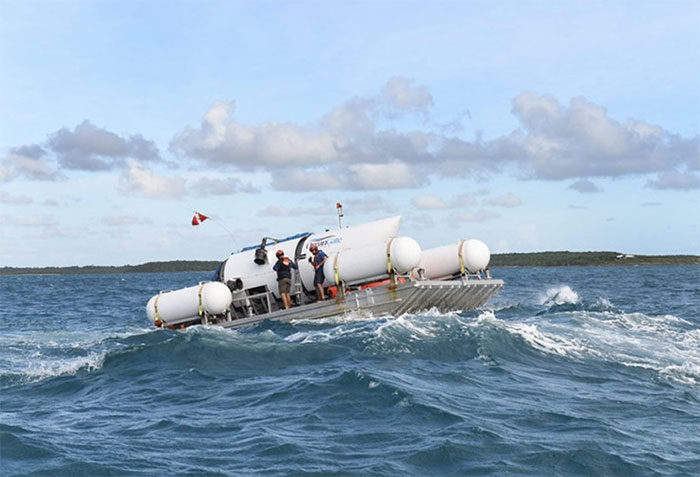
The submersible is brought to the designated location for release into the water.
The New York Post called the missing ship a tourist submarine , while some other media outlets called it a submersible .
The ship is designed to carry five people, has a maximum diving depth of 4,000 meters, and is owned and operated by OceanGate Expeditions .
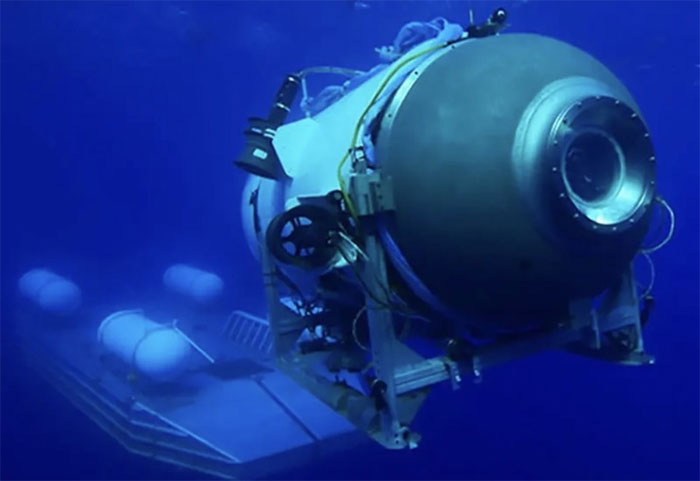
The ship powered itself after diving into the water.
"It's very worrying. It could be entangled with the Titanic. We don't know yet. There's debris from the Titanic all over the place down there," former British naval officer Chris Parry told Sky News.
In an official statement, OceanGate Expeditions said it was 'focusing on the search mission.' The company also thanked the US and Canadian authorities, as well as other companies operating in the same field, for their support.

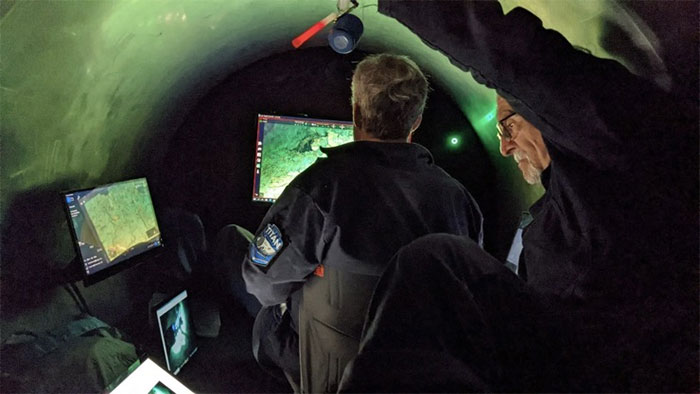
The interior of a submersible during another expedition.
Since 2019, OceanGate Expeditions has offered a Titanic wreck exploration service for $250,000 per person. Typically, the company's submersibles can only carry a maximum of one passenger per expedition, with the remaining four being the pilot and crew members.
The guest who spent a large amount of money on this expedition was Hamish Harding, a British billionaire and CEO of an airline company based in Dubai.
The boat is made of carbon fiber, which significantly reduces weight.
"I'm so happy to finally be able to join the expedition. This might be the only opportunity this year due to the weather. We'll dive tomorrow ," Mr Harding said the day before he went missing.
In 2019, the OceanGate Expeditions submarine Titan set a record as the first civilian vessel to successfully carry divers to a depth of 3,760 meters below the seabed.
The ship usually takes about 2 hours to dive to a depth of 3,800 meters, where the Titanic wreck is located, and visitors have 1 hour to explore before the ship resurfaces.

The vessel is designed to dive to a maximum depth of 4,000 meters.
Photos published by the US newspaper about the previous expedition revealed the space inside the Titan. "The space inside the Titan is not large, but it is still more spacious than traditional submersibles ," said a company representative. "The crew members have more space to work together on the seabed."
The photos show the submersible is equipped with multiple screens that provide real-time images and diving status to serve the pilot.
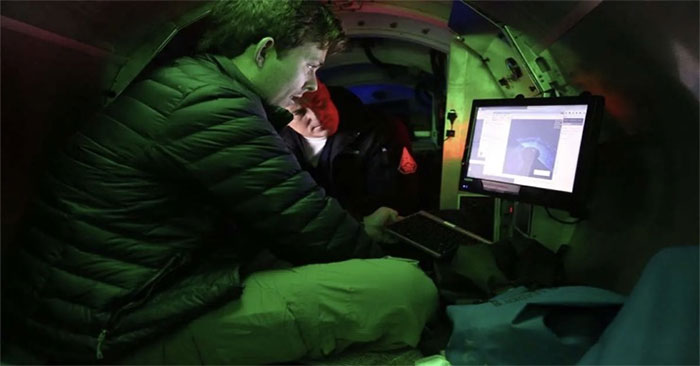
A photo of the interior of the submersible during the 2021 expedition.
Others can sit with their legs stretched out in the submersible and observe the scenery outside through special glass that can withstand considerable depths.
Earlier this month, OceanGate Expeditions announced it was using billionaire Elon Musk's Starlink service to provide internet and communications to its submersibles.
According to the company representative, the most important improvement in the process of building the submersible is the real-time hull condition monitoring system.
"The system will provide early warning to the driver to bring the vessel to the surface in case of an incident ," the company said.
Stockton Rush, founder of OceanGate Expeditions, said the submersible was built in a way that had never been done before. 'The biggest difference is the combination of titanium and carbon fiber ,' Rush said . 'Carbon fiber is used in cars, planes, yachts, but never in submersibles. This saves a lot of weight, which saves money.'
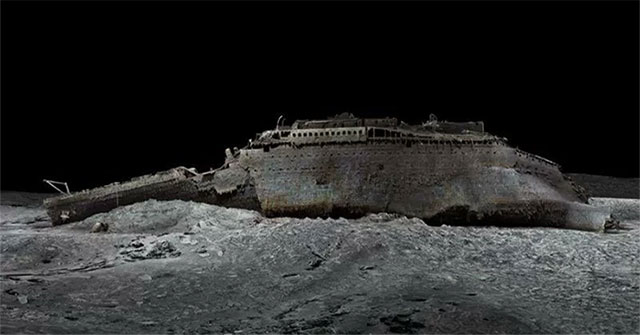
On April 15, 1912, the Titanic sank after hitting an iceberg. At the time, the Titanic was the world's largest steamship, carrying more than 1,400 passengers. The ship met with an accident while traveling from England to New York, USA.