Haneda Airport in Tokyo, Japan, one of the world's busiest airports, is experimenting with using self-driving vehicles to tow cargo containers in an effort to address labor shortages amid a surge in tourist arrivals to Japan.
All Nippon Airways (ANA) and Toyota Industries jointly developed this vehicle. It can lift six containers simultaneously, with a maximum towing capacity of 13 tons, and can move unmanned over a distance of approximately 2km from the aircraft to the airport terminal.
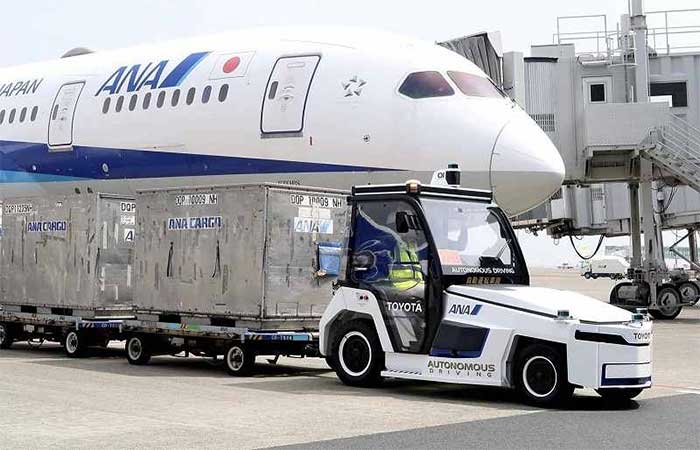
Self-driving vehicles tow cargo containers at Haneda Airport. (Photo: japannews.yomiuri.co.jp).
This is a Level 4 autonomous vehicle , meaning it requires no human interaction in certain settings, although a driver can still control the vehicle if desired.
The trial began on July 1st and is the first at a Japanese airport, part of the Japanese government's efforts to modernize its air transport industry. The companies aim to have the vehicle fully operational by the end of 2025.
Japan faces significant challenges as it seeks to double its tourist numbers to 60 million by 2030. With an aging population, many sectors of the world's fourth-largest economy are experiencing labor shortages. In 2024, the country's airports faced problems with aviation fuel supplies, prompting the government to establish a task force last month.
Following the government's decision to allow Level 4 autonomous vehicles on public roads starting in 2023, trials of autonomous vehicles have been launched in numerous locations across the country.