A VinFast VF8 self-driving electric car, seen speeding through heavy traffic in Vietnam, has caused a stir online. Specifically, a recently revealed video shows the VinFast VF8 self-driving electric car speeding down the road with no one behind the wheel.
In the clip, the two front seats are empty, with two people sitting in the back. The person in the back passenger seat is filming. The driver in the back seat twice raises their hand forward; once to adjust the steering wheel, and once to press a control button on the screen. It's unclear what road the car is traveling on, but it appears to be a section of highway with a solid median barrier.
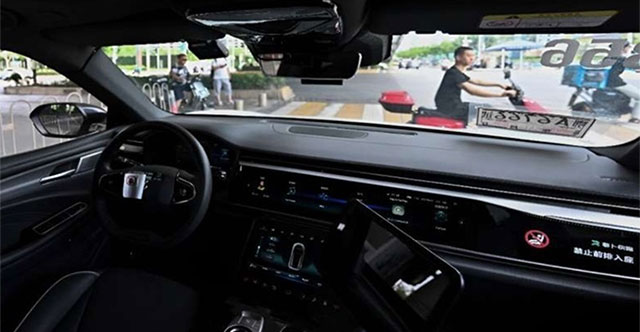
According to the video, the car gradually increased its speed from over 50 km/h to 71 km/h, with other cars ahead and a truck driving parallel in the adjacent lane. Also, judging from the information displayed on the screen, the car appears to have ADAS (Advanced Driver Assistance System) activated.

The car is currently using ADAS - Advanced Driver Assistance Systems.
ADAS is classified as a Level 2 autonomous driving system for cars. Specifically, the VF8 in the video is supported by the Keeping Lane Assist and Adaptive Cruise Control features. These two features allow the car to automatically stay in its designated lane and automatically adjust its speed (accelerating or decelerating) to maintain a safe distance from the vehicle in front.
Although ADAS is an intelligent system, its use still requires the driver to be behind the wheel to intervene when necessary. Modern cars all have features that detect when the driver takes their hands off the steering wheel for a certain period of time and issue a warning.
Furthermore, driving without a driver behind the wheel is strictly prohibited in Vietnam. Only a very few places, specifically for testing self-driving cars, allow manufacturers to experiment with driving vehicles completely without a driver.
Previously, Vingroup had tested Level 4 autonomous electric vehicles.
VinBigdata, a subsidiary of Vingroup, announced that it has begun initial trials of Level 4 autonomous electric vehicles on Hon Tre Island. The 23-seat vehicle has an average speed of 20-23 km/h.
Autonomous electric vehicles are being tested in Khanh Hoa.
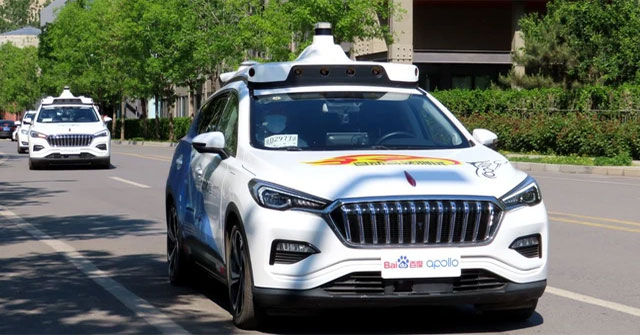
Like other autonomous vehicles, this company's prototype also uses a system of sensors, Lidar (light detection and ranging) , and cameras to scan images and transmit them to a central computer for AI-powered decision-making.
Prior to VinBigdata's product, another Level 4 autonomous electric vehicle was also tested by Phenikaa Group at the Phenikaa University campus in Hanoi. The vehicle operates approximately 100 km a day at an average speed of 20 km/h, with a full charge taking 7 hours.
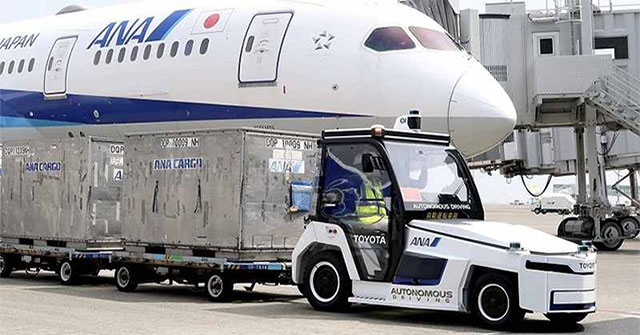
Both Level 4 autonomous electric vehicle models are initially intended for use in enclosed areas such as tourist resorts, golf courses, and corporate campuses. Vietnamese law, like most countries worldwide, does not yet permit Level 4 autonomous vehicles to operate on public roads. In reality, manufacturers have not yet fully resolved all the issues arising from autonomous vehicles, especially safety concerns. Numerous accidents have occurred that are attributed to malfunctions in autonomous systems, even at lower levels. The most feasible solution that car manufacturers are currently pursuing is Level 2 and Level 3 autonomy on public roads.
The ideal place in the world to test multi-level autonomous vehicles on public roads is California, USA, which has established a specific policy framework to attract companies researching and developing autonomous vehicles.
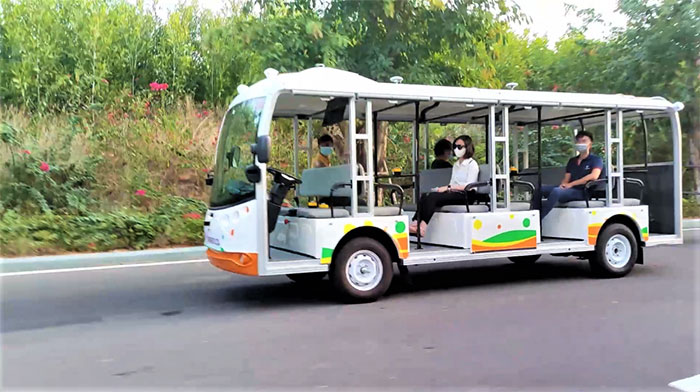
The company's prototype vehicle also uses a Lidar sensor system and cameras to scan images.
Currently, self-driving cars are divided into 5 main levels . These include:
- Level 1 : The simplest level, the driver must master the steering wheel, the car has minimal additional technology such as cruise control, lane keeping assist, parking assist.
- Level 2 : At this stage, the driver no longer needs to worry about acceleration, braking, or steering. Vehicle technologies such as automatic braking, lane change assist, and adaptive cruise control are available. However, the driver must still focus on the journey and maintain control. This is the most common level in modern cars.
- Level 3: The vehicle is more proactive, no longer just "assisting" but capable of actively changing lanes, such as automatically changing lanes.
- Level 4: Nearly fully autonomous driving, no driver intervention required, but still requires attention.
- Level 5: The driver doesn't need to pay attention to the car.
Who will the self-driving car choose to hit and who will it avoid?
Toyota unveils a self-driving car straight out of science fiction.
South Korea's unique bubble-shaped self-driving car.