Scientists have discovered a shocking origin for creatures that abound in nature and are farmed by humans around the world: They were "friends" of dinosaurs on the supercontinent Gondwana.
The new research was conducted by Brazil's University of São Paulo and the US's Washington State University, which are also two countries that exist on land that was once the dinosaur-era supercontinent Gondwana .
That amazing creature, a " living fossil" that survived the mass extinction caused by the Chicxulub meteorite 66 million years ago, was the bee .
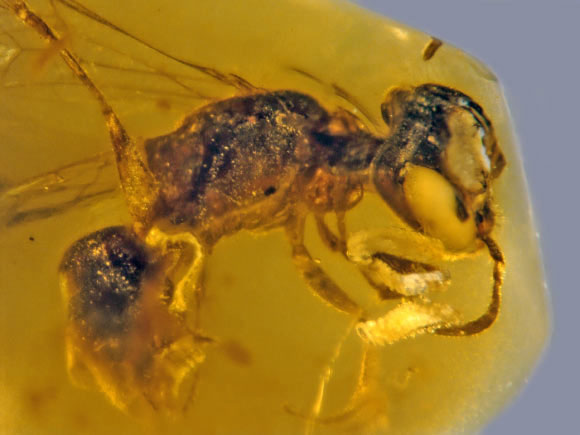
A 99-million-year-old bee is preserved intact in a piece of Burmese amber (Myanmar) - (Photo: UNIVERSITY OF OREGON (USA)).
Previously, it was known that bee-plant cooperation – that is, bees pollinating plants – had emerged 120 million years ago, but it was not really certain how and when bees spread across the globe.
Dr. Silas Bossert from Washington State University, Dr. Eduardo Almeida from the University of São Paulo and colleagues sequenced and compared the genomes of more than 200 bee species from around the world, according to Sci-News.
They compared them with features from 185 different bee fossils, including extinct species.
This evidence points to their origin: the arid western supercontinent of Gondwana, during the early Cretaceous period (145-66 million years ago).
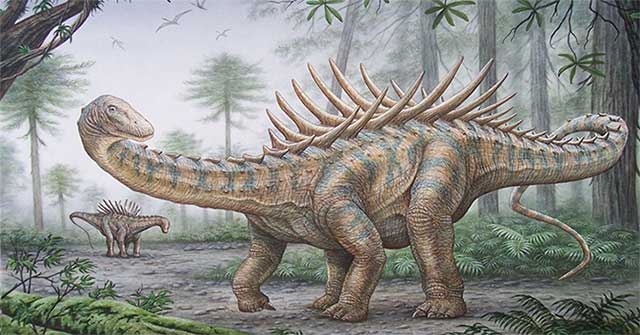
At that time, the world was divided into two supercontinents: Laurasia in the north and Gondwana in the south . Laurasia included present-day Europe, Asia, and North America; while Gondwana encompassed the remaining modern continents.
After a period of existence, Gondwana split into West Gondwana (including South America and Africa) and East Gondwana (Oceania and Antarctica).
Bees rapidly spread across their "home" supercontinent and the rest of the globe, dividing all the major bee families before the dawn of the Tertiary, the transitional period at the end of the Cretaceous.
This Cretaceous 'living fossil' survived the mass death of the dinosaurs, continuing to spread and fill ecological niches in the following Paleocene, Neocene, and Quaternary periods. The Quaternary is the geological period in which we now exist.
This interesting study was just published in the scientific journal Current Biology.