We have a huge need for energy. When we need to run anything that can't be plugged into a wall socket, the electricity comes from batteries, and the quest for a better battery is underway in labs around the world.
Nuclear waste is radioactive waste produced by nuclear power plants that no one wants to keep near their homes or even carried through their communities. It is highly toxic and deadly waste that takes thousands of years to completely decompose, however the amount of nuclear waste produced also increases with the demand for electricity by humans.
Now, a California-based company called NDB says it can solve both problems. It claims to have created a battery that is completely self-powered by radioactive waste and has a lifespan of 28,000 years , making it ideal for your future electric car or mobile devices.
Instead of storing energy generated elsewhere, the battery generates its own charge . It is made of two types of nanodiamonds , which makes it virtually indestructible when used in vehicles or other moving objects. Additionally, the company claims that its battery is safe because it emits little radiation, which is not harmful to the human body.
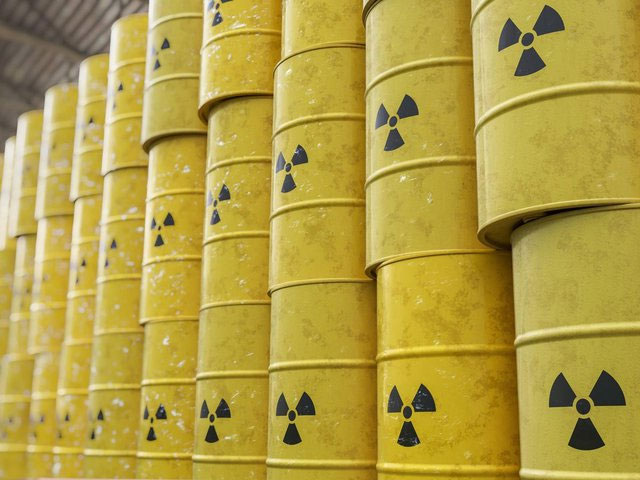
Radioactive waste container.
NDB has created a proof of concept and plans to build its first commercial prototype once its labs restart operations following the COVID outbreak (which should happen soon).
The nuclear waste that NDB plans to use to make batteries includes reactor components that have become radioactive due to contact with nuclear power plant fuel rods.
While this is not considered high-level nuclear waste – which would be used as fuel – it is still highly toxic, and a nuclear plant generates a lot of it. The International Atomic Energy Agency estimates that 'the core of a typical graphite-moderated reactor' can contain up to 2,000 tonnes of graphite.
Carbon-14 is a radioactive isotope found in graphite. It is also the radioactive isotope used by archaeologists for carbon dating. It has a half-life of 5,730 years and eventually decays into nitrogen-14, an antineutrino, and a beta decay electron, the charge of which makes NDBs intriguing as a possible source of electricity.
NDB purifies graphite and then turns it into microscopic diamonds. The company claims that using existing technology, they have created microscopic carbon-14 diamonds that can generate large amounts of electricity. The diamonds also act as semiconductors, absorbing energy and dissipating it through a heat sink.
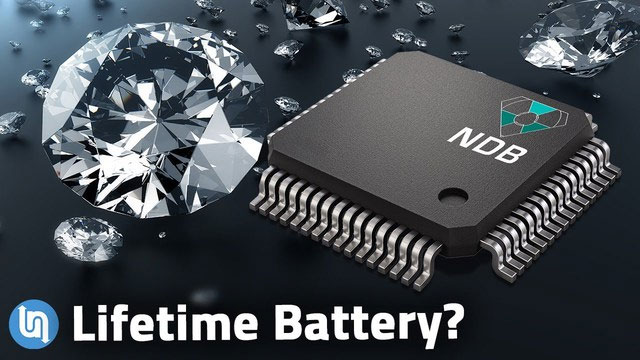
This battery will generate its own charge, it is made of two types of nano diamonds.
The radioactive batteries were created through a process called chemical vapor deposition , which is widely used to produce artificial diamonds. The researchers modified the process of growing radioactive diamonds by using radioactive methane gas containing the radioactive isotope Carbon-14, which is found on graphite blocks from irradiated reactors. These diamonds can act as a source of radiation as well as a semiconductor.
However, because they are still radioactive, NDB coats the 'miniature nuclear power plants' with non-radioactive, low-cost carbon-12 diamonds . These lab-grown, glittering shells provide diamond-hard protection while containing the radiation of carbon-14 diamonds.
NDA plans to produce batteries in a variety of popular sizes, including AA, AAA, 18650, and 2170. Each battery will have multiple layers of diamond stacked on top of each other, as well as a small circuit board and a supercapacitor to collect, store, and discharge energy. The end result, the company claims, is a battery that will last a very long time.
According to NDB, the battery could last up to 28,000 years when used in low-power environments, such as satellite sensors. They predict the battery could last 90 years in a car, much longer than any existing electric vehicle battery. For consumer devices like phones and tablets, the company estimates the battery would last about nine years.
NDB plans to commercialize a low-power version in the next few years, followed by a high-power version in about five years. If all goes according to plan, NDB's technology will represent a significant step forward in providing long-lasting, low-cost power to the world's electronics and automobiles.
'We can start at the nano scale and work our way up to powering satellites, locomotives,' the company says .
Additionally, the company predicts that its batteries will cost about the same as existing batteries, including lithium-ion, and could become much cheaper once they are mass produced.