Space science
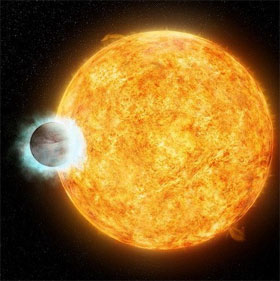
The mysterious planet causes the orbiting star to age
NASA's Chandra X-ray Observatory has discovered an anomalous planet that has the ability to make its star around older than its actual age.
Explore astronomy, NASA missions, planets, galaxies, the Moon, the Solar System and discoveries that expand our understanding of the universe.
8,698 published items in this category and its subcategories.
NASA's Chandra X-ray Observatory has discovered an anomalous planet that has the ability to make its star around older than its actual age.
The Maven, short for Mars's Atmospheric and Evolutionary Mission, will perform a different mission from NASA's previous missions.
An international group of astronomers discovered a supermassive black hole
The European Space Agency (ESA) said it is still investigating the cause of the two satellites of the Galileo navigation system to go wrong after its launch.
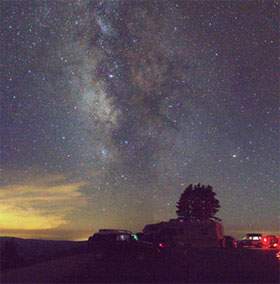
Under a clear, moonless and empty night sky, you will see the splendor of the galaxy.
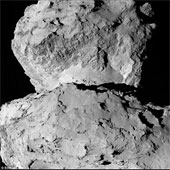
The European Aeronautics Agency (ESA) has made a list of 5 possible answers for the first landing plan on the surface of a comet.
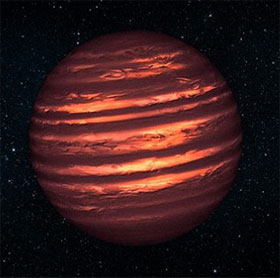
Scientists on August 26 announced they may have found the first water clouds outside the Solar System.
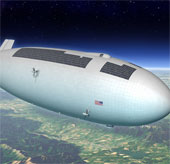
The giant solar powered hot air balloon can replace satellites and act as low cost communication and monitoring centers.
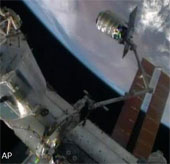
For satellite operators, space garbage is a permanent concern and can cause great damage.
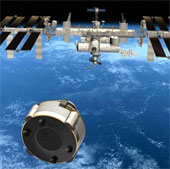
Boeing has completed a number of important reviews to commercialize flights to the ISS international space station.
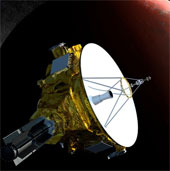
NASA's New Horizons spacecraft has passed Hai Vuong Tinh's orbit, is on its way to the distant Pluto and is expected to orbit the planet next July.
An Italian laboratory located at a depth of 1.4 km in the heart of the Apennine has discovered molecules from the Sun that can help measure activity at the planet's core.
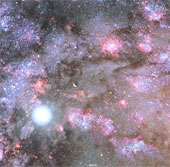
For the first time astronomers have captured the fleeting image of a giant galaxy in the newly formed phase when the universe is about 3 billion years old.
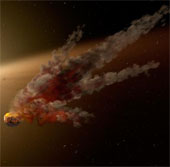
Spitzer Space Telescope has discovered a collision between asteroids, which can lead to the formation of new planets.
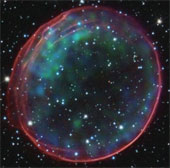
A series of supernova explosions, though not strong enough to kill life on earth, have wrapped the solar system in a hot air bubble and exist today.