Space science
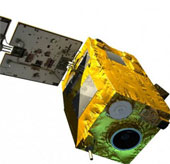
Save VNREDSat-1 satellite from collision in the universe
According to the assessment of the Small Satellite Control and Exploitation Center (DKKTN), this is the most complex operation to control the VNREDSat-1 satellite orbit…
Explore astronomy, NASA missions, planets, galaxies, the Moon, the Solar System and discoveries that expand our understanding of the universe.
8,681 published items in this category and its subcategories.
According to the assessment of the Small Satellite Control and Exploitation Center (DKKTN), this is the most complex operation to control the VNREDSat-1 satellite orbit…
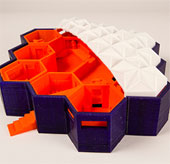
One day, astronauts set foot on Mars, how will they live in an architectural headquarters?
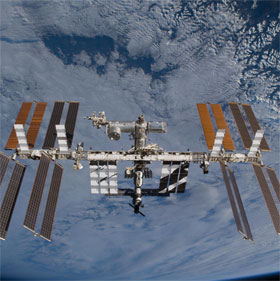
Scientists have discovered traces of living organisms that live on the surface of the International Space Station (ISS).
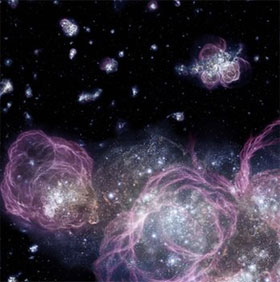
For the first time, astronomers found traces of one of the earliest stars in the universe.
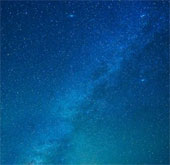
Fluorine in toothpaste products can be formed billions of years ago from dead stars.
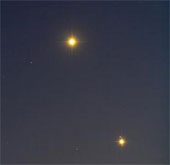
Astrological photographers from around the world have captured some amazing images of two planets - Venus and Jupiter - before dawn on Monday, August 18.
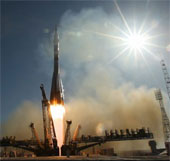
On August 22, the European Union (EU) successfully launched a Soyuz missile from the French Guiana Space Center, carrying two satellites of the Galileo navigation system.

Recently, NASA has explained a picture that looks like a human bone taken from Mars that they announced earlier.
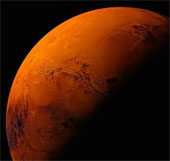
India on August 23 said the country's spacecraft Mars Orbiter Mission is currently only 9 million kilometers from Mars and is expected to reach Red Planet in 33 days.
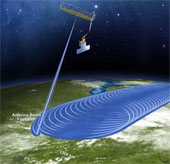
The US space agency (NASA) is preparing to launch the Soil Moisture Active Passive (SMAP) satellite into orbit with a view to measuring soil moisture on a global scale.
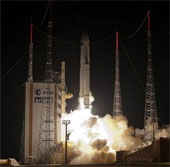
The missile launches from the Kourou Space Center in French Guiana at 20:47 pm on July 29 (local time, 6: 47 minutes on July 30 morning in Vietnam time).
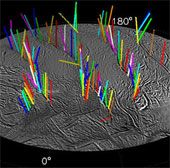
Scientists at the US Aeronautics and Space Agency (NASA) have identified more than 100 geysers on Saturn's moon Enceladus.
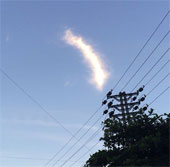
Learn more about the unique Delta Aquarids meteor shower that took place over a period of nearly a month.

According to experts, it is the friction effect that appears together with the phenomenon of tidal deformation caused by the Earth, which causes the Moon to be enlarged…

In fact, the big planets all have spheres while meteorites have different shapes, however our Earth is not completely spherical.