Scientists ran a supercomputer simulation depicting a mass extinction on Earth in the year 2100 .
In a study released at the United Nations COP15 Biodiversity Conference in Canada, scientists warned that the Earth is about to experience its sixth mass extinction.
According to the study, we will lose about 10% of animals and plants by 2050. This rate will increase to 27% by 2100. Scientists predict that the causes of extinction are climate change, indiscriminate exploitation of resources and changes in land use.
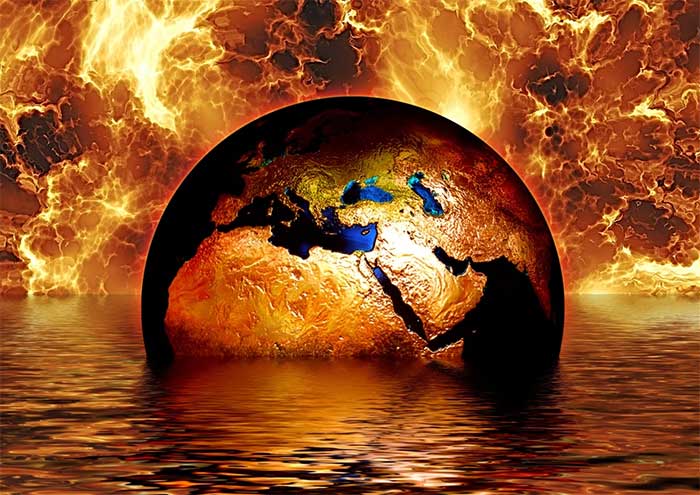
According to scientists, climate change could wipe out more than 25% of the world's animal and plant species. (Photo: Pixabay).
Simulating 'Virtual Earth'
Dr Giovanni Strona from the University of Helsinki (Finland) and Professor Corey Bradshaw from Flinders University (Australia) used supercomputers to build a "virtual Earth" to simulate a global extinction event caused by climate change.
They say the tool 'can predict extinction events anywhere on Earth' , revealing the future of global biodiversity.
Previous approaches to assessing the risk of extinction over the next century are flawed because they miss cases of 'co-extinction', scientists say.
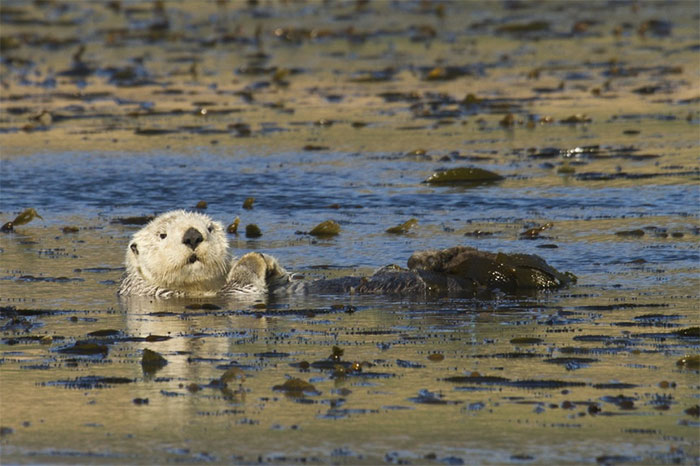
Sea otters rest in a kelp forest off the coast of California. (Photo: Nicole LaRoche).
Co-extinction is the disappearance or decline of one species, leading to the disappearance or risk of extinction of another species that depends on it, explains Bradshaw .
'Think of a predator losing its prey. The loss of the prey due to climate change will cause the predator to go extinct as well because it loses its food. This is called co-extinction ,' said Professor Bradshaw.
'Another example of co-extinction is when a parasite loses its host or a flowering plant loses its pollinators because of climate change. Each species depends on the others in some way ,' he continued.
According to him, co-extinction is the main cause of global biodiversity loss.
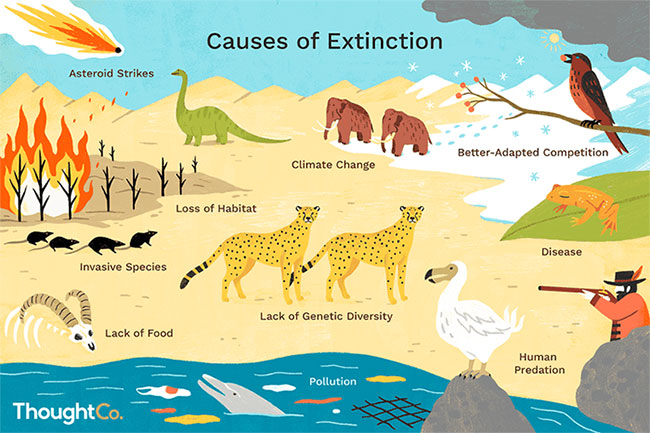
Illustration of causes of animal extinction. (Photo: ThoughtCo).
To make this observation, the two researchers built a virtual Earth with a network of closely linked species. They then applied climate changes to the system to make future predictions.
'We essentially created a virtual world and mapped the connections between thousands of species. From there, we were able to assess how well they were adapting to different climate scenarios, and link that to other factors to predict extinction,' Dr Strona explained.
The 6th mass extinction
The world has experienced five mass extinctions throughout history. Experts say the Earth is entering its sixth mass extinction. This is the first mass extinction since the age of the dinosaurs.
According to the International Union for Conservation of Nature's red list, more than 42,100 species are threatened with extinction.
'We will see the disappearance of thousands of plant and animal species, from tiny orchids and insects to iconic species such as elephants and koalas. Children born 70 years from now will never even see these species ,' said Professor Bradshaw.
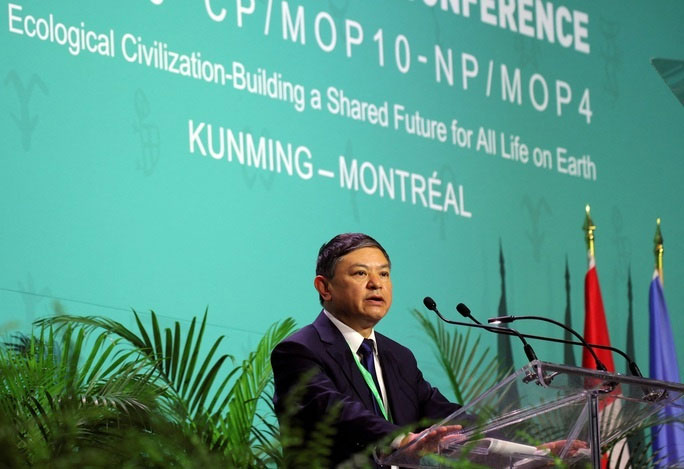
The representative of the COP15 Presidency - Chinese Minister of Ecology and Environment Huang Runqiu - spoke at the conference. (Photo: Reuters).
Over the past century, an average of two vertebrate species have gone extinct each year. A 2017 study declared that 'biodiversity loss' of wildlife over recent decades is the main cause of the coming mass extinction.
So at the United Nations biodiversity summit on December 19, countries adopted a historic agreement to reverse decades of environmental destruction that threatens species and ecosystems around the world.
The agreement aims to protect 30% of the world's land and sea by 2030, with hundreds of billions of dollars a year earmarked for species and wildlife conservation. The draft includes a target of restoring 30% of degraded natural areas, much higher than the original target of 20%.
After four years of intense negotiations, more than 190 countries have rallied behind the China-brokered agreement to save land, oceans and species from pollution, degradation and the climate crisis.