
Environment
New method of absorbing industrial emissions
Chemists from the Brazilian Federal University of Minas Gerais have announced the invention of a new method to absorb CO2 emissions from industrial facilities.
Browse ScienceInfo articles and explainers related to Environment.
1,985 published items.
Chemists from the Brazilian Federal University of Minas Gerais have announced the invention of a new method to absorb CO2 emissions from industrial facilities.

On the streets of all European countries an image of a big car leading the way

Australian scientists were stunned to find a giant iceberg drifting wandering the waters of the country.

For hundreds of years, the Earth has absorbed more than half of the CO2 that people emit and this phenomenon will continue in the future.


Demand for ethanol is increasing, however, because production costs are still quite high, they cannot compete with traditional fuels today.

According to scientists' conclusions, if Greenland's massive ice sheets melted due to global warming, Earth's sea level would rise by 7cm.

Venezuelan President Hugo Chavez announced that Cuban scientists will create rain to help the country get out of drought.

To buy a car is not difficult, but drivers in the Netherlands will have to pay taxes for every kilometer that their vehicles circulate on the road.

On the afternoon of October 23, the director of Hanoi Department of Science and Technology Le Xuan Rao said that the Hanoi City People's Committee has agreed to allow fu…
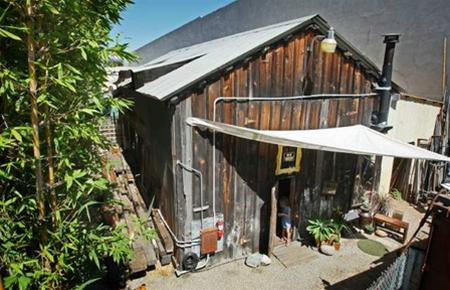
On October 26, Spain's Altran Innovation Support Fund introduced a model of housing with mostly bamboo construction materials capable of absorbing CO2 emissions naturall…
In the morning of October 28, in Hanoi, the Ministry of Natural Resources and Environment cooperated with the National Meteorological Center to organize a workshop on

October 27 is the end of the week of the 'No Harm' project launched by the famous US website Huffington Post. Thousands of people have participated in testing green life…

The leaves attract iron oxide particles on the surface, making them magnetic. So they can become inexpensive sensors that assess pollution.

On November 2, WWF Vietnam awarded certificates