
Space science
New discovery shortens Earth's age
Compared to previous research on Earth's age, scientists from Cambridge University (UK) have confirmed the green planet is younger than 70 million years ...
Browse ScienceInfo articles and explainers related to Planet.
2,878 published items.
Compared to previous research on Earth's age, scientists from Cambridge University (UK) have confirmed the green planet is younger than 70 million years ...

Because a planet moves so close to its own star, its atmosphere is sucked out and forms a trail like a comet.

Scientists say they have just identified the location of some recently active volcanoes on Mercury.

A statement shocked scientists when the number of Earth-like planets was found to reach 140 in just a few weeks.

The ship 'virtual' to Mars with a 520 day and night journey, the third stage in the 'Mars - 500' project of the Y-Sinh Academy (Russian Academy of Sciences) 'departed' y…

A recent study shows the amount of water below the surface

Scientists claim that, at the time of today 3.5 billion years, 36% of the surface of Mars had been covered by seawater.
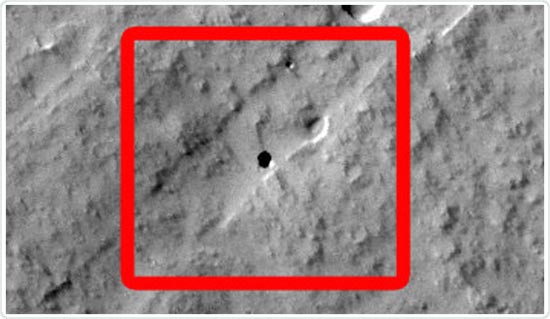
A group of 7-year-old students in California, the United States discovered a mysterious cave on Mars when participating in the research project of images operated by a N…

The discovery of nine extrasolar planets has challenged current theories about the formation of planets, according to new observations by astronomers.

The unique photograph that captures the image of Earth seen from another planet shows that our

A meteorite will fly close to the earth tomorrow but not collide with our planet.

Scientists at the European Center for Atomic Research (CERN) have created 10 million explosions in a large particle accelerator in a week.

For the first time scientists have discovered clear signs of recent lava flows on Venus's surface.

Planets can orbit their stars in the opposite direction to the one we have known in the solar system.

Jim Kasting, an astronomer, said that around the Earth, there are dozens of other planets with life that humans cannot yet observe.