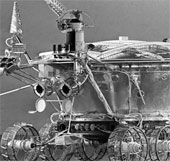
Space science
Found Russian spacecraft on the Moon after 42 years
French scientists succeeded in using lasers to find the former Soviet Union's Lunokhod 1 self-propelled ship on the Moon. 42 years ago, Lunokhod 1 became the first explo…
Browse ScienceInfo articles and explainers related to Rain.
4,033 published items.
French scientists succeeded in using lasers to find the former Soviet Union's Lunokhod 1 self-propelled ship on the Moon. 42 years ago, Lunokhod 1 became the first explo…
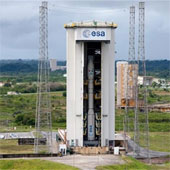
According to the latest announcement on the website of the Arianespace company, Vietnam's first remote sensing satellite launch will be postponed due to weather conditio…
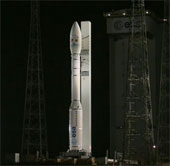
Information from the Vietnam Academy of Science and Technology, after two days of postponement and anticipation, tomorrow morning, May 7, at 9:00 am (Hanoi time), Vietna…
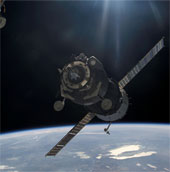
The flight to the International Space Station (ISS) on March 28 of the Soyuz spacecraft only lasted nearly 6 hours, while other flights usually took place over two days.
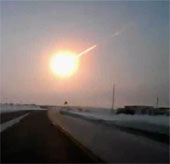
Officials from the US Aeronautics Agency (NASA) concede there is nothing to be done if the meteorite on the collision with the Earth within 3 weeks.
A high-ranking Russian official in the space sector said the country could build heavy boosters to bring up nuclear warheads to deal with asteroids, which threaten the e…
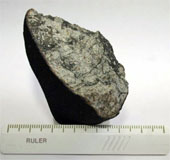
The meteorite exploded in the Russian sky last month more likely to split from an asteroid and collided with another celestial body tens of millions of years ago.
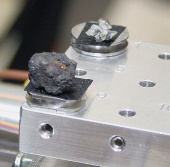
Scientists have obtained the first data on the chemical composition of meteorites, falling into the Chelyabinsk region. The analysis showed that it contained a large amo…

Russian scientists said that the meteorite 'choose' Earth is the destination because it had collided with other meteorites in the universe before.
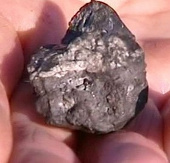
The Russian space agency (Roskosmos) acknowledged that their telescopes could not find the meteorite falling on the country's Chelyabinsk region, because it had a very s…
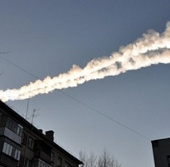
An asteroid caught fire and exploded violently, dragging shocks and glare in the sky of central Russia, breaking many glass doors and injuring hundreds.
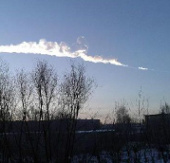
A US senator commented that the US government invested a lot of money in the program to track objects near the earth, but their devices still could not detect meteorites…
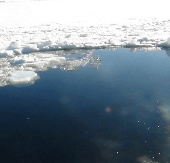
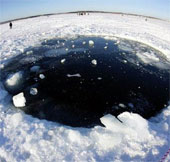
Divers have just finished checking Lake Chebarkul, where a meteorite is thought to fall and create a giant crater on the ice, but no trace is found.
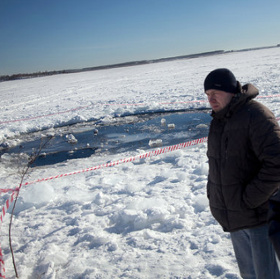
The meteorite falling into the Russian Ural region has been recalculated by NASA based on the latest data, with a mass of about 10,000 tons and a destructive power of up…

The meteorite weighing about 10,000 tons flew through the sky in the Ural region in the early morning hours on Friday when the world was holding its breath in anticipati…