Medicine - Health
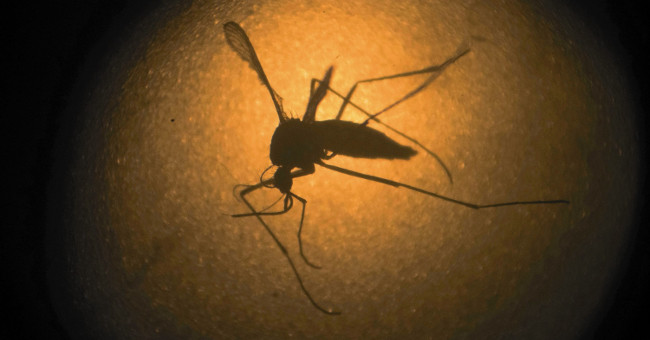
Brazil releases mosquitoes that carry dengue bacteria to the environment
The project was developed by Australian scientists and has been prepared by Brazilian scientists since last year.
Browse ScienceInfo articles and explainers related to Release.
367 published items.
The project was developed by Australian scientists and has been prepared by Brazilian scientists since last year.

On January 5, Khanh Hoa Provincial People's Committee had a meeting with the Institute of Hygiene and Epidemiology on the project

46-year-old Ken Baker (American) suffers from a brain tumor that slows puberty and has no sexual desire.

Swallowing corn kernels without chewing and watching the time the body needs to release them will reveal to you the amount of fiber inside or not.

In 1932 the Japanese Chisso Corporation discharged mercury-contaminated wastewater to Minamata Sea caused a massive death of fish and shrimp, people ate fish that had be…

No one denies that lack of sleep at night causes many harmful consequences to human health. One of the easiest ways to counteract this problem is to adopt a diet that in…

Even though you've tried hard, sometimes you still can't sleep when you really want to sleep. There are many ways to help you sleep fast, but the following is probably t…
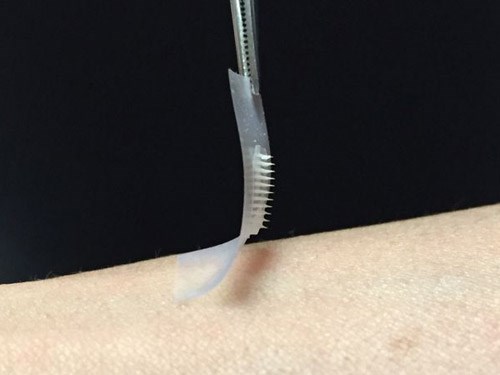
US scientists have created smart patches that can automatically release insulin for diabetics.

Plastic water bottles are made of polyethylene terephthalate. When heated, this material releases antimony (Sb) and bisphenol A, commonly known as BPA.
Brazilian researchers in Rio de Janeiro have released thousands of mosquitoes carrying dengue-suppressing bacteria.

A young man with polio in the US can use his thoughts to move his fingers and hands thanks to a device called Neurobridge.

First, scientists have placed the engine inside human cells and drove them to move under the influence of magnetism.

This is not only in science fiction, in fact Debbie Wolf - a British woman can release bioelectric currents that turn lights, refrigerators off ...

According to Lubeck University professor Peters, obese people always live longer than thin people because their brains in stressful state receive more nutrients.

A new study has discovered a gene called RASGRF-2 that plays an important role in the stimulation of alcohol to release dopamine in the brain.