New technology
Robots find pirated goods from ships
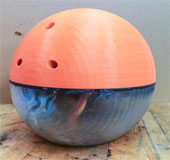
Scientists at the Massachusetts Institute of Technology (MIT) have introduced a water-based oval robot.
Browse ScienceInfo articles and explainers related to Water.
6,456 published items.
Scientists at the Massachusetts Institute of Technology (MIT) have introduced a water-based oval robot.

Chinese experts have recently found a way to make a sticky adhesive in the water.

Japan's Ministry of Science and Technology will develop an advanced optical satellite capable of detecting objects at sea or on land with a resolution of up to 1m.

Sports cars are largely unfriendly to the environment, but the Quant e-Sportlimousine is an exception as it runs entirely on salt water.
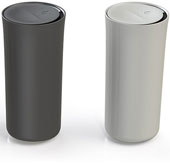
Vessyl is a special water bottle, which is capable of recognizing it contains anything liquid, such as coffee, beer, soft drinks, milk, water.

China has taken a step closer to the ambition to create an ultrasound submarine that could move from Shanghai to San Francisco in less than two hours.

The tendency to use small homes is quite common in the community. So a team from the New York-based design firm launched a mobile home called Taku Tanku.

Costume and technology in Melbourne, Australia, with Threadsmiths, has created a waterproof and dust-free T-shirt.

Researchers in Hong Kong have recently made a test of cashmere wool that can clean itself of sunlight, which saves water and chemicals.
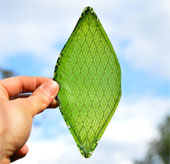
A recently graduated American student has created an artificial tree that is able to turn water and light into oxygen, a significant advance in science for space travel.
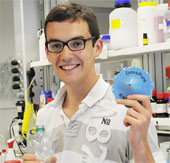
There are still hundreds of millions of people in the world who do not have access to clean water.

Ecosphere Technologies has completed the first version of a closed-end device to help disaster-stricken areas be named the PowerCube.
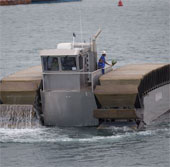
The US Marine Corps has just released a new kind of amphibious vehicle, designed to land on beaches, transport soldiers and overcome land obstacles.

With the new device, users can immediately determine whether their drink has been sexually abstained.

AUSTRALIAN researchers have recently introduced a smart alert buoyancy device that can detect the presence of sharks in the sea and send a signal to the rescue team.