Space science
NASA launched the mission to hunt meteorites in 2019
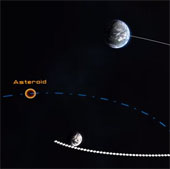
Recently, the US space agency (NASA) has revealed more information about the mission of hunting and exploiting meteorites (ARM).
Browse ScienceInfo articles and explainers related to Formation.
530 published items.
Recently, the US space agency (NASA) has revealed more information about the mission of hunting and exploiting meteorites (ARM).
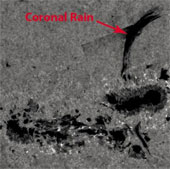
Compared to the sun showers, destructive storms on Earth become too much
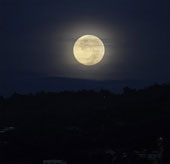
A group of scientists have published some new evidence that the Moon was formed after a very strong collision between a Theia-sized celestial body.
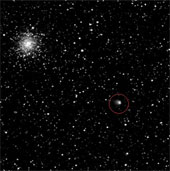

Scientists at the Ames Research Center of the US Aeronautics and Space Administration (NASA) for the first time successfully recreated dust tiny particles that usually o…
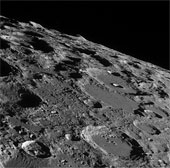
The moon appears about 95 million years after the Solar System was formed from a planetary collision.
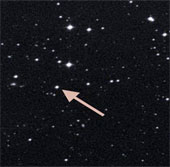
Australian scientists have discovered the oldest star in the universe, formed 13.7 billion years ago, shortly after the Big Bang.
Physicists in Russia and Italy have created processes similar to the process of producing life on meteorites in the universe, thanks to the accelerators of the Unified N…
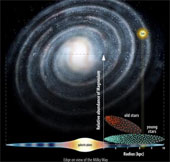
European astronomers have found new evidence that the Milky Way expands inward from the inside out.
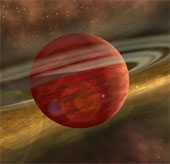
Astronomers discovered a planet where it should not belong, raising questions about the actual formation of planets.
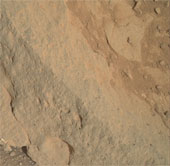
The Curiosity probe of the US Space Agency (NASA) for the first time detected direct evidence that a freshwater lake once existed on Mars.
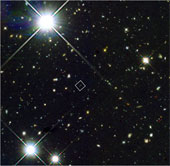
Astronomers used the telescope in Chile to combine Hubble's power in orbit to observe the ancient trio of galaxies at the time of the new universe.
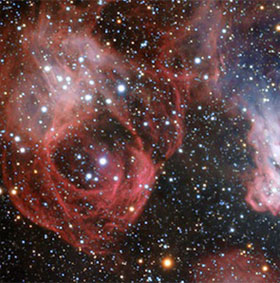
The Southern European Astronomical Observatory has just captured a photograph of the formation and death of stars at the Large Magellanic Clound (the large Magellanic Ne…
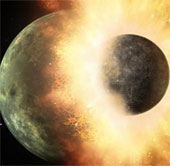
Mercury can unravel the long-standing mysteries of the moon's formation, after scientists found unexpected similarities between these two bodies.
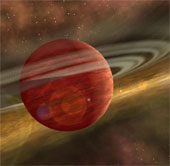
A giant planet recently discovered 25,000 light-years from Earth, can provide clues about the formation of planets.