
Discover science
How does the brains of geniuses work? (2)
Continue to explore Part II of the article to find out if the brains of re-natural beings are different from those of ordinary people.
Browse ScienceInfo articles and explainers related to Intelligence.
943 published items.
Continue to explore Part II of the article to find out if the brains of re-natural beings are different from those of ordinary people.
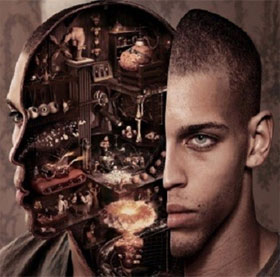
Many previous studies have pointed out the danger of artificial intelligence to human life
Intelligence is a quality everyone wants to get but not everyone understands how smart and what factors affect it.
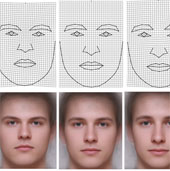
Scientists have discovered that women can easily guess the level of intelligence by just looking at their faces.

Oxford University researchers were based on a general social survey conducted in the United States to survey public opinion.

A new study has found a close link between our height and our IQ, implying that lower people are generally less likely to be smarter.

After doing the largest study ever so far about intelligence, researchers discovered real IQ tests.
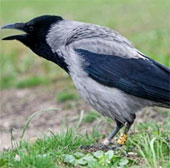
Scientists point out, some other animals have a much smarter brain than humans ...
It would not be too much to say,

Finally, the US Government has acknowledged the existence of Area 51 (Area 51) - this long time still covered with a mysterious veil of studies of extraterrestrial organ…
Genius is natural and cannot be trained. This conclusion was made by Russian scientists. Doctor of biological sciences, Professor Sergey Savelyev is an expert on the per…

Recent research by Dr. Robert Hanlon at Northwestern University, Illinois (USA) shows that there is an intellectual difference between murderers who have pre-conceived w…
The latest study by a group of scientists has yielded shocking results: modern humans are not as intelligent as people living in the 19th century, even far behind intell…
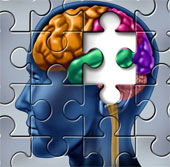
Human intelligence can no longer be explained by relying on the growth in the size of the frontal lobe.

A new study shows that emotional intelligence and intelligence can be more closely related than previously thought.