
New technology
Liquid Metal: A new evolution of 3D printing
Researchers at the University of North Carolina have developed 3D printing technology a new step in the use of liquid metal materials.
Browse ScienceInfo articles and explainers related to Material.
2,029 published items.
Researchers at the University of North Carolina have developed 3D printing technology a new step in the use of liquid metal materials.

By applying graphene materials with the advantage of good thermal conductivity, researchers - including the participation of Vietnamese people - have opened new steps fo…

At a research institute in Brindisi, eastern Italy, people are cooking a special thing in a large saucepan, not a traditional pasta but an organic plasticizer.
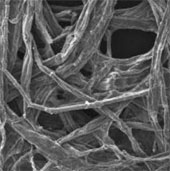
Today, there are many new battery technologies that scientists are turning to, such as small, lightweight Li-S batteries, or fast rechargeable batteries.

Potential research team of the Department of Information Technology, Military Technical Academy has studied and created fire detection and warning system based on machin…

Lighter materials, such as plastic, can help astronauts effectively block harmful radiation rays during space travel.

Camping enthusiasts will no longer worry about their cell phones running out of batteries, thanks to a new type of shorts and sleeping bags that can generate electricity…

A Harry Porter invisibility cloak is just a product of imagination and, in fact, to create a similar product requires the use of negative refractive index materials for…
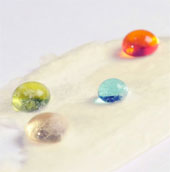
Scientists at the Georgia Institute of Technology have created a new paper that does not absorb many types of liquid including water and oil.

A team of scientists from Japan, Finland, the US and Germany used lasers to turn liquid cement into a semiconductor form that could be used to make computer chips, or ev…
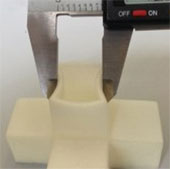
As 3D printing technology becomes more popular, companies are racing to produce unique products, both in form and in materials. And the Shadeways are no exception.
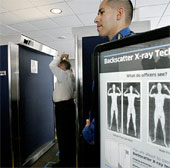
This device was created to quickly detect non-metallic objects, potentially destructive. Only the United States can manufacture similar products, said Tianjin Chongfang…
Physicists at the Massachusetts Institute of Technology have found a way to turn graphene into a semiconductor by giving it exposure to a boron nitride substrate.
Tablet PCs, mobile phones, music players, laptops are rolling out at breakneck speed. This situation means that e-waste will also increase rapidly.
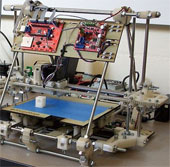
NASA is investing in System & Materials Research Corporation's 3D food planner for Mars astronauts.