
Space science
'Crazy star' was thrown out of the Milky Way
The US Hubble telescope detected a super-hot blue star moving at speeds of up to 2.56 million km / h.
Browse ScienceInfo articles and explainers related to Milky.
356 published items.
The US Hubble telescope detected a super-hot blue star moving at speeds of up to 2.56 million km / h.

The Royal Astronomical Society of England said on April 14 that scientists from the University of Manchester have discovered a

The magnetic field at the center of the Milky Way is 10 times more magnetic than the rest of the galaxy.

A galaxy that humans cannot see collides with the Milky Way but it retains its shape.

Astronomers have discovered a star with a surface temperature of 200,000 degrees Celsius in the Milky Way.

The Adler, Chicago (USA) astronomical department recently published the latest and most complete picture of a galaxy of 800,000 images of different sizes.

Scientist Axel Mellinger (USA) has used digital image processing technology to successfully combine a panoramic picture of the Milky Way from over 3,000 different images.

Combining images taken from multiple space telescopes, scientists introduced the beauty of the center of the Milky Way, the galaxy containing the Earth.
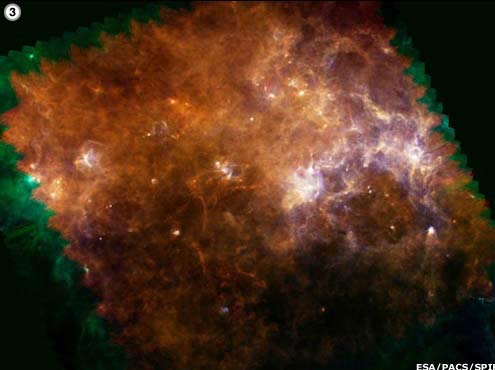
After striking images of the Milky Way, Herschel Observatory intends to conduct a larger study thanks to two Spire - Pacs devices, but the plan is slowing down because s…
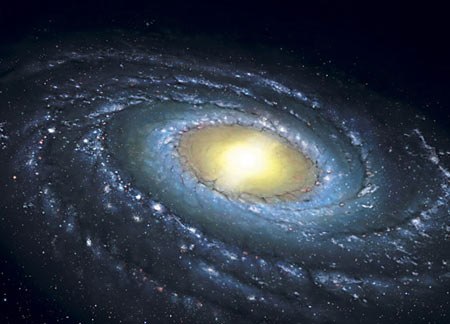
Some small galaxies have collided with the Milky Way. Similar clashes still occur in the future, but they cannot destroy the Milky Way as predicted by many scientists.
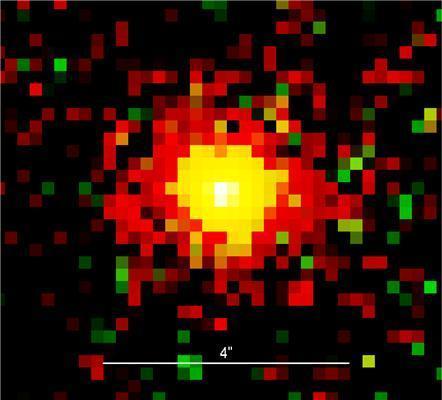
Astronomer Tomotsugu Goto from the University of Hawaii and his colleagues discovered a giant galaxy surrounding a large black hole at a location farther away from Earth…

Two scientists from the University of California (USA) - judged that the gravitational force from a galaxy causes disturbances in the Milky Way's disk of dust.
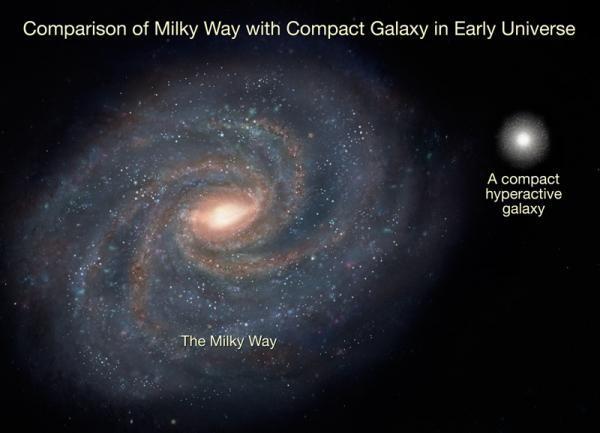
Looking back at 11 billion years ago, astronomers for the first time measured the motion of stars of a distant galaxy and obtained a velocity of up to one million miles…
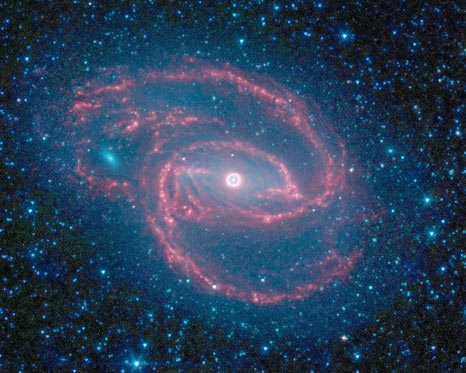
The Spitzer telescope has just discovered a spiral galaxy shaped like an eye about 50 million light years from the earth.

An unprecedented map of the area inside the Milky Way has been revealed by astronomers.