Space science
Detected the defected star group in the Milky Way
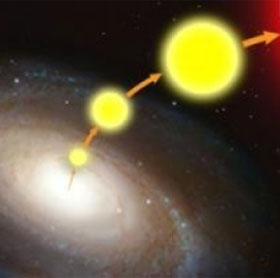
American students find a group of stars that move so quickly that they can escape the Milky Way in the future.
Browse ScienceInfo articles and explainers related to Super.
1,981 published items.
American students find a group of stars that move so quickly that they can escape the Milky Way in the future.
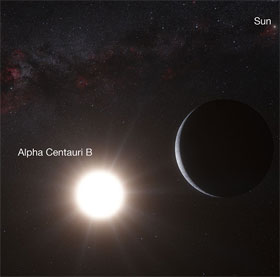
The closest neighbor of the sun may contain a more evolved life-like planet than Earth, with islands on the surface, shallow waters and a sloping sea floor.
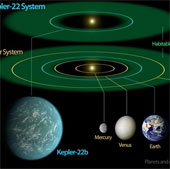
Astronomers call them such super-Earths and planets so much outside our solar system.
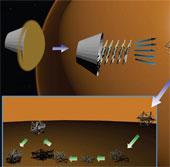
NASA scientists are testing robots capable of being dropped from a height of almost 100km and still landing gently on any surface of the celestial body.
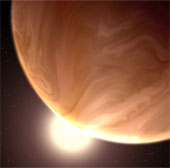
The Hubble telescope has allowed astronomers to observe the weather situation in an unfamiliar world, with the predicted result being cloudy.
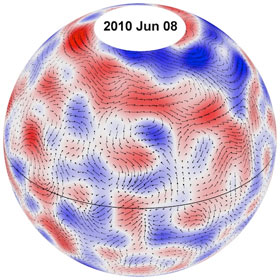
Scientists have predicted that the sun has a particle-like structure (matter particle). Each particle of this matter can be 16 times larger than the Earth.
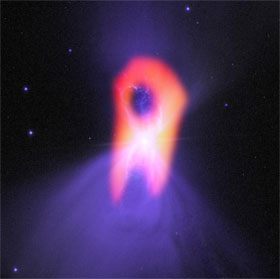
International astronomers have just confirmed the Boomerang nebula, 5,000 light-years from Earth, the coldest region in the universe with a temperature of about -272.2 d…

Two groups of international astronomers have taken horrifying images of a gargantuan greedy black hole
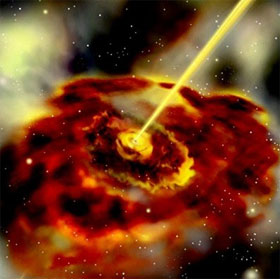
Astronomers have found a solution to the birth of these
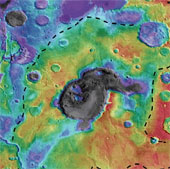
Scientists discovered super-volcanoes on Mars with the power to bury the planet in dust and rock.
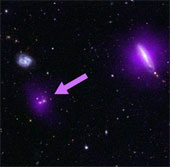
After a period of operation, this nuclear spectrophotometer has recently yielded a surprising result. It not only found a black hole, but 10 black holes in the center of…
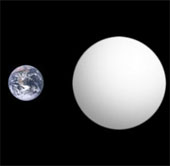
Super Earth are planets orbiting a star outside the solar system, with a larger mass and radius than Earth, but smaller than celestial bodies such as Uranus or Neptune.

Collaborating with US and British colleagues, scientists at the University of Western Ontario (Canada) said the finding deciphered the puzzle that has long been in the f…
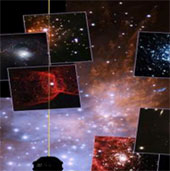
Experts in Chile have published seven super-sharp, wide-spectrum images of the device that are expected to revolutionize astronomical observations.
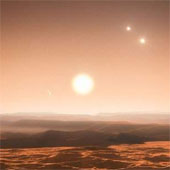
The Glise 667 C solar system near us has 7 planets, 3 of which are