Space science
Monitor the risk of collisions between giant meteorites and Earth
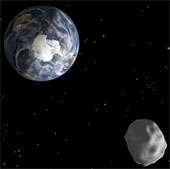
Russia's telescope has discovered a giant meteorite that can plunge into the Earth in the future.
Browse ScienceInfo articles and explainers related to Telescope.
1,099 published items.
Russia's telescope has discovered a giant meteorite that can plunge into the Earth in the future.
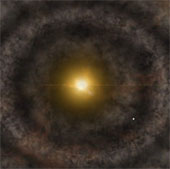
Thanks to the Alma radio telescope, scientists have for the first time captured the clearest picture of the formation of planets around a young star.
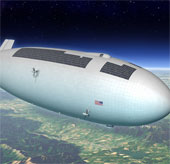
The giant solar powered hot air balloon can replace satellites and act as low cost communication and monitoring centers.
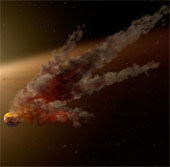
Spitzer Space Telescope has discovered a collision between asteroids, which can lead to the formation of new planets.
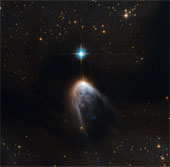
The Hubble Space Telescope captures stunning images of the birth of a distant star.
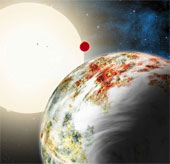
The Kepler space telescope detected a planet with a hard surface like the globe, but its size was 17 times larger than our planet.
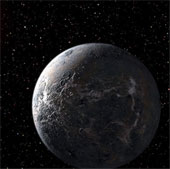
NASA's infrared telescope discovered 7 light-years away from the Sun has a cold, small brown star that does not shine.
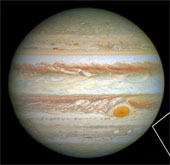
On May 15, the United States announced a Hubble telescope photo of Jupiter, showing a huge storm in Jupiter whose diameter at the end of the 19th century was about 40,00…
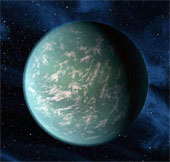
Beginning later this month, scientists at NASA's Ames Research Center will deploy Kepler's next mission.
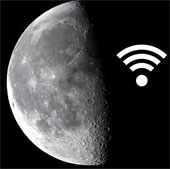
For the first time, scientists have demonstrated the ability to transmit wireless Internet signals with a distance of 238,900 miles, the distance from the earth to the m…
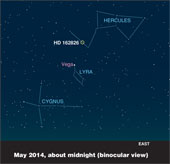
In the center of the solar system, the giant star warming the Earth is not the only child born more than 4 billion years ago.
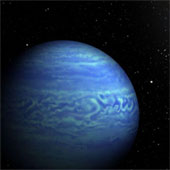
NASA telescopes have found the coolest brown dwarf ever. The temperature of this star's surface is on par with the North Pole.
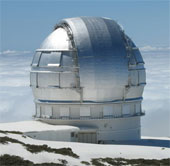
On March 6, Russian scientists at Irkutsk State University said they had taken unique photos of the explosion of the oldest star from Earth. 12 billion light years.
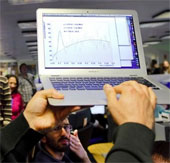
For the first time, astronomers have
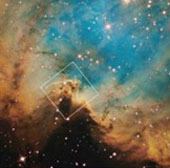
NASA has just released a series of impressive new images of the Monkey Head Nebula, a star-forming cradle about 6,400 light-years from Earth.