
Space science
NASA discovered the smallest planet in the universe
The newly discovered planet, named Kepler-37b, is only slightly larger than the Moon and takes 13 days to complete an orbit around its star.
Browse ScienceInfo articles and explainers related to Telescope.
1,099 published items.
The newly discovered planet, named Kepler-37b, is only slightly larger than the Moon and takes 13 days to complete an orbit around its star.

The Russian space agency (Roskosmos) acknowledged that their telescopes could not find the meteorite falling on the country's Chelyabinsk region, because it had a very s…
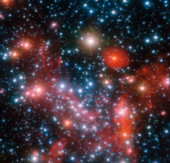
The central region of the Milky Way appears with subtle colors in a photo taken from the ground by a telescope.
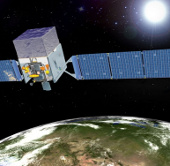
The Fermi glass vision has detected traces of so-called dark matter that account for 85% of the universe's mass.
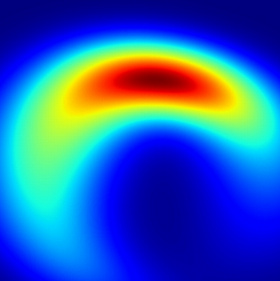
Astronomers have just published their first speculative images of the shape of a black hole, very different from previous illustrations.
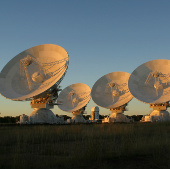
Astronomers use telescopes in Australia to measure the temperature of the universe, and draw conclusions that it is cooling like predicted by experts according to the Bi…
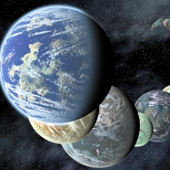
Kepler Space Telescope of the US Space Agency (NASA) has discovered 461 new potential planets.
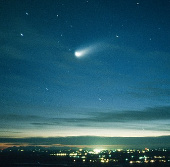
Comet giant is discovered by two Russian astronomers
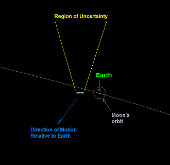
One day after the apocalyptic rumor, the US Aeronautics Agency (NASA) gave the good news, that concerns about asteroids colliding with the earth will not happen.
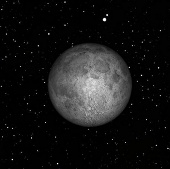
In fact, the full moon is a fast happening phenomenon. And in this December, the moon will be round, big and brightest from 5:21 am tomorrow morning (December 28).
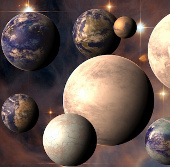
According to lead researcher Abel Mendez, scientists have achieved much progress in the way of searching for exoplanets.
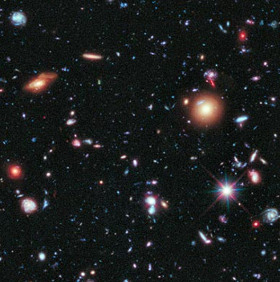
The Hubble telescope has recently discovered primitive galaxies formed during the early days of the universe, including the oldest galaxy ever discovered.
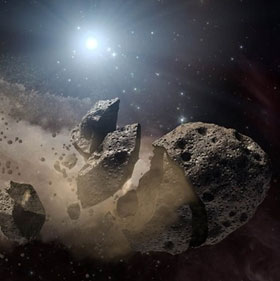
Based on the support of the ALMA telescope, world astronomers have just announced a new discovery that could change every theory so far about the formation of planets, i…
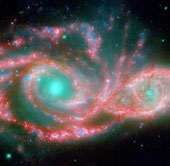
NGC 2207 and IC 2163, names of two galaxies twisted in the Canis Major constellation, are in the process of merging into a galaxy.

The little planet Makemake has no atmosphere, this distant icy world revealed its secret for the first time.