Standing at over 3 meters (nearly 10 feet) tall, Gigantopithecus Blacki was the largest primate to ever exist on Earth (at least that we know of). The beast roamed all over China at the time.
The beast roamed throughout China at that time until it became extinct between 295,000 and 215,000 years ago under mysterious circumstances.
In a new study, scientists looked into why the giant ape went extinct and concluded that the species struggled to adapt to a rapidly changing environment.
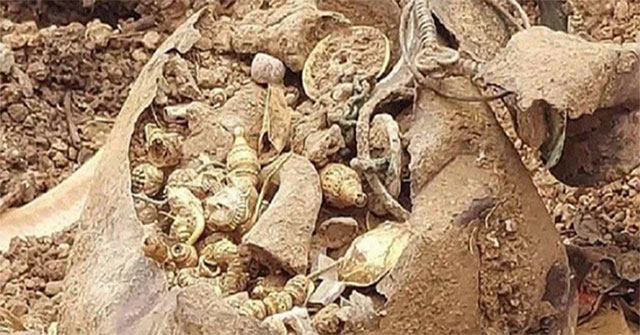
The first evidence of Gigantopithecus emerged in 1935 when anthropologist Ralph von Koenigswald stumbled upon an unusual specimen in a traditional Chinese pharmacy in Hong Kong. Labeled 'dragon teeth ,' von Koenigswald discovered the molars belonged to an unidentified extinct ape species that he dubbed Gigantopithecus.
Even today, only 2,000 fossilized teeth and four jawbones are the only evidence of their existence, meaning we have very little idea of what they actually looked like.
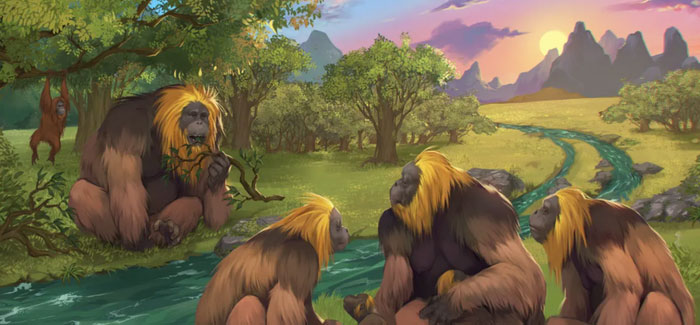
Blacki is sometimes referred to as the 'real-life King Kong' due to its enormous size, although it is more closely related to orangutans of the family Ponginae.
'The Jungle Book basically turned them into a big orangutan. We don't know how much G. blacki looked like an orangutan but it was definitely a Pongine,' said Associate Professor Kira Westaway, a researcher at Macquarie University whose new study investigated the extinction of G. blacki.
To learn about the species' disappearance, Westaway and a large team of researchers explored 22 caves in China's Guangxi Province to collect pollen, fossil, and sediment samples.
Their findings suggest that the environment was made up of dense forests with dense cover around 2.3 million years ago, which was ideal for G. blacki and another primate resident of the forest, the orangutan (Pongo weidenreichi).
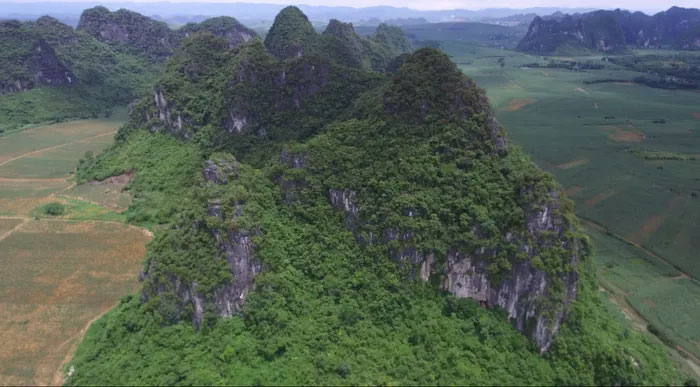
This drone photo shows some of the caves in China's Guangxi province where the remains of G. blacki were found.
However, around 600,000 years ago, the environment became more variable as the seasons increased in intensity, causing a change in the types of vegetation that grew in the forest. While this change suited orangutans, it posed a challenge for G. blacki.
' The environmental changes that began around 600,000 years ago really highlighted the adaptability of G. blacki compared to P. weidenreichi (orangutans). The dry climate at the time made it difficult for them to find fruit. G. blacki relied on less nutritious fallback foods such as bark and twigs while P. weidenreichi were more flexible in their fallback foods, eating buds, leaves, flowers, nuts, seeds and even insects and small mammals ,' Westaway explained to IFLScience.
Eventually, G. blacki's sheer size was its downfall. In times of change like this, you have to be quick and agile, which isn't easy when you're 3 meters tall and weigh up to 300 kilograms (661 pounds).
' The foraging range of blacki is limited by its size but P. weidenreichi moves nimbly under the canopy over longer distances and a wider foraging range. G. blacki stays in the forest while P. weidenreichi can move into more open forest environments. Surprisingly, G. blacki even increases in size during this time, while P. weidenreichi decreases in size and becomes a more agile species ,' she added.