Play dead, or thanatosis in scientific terms, is common in the animal kingdom, from birds, reptiles, amphibians, mammals, insects to fish. This behavior is often used as a survival strategy, stemming from the fact that most predators prefer to eat fresh meat due to fear of disease. However, in some cases, animals play dead not to avoid predators but for the purpose of feeding or mating.
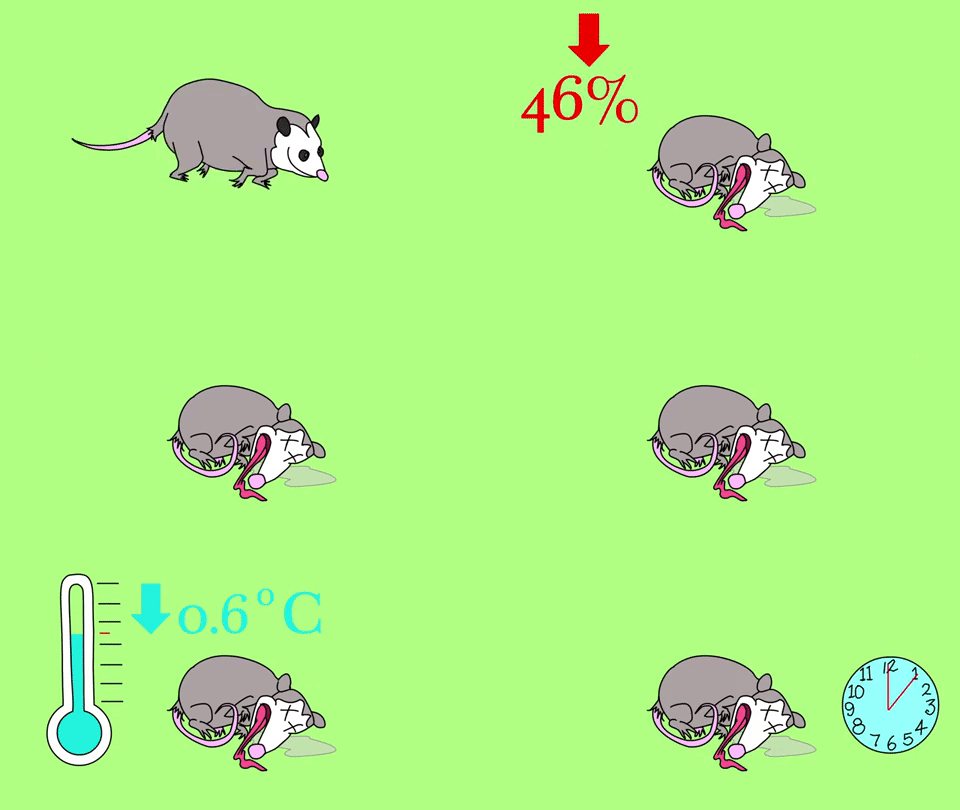
When it comes to natural "experts" at playing dead, the most famous is probably the North American grasping-tailed possum (Didelphis virginiana). When they feel threatened, they lie still, open their mouths, stick out their tongues, defecate, and secrete a foul-smelling liquid to trick predators into thinking their meat is "past its expiration date." Some other mammals, such as rabbits and guinea pigs, also play dead as a survival strategy.
You can see this typically in the Oposum, when attacked by a brutal predator and with no way to escape, they will curl up motionless, stick out their tongue, drool and expel an extremely foul-smelling solution from their anus.
These disgusting things made the attacker loosen his grip and leave, because no one wanted to eat an unappetizing meal. After 10 minutes, the opossum returned to its original state and was happy and carefree as if nothing had happened.

From lemurs, geckos, ants to amphibians, chickens, and even sharks, hundreds of species of animals use this method of pretending to be dead to escape. This phenomenon of pretending to be dead is called Tonic Immobility (TI) by scientists . TI has many variations depending on the animal species and different situations. But creating an unpleasant smell and lying in a strange position is the most common method used.

Several biological mechanisms underlie these displays. They originate in the parasympathetic nervous system, which controls the rest-and-digest cycle. In opossums, the parasympathetic nervous system causes their heart rate to drop by nearly half, their breathing rate to drop by a third, and their body temperature to drop by more than half a degree Celsius in an hour.
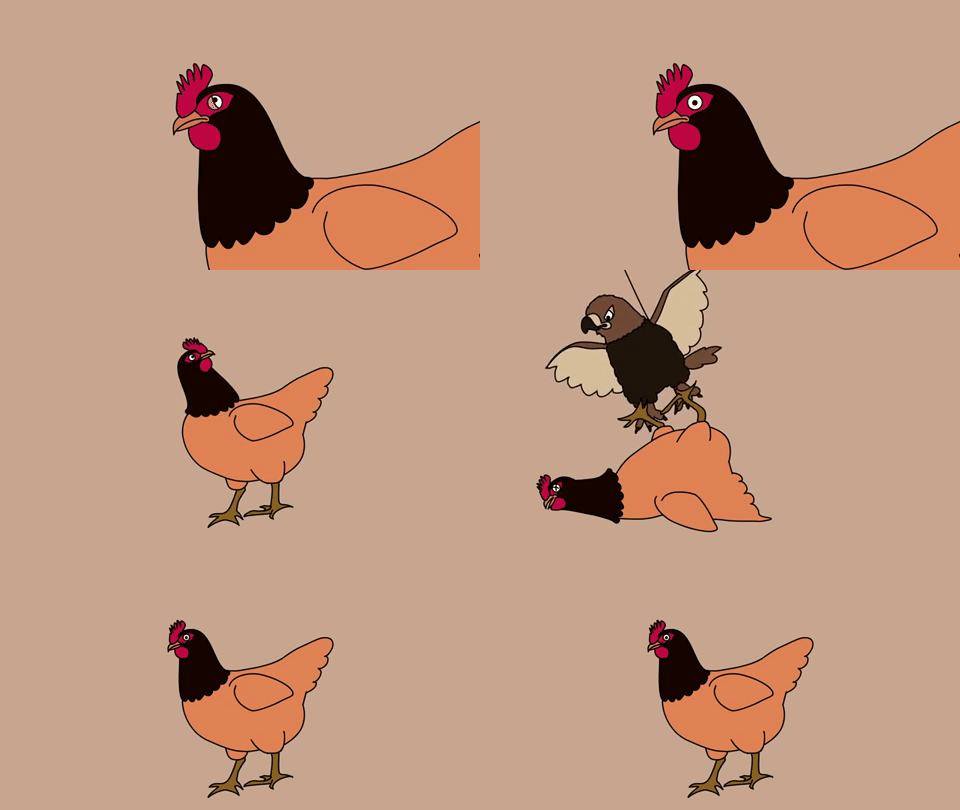
But controlling this phenomenon is not easy. These 'actors' must always be alert to their surroundings to see when it is safe to wake up. For example, chickens can sense the presence of predators around them. Scientists have tested this by using stuffed hawks and found that the chickens in the experiment woke up faster when the hawks moved away.
In addition to self-defense, some species use TI for other purposes. When the Ali fish feel hungry, they lie on the bottom of the tank, the spots on their bodies make them look like rotting dead fish. If a voracious fish comes near, the scammer will jump up and grab them.
In reptiles , death play is most commonly observed in snakes, including the grass snake (Natrix helvetica), the banded snake (Natrix tessellata), the Texas indigo snake (Drymarchon melanurus erebennus), and the snub-nosed snake (Heterodon platirhinos). When in danger, they lie motionless in a partially or fully supine position, with their mouths wide open and breathing slowed. Some species even vomit blood or produce a foul odor resembling rotting flesh.
The yellow-bellied toad (Bombina variegata) is a master of playing dead among amphibians. To avoid being eaten, it curls up on its back and raises its four legs, deliberately exposing bright yellow spots on its belly and feet, which frightens predators, as the bright colors of amphibians are often a sign of toxicity.

Purple toads show off their colorful bellies to fool predators into thinking they are poisonous. (Photo: Denis Ćoso).
In insects, many species only feign death after a predator has caught them, a phenomenon known as "contact immobility." For example, antlion larvae (Euroleon nostras) attacked by sparrows can remain motionless for up to an hour. "It's their last chance, because the sparrow will probably release the prey if it thinks it's dead ," biologist Ana Sendova-Franks from the University of Bristol in the UK wrote in a study.
Another example of contact immobility in insects is the Japanese dwarf grasshopper. When attacked by a frog, it plays dead by stretching its legs out in multiple directions, making it impossible for the predator to swallow. Dung beetles have also been recorded to play dead for over 20 minutes.
While most animals play dead to avoid being eaten, some use this method to attract prey. Examples include the Central American cichlid and Brazilian comb grouper. They pretend to be dead at the bottom of the lake to lure in small scavengers, then suddenly pounce on their prey.
Pisauridae spiders and Aeshna dragonflies are two rare examples in the animal kingdom that use the strategy of feigning death for mating or mating avoidance purposes.
Since female Pisauridae spiders can eat the male after copulation, the male spider often gives his mate a food packet, such as a few flies 'wrapped' in spider silk, to reduce this risk. This gives him a chance to escape after mating. However, in some cases, the male spider does not run away but plays dead. Once the female has eaten the food packet and her hunger has subsided, the male spider will rise to try to mate again. Sometimes this attempt is successful, sometimes the female rejects it and attacks.
In stark contrast, Aeshna dragonflies use a strategy of playing dead when they don't want to mate. To avoid aggressive males approaching them while flying, female dragonflies will stop flapping their wings and fall to the ground.

Humans can also experience TI when faced with a frightening situation, which explains why some victims do not run or fight but instead freeze in the face of danger. Studying TI not only helps us understand more about natural defense mechanisms, but also about ourselves.