In a remote area of Alaska, where the moose population is only about 200, when wolves first appeared, many predicted that they would quickly leave once all the moose were gone. However, the opposite has happened, and the wolves have remained, looking for alternative food sources.
Pleasant Island in Alaska is a place that contradicts its name. The island is extremely cold, just over 12 square miles in size, and inhabited. But it has a remarkably rich and diverse ecosystem, with moose, otters, red squirrels, and even brown bears. But in 2013, the island got a new addition: wolves.
When wolves invaded the island in 2013, it accidentally created the perfect ecological observation environment for scientists.
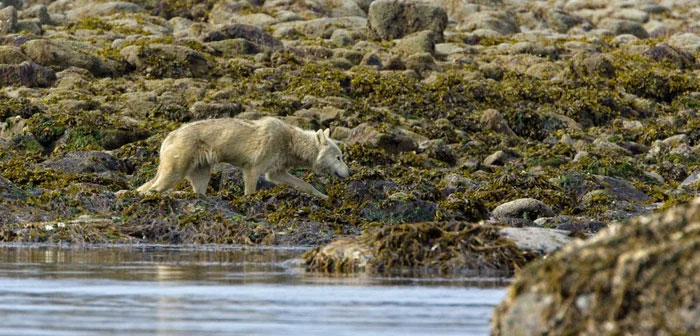
Instead of leaving, the wolves here continue to stay in search of other food sources.
"This provides a great opportunity to study wolf predation dynamics, " said Gretchen Roffler, one of the study's authors. "We were interested in how the newly settled wolf population would impact the moose population and predicted that the wolves might consume all the moose on the island, then move to another area because it is only 1.5km from the mainland."
The first part of the prediction came true. The elk herd of about 120-200 animals was drastically reduced. But instead of moving on to greener pastures, the wolves remained on the island and turned their attention to an unlikely prey: sea otters .
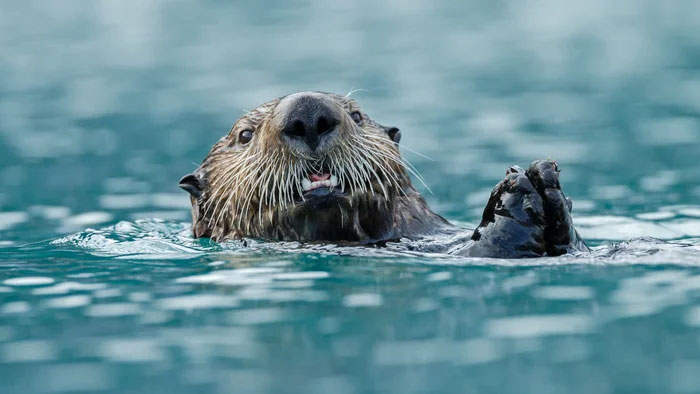
Sea otters are the next target of wolves after the deer population here plummeted.
Sea otters are the top predators in the island's nearshore ecosystem, while wolves are the top predators in the island's terrestrial ecosystem. So scientists were surprised by the phenomenon. "It's amazing that one top predator is eating another top predator," said Taal Levi, an associate professor at Oregon State.
Gretchen, Levi, and colleagues tracked a number of wolves with GPS collars and analyzed them. They found that in 2015, moose was the wolves' main food, making up 75% of their diet. By 2017, the wolves had switched to eating sea otters (making up 57% of their diet), while moose made up just 7% of their diet. The pattern held through 2020, when the study ended.

Wolves switched to eating sea otters (which make up 57% of their diet) since 2017.
The sea otter itself has had a very difficult time in the region. During the 19th and 20th centuries, sea otters in the region were hunted by fur traders and were essentially driven to the brink of extinction in the region.
But it is only in recent decades, thanks to legal protection for sea otters, that their populations have gradually recovered.
However, researchers did not expect that wolves - a land-dwelling species - would become adept at eating sea otters - a species that, as their name suggests , spends most of their time at sea.
"Wolves will eat otters, but they will also actively pursue sea otters when they come close to shore. Sea otters are rarely attacked by wolves when they are swimming in the ocean ," Levi noted.
Wolves are often seen patrolling the shores and rocky outcrops of Pleasant Island. GPS data confirms that in recent years, they've been spending a lot of time roaming the intertidal zone, as if searching for something—and they are: They're looking for sea otters to ambush.
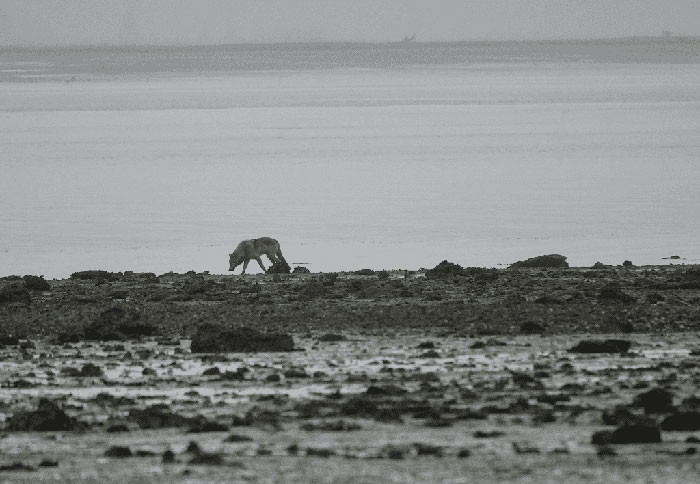
Wolves spend most of their time at sea searching for food.
Sea otters often cling to rocky outcrops to save energy, Roffler says. But this makes them vulnerable to predators because they are slow and awkward on land — and wolves will quickly seize the opportunity to prey on sea otters.
'We have collected evidence of wolves killing sea otters by ambushing them as they move on land or in shallow water,' Gretchen added .
'This new twist on the ecosystem makes for a very interesting case study,' Gretchen continues .
'There have been previous studies on the impacts of marine predators on sea otter populations, but to date there has been little attention paid to the impacts of terrestrial predators on sea otters. This interaction is relatively infrequent, but has had profound impacts, at least on Pleasant Island.'
It is currently unclear how (or if) otters are adapting to this. The biggest impact that may be seen is a change in behaviour that forces sea otters to spend more time at sea – the effects of which could be stressful in the long term.

The wolf's diet is changing.
But overall, the researchers didn't expect wolves to have a big impact on sea otter populations. This surprising finding about wolf diets certainly requires more research to better understand the interactions in this ecosystem. Levi says they're working on exactly that.
' We are now increasingly following up the sea otter and wolf story with additional field studies, including one by PhD student Ellen Dymit, comparing land-based study sites with and without sea otters along the same stretch of sea otter population expansion.'