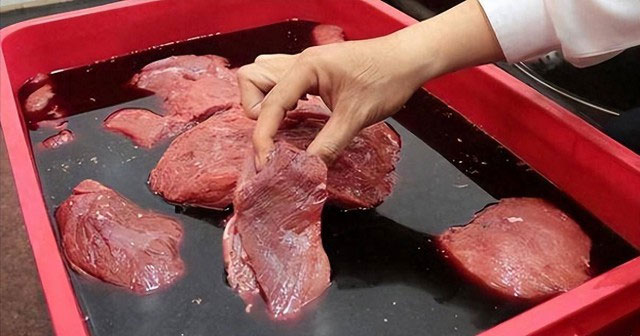
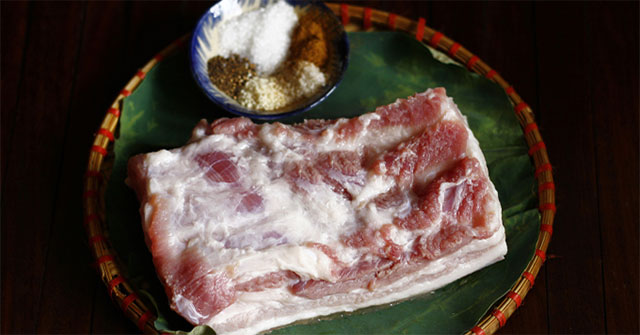
The expiration date (or "date") is not necessarily a date when the food goes bad, but rather a way for consumers to decide whether or not to eat it . In fact, many products can still be eaten after their expiration date.
The shelf life of food is the period of time during which the food can be kept at its best quality as recommended by manufacturers to consumers.
In the US, the actual meaning of expiration dates varies widely , especially since there is no federal oversight over labeling.
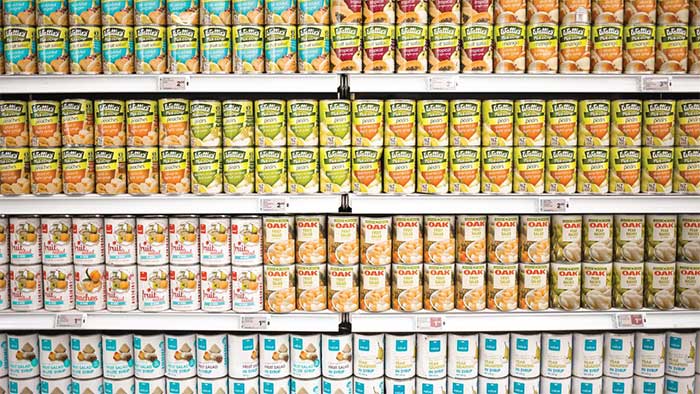
Many people often throw away expired food, but according to food scientists, a large portion of food considered trash is completely edible - (Photo: GALLERY STOCK).
For example, milk in Idaho may be sold by grocery stores 10 days later than milk in neighboring Montana. Some states, such as New York and Tennessee, do not require expiration date labels at all.
Expiration date labels in the US have been a mess since they first appeared in the 1970s. At that time, most Americans had begun to rely on grocery stores to buy food, and on manufacturers to know about food freshness.
Now, 'most consumers think these labels are about safety,' says Emily Broad Leib, a Harvard law professor and founding director of the Food Law and Policy Clinic.
A 2019 study Leib co-authored found that at least 84% of Americans throw away food close to the date listed on the package.
However, quality and safety are two very different things . Many products are edible, even long past their expiration date.
Broad Leib points to milk, one of the most wasted foods in the world. Milk that has gone sour or curdled can be perfectly safe to consume, she says. In fact, it can be used in pancakes, soft cookies, and skin-softening face masks.
'Milk is one of the safest foods on the market because the pasteurization process kills all the germs,' she says.
Leib's general rule for other refrigerated items is that anything that goes into the stove or oven after its expiration date is safe to eat, as long as it doesn't smell or look weird. In other words, cooking is a "killing step" for harmful "interlopers ," if done properly.
Food is considered unsafe if it carries pathogens such as listeria, E. coli, or salmonella. These pathogens get into food through contamination, such as when water contaminated with E. coli bacteria is then used to irrigate vegetables.
However, there are some foods that pregnant women should avoid once they have passed their "use by" date , including cold cuts, raw fish, sprouts, and unpasteurized milk and cheese.
These can contain listeria (which is invisible to the human eye) and are often cold-produced, meaning they don't go through a step to kill the bacteria before being served, according to Brian Roe, professor at the Ohio State University Center for Food Innovation.
According to The Atlantic , food waste has long been a major climate problem. The annual emissions from rotting food in the US are roughly equal to the emissions of 42 coal-fired power plants.
On the other hand, with the devastating impact of inflation, it is also a problem for the consumer's wallet.
People waste about $1,300 a year on 'expired' food, said Zach Conrad, an assistant professor of food systems at the College of William and Mary.
Food waste nonprofit ReFED estimates that 300 million pounds of food are needlessly thrown away during Thanksgiving in the United States.