Life on Earth has a history of development and evolution of 3.8 billion years. On Earth, there are millions of species, without exception, all species are in large food chains and food webs.
In this large network, only the members at the top of the food chain have no natural enemies. Of course, food chains and food webs are fundamentally different in different ecosystems, so we can discuss them separately.
1. The top predators in the ocean
The ocean covers about 70% of the Earth's surface, with an average depth of more than 3,000 meters. In such a world, one can imagine the biodiversity. The most famous predator in the ocean is the shark, through many films and television shows. But sharks are also divided into many species, in the world there are 8 orders and 25 families, there are about 300 species of sharks. The most famous is the great white shark, which has been recorded in the wild as attacking ships and humans, and is also one of the most ferocious sharks.
The strongest fish in the marine ecosystem may be these big and ferocious sharks, but if you add mammals, there will be more powerful creatures and they are the killer whales, the most intelligent animals in the ocean. There is a large class of mammals in the marine ecosystem, they are whales , mainly divided into baleen whales and toothed whales. Large whales like the blue whale are all baleen whales, they mainly eat krill and plankton.
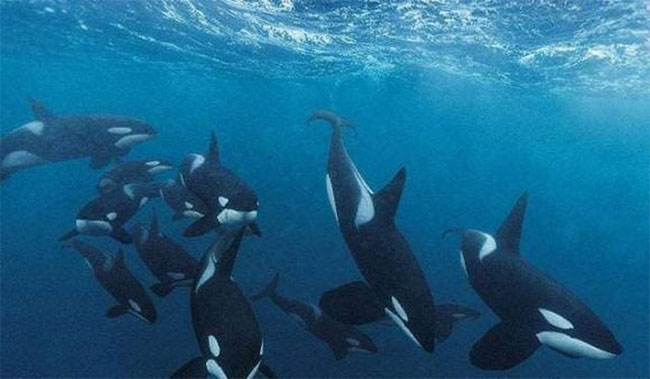
Killer whales
But like most sharks and killer whales, sperm whales are toothed whales , they can hunt and bite their prey. The killer whale's diet is very rich, and some large baleen whales can become food for killer whales. The way killer whales hunt large baleen whales is also very simple, that is, prevent them from surfacing to breathe, and eventually suffocate to death. Even the extremely ferocious great white shark is no match for the killer whale, it is impossible that this is an intelligence suppression.
For example, not long ago, a 15-meter blue whale entered the breeding grounds of killer whales, and was eventually surrounded and hunted by 75 killer whales. In the marine ecosystem, killer whales are top predators with no natural enemies, and of course the great white shark is also taken into account.
2. The top man-eaters of the African savannah
When it comes to Africa, the first impression is an animal paradise. Most children like to see the animal world and read stories about animals in Africa. On the African savanna, lions are considered the absolute top predators. But in fact, lions are relatively successful on Earth and they are considered relatively top predators in their area, generally speaking, they have very few natural enemies.
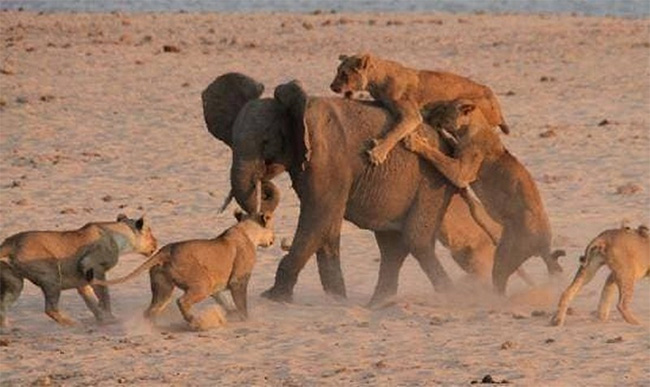
On the African savannah, the lion is considered the top predator.
Only spotted hyenas compete with lions on the African grasslands. Both are pack animals and have food interactions. Spotted hyenas will steal the lions' kills. Of course, lions will also steal spotted hyenas when there are more of them. The two compete with each other and are not natural enemies.
In fact, even if they are herbivores , if they are too large , they often have no opponents. For example, giraffes and elephants on the African grasslands, their huge size will generally not become prey for other animals. Of course, in special cases, lions will also hunt young or old giraffes and elephants, but they cannot be considered natural enemies.
3. Top predators in South America's Amazon rainforest
The Amazon rainforest is the largest tropical forest in the world, covering an area of 5.5 million square kilometers and spanning nine countries and regions. In such a world, it is conceivable that there are a large number of animal and plant resources, and the Amazon River Basin is a paradise for animals. Although it is a paradise for animals, it is a hell for humans, and even the slightest mistake can take our lives.
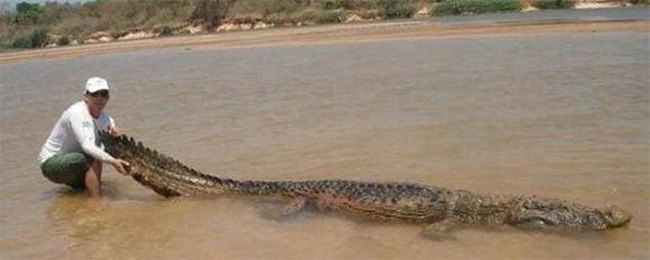
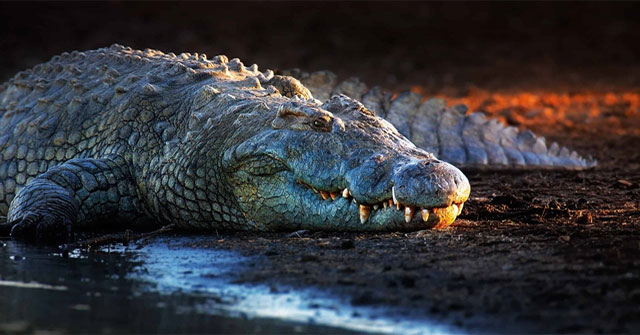
Caiman crocodiles are a formidable predator in the Amazon.
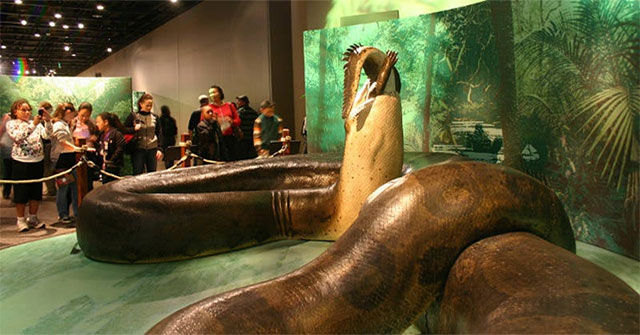
Speaking of the top predators in the Amazon, we have to mention the heaviest snakes in the Amazon basin, the anaconda, also known as the green python . In the Amazon rainforest, the anaconda can be considered the top predator and has no natural enemies. But in fact, there are still animals that can hunt green pythons, such as the caiman (crocodile family) of the Amazon River, which often attacks when these pythons are not fully grown.
4. Natural enemies have also existed in human evolutionary history.
Different species live in different ecological environments and they hunt and kill each other in the historical evolution, finally forming a stable food chain relationship. The existence of natural enemies can well control the population under it, which greatly reduces the pressure on the ecosystem.
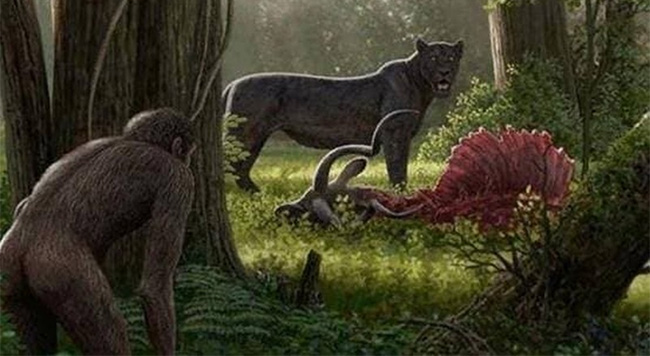
In the process of human development and evolution, there once existed a natural enemy, which was the cat.
Humans have reached the top of the food chain in the process of evolution, even jumping out of the food chain system and no longer have our natural enemies in nature. But in fact, in the process of human development and evolution, there was once a natural enemy, which is the cat . About 6 million years ago, the ancestors of humans and chimpanzees parted ways, after the process of development and evolution, Australopithecus (the genus of Australopithecus - the first form of ape) appeared 3 to 5 million years ago.
According to the research results of paleontologists, they believe that in the daily life of the Australopithecus species, we must always be vigilant against the attacks of predators such as cats, because compared to the ancestors of some baboons, Australopithecus is easier to catch. This also means that humans had natural enemies in the Australopithecus period. But unfortunately, this cat species was quickly eliminated by nature. Although ancient cats had very large fangs and claws, they were not as flexible as they are now and appeared to be larger.
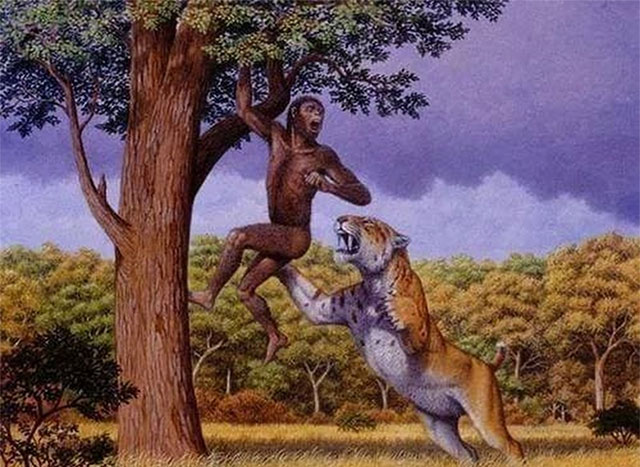
We must always be on guard against attacks from predators like cats.
Millions of species on Earth form a stable food chain, which is very important for the Earth's ecosystem and energy can be transferred stably from bottom to top. For predators at the top of the food chain, they have no natural enemies, but the population is relatively small. At the same time, with the increase and expansion of human activities, the large-scale species at the bottom of the food chain will be less affected, while the predators at the top of the food chain may face the risk of extinction.