The Reevo Bike electric bicycle from Beno Technologies promises to be a new hit in the future electric bicycle market.
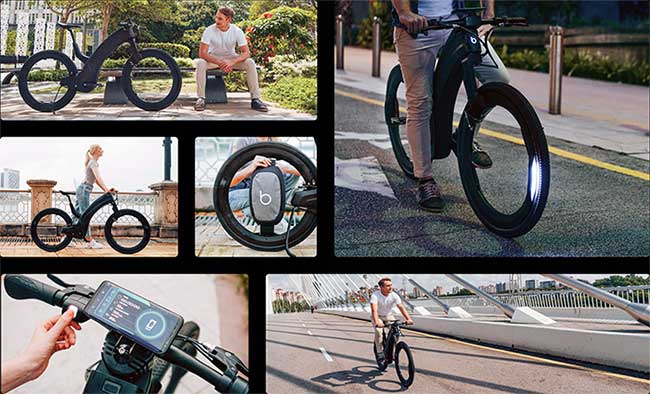
According to recently revealed prototype photos, Reevo is an electric bicycle that initially looks quite similar to traditional bicycles. Developed using beno technology, it boasts a sleek, futuristic design that seems straight out of a science fiction movie.

At first glance, the electric bicycle looks quite similar to traditional bicycles. (Photo: @Beno Technologies).
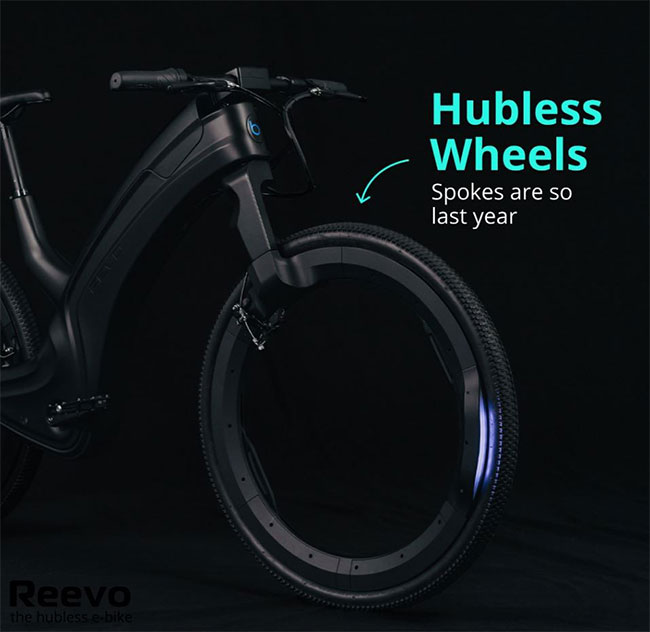
But the strangest thing is that the vehicle has absolutely no spokes on the wheels, not even wheel hubs. The tires rotate on a bearing along a fixed rim. This is considered a pinnacle of design technology in terms of pure engineering.
The decision to remove the wheel arch and spokes wasn't disclosed in detail, but it's believed to be a way to create some kind of spare storage space, perhaps for a tire, while also adding to the car's aesthetic appeal and creativity.
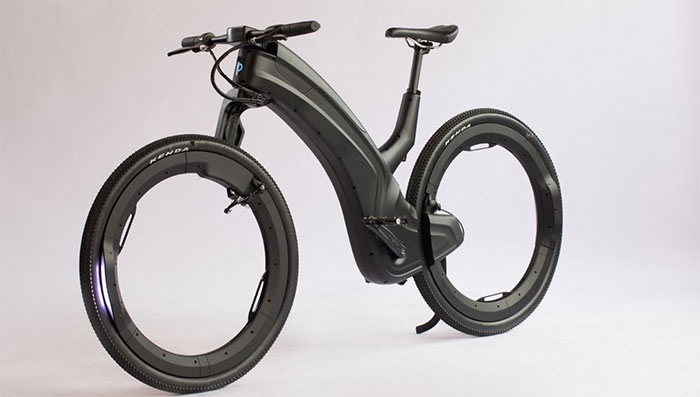
This bicycle has absolutely no spokes on its wheels, not even a wheel hub. (Photo: @Beno Technologies).
Engineer Abby S of Beno Technologies said: "This is a truly unique design. I don't think I've ever seen a bicycle like this before. And I can easily put my hands under the wheels."
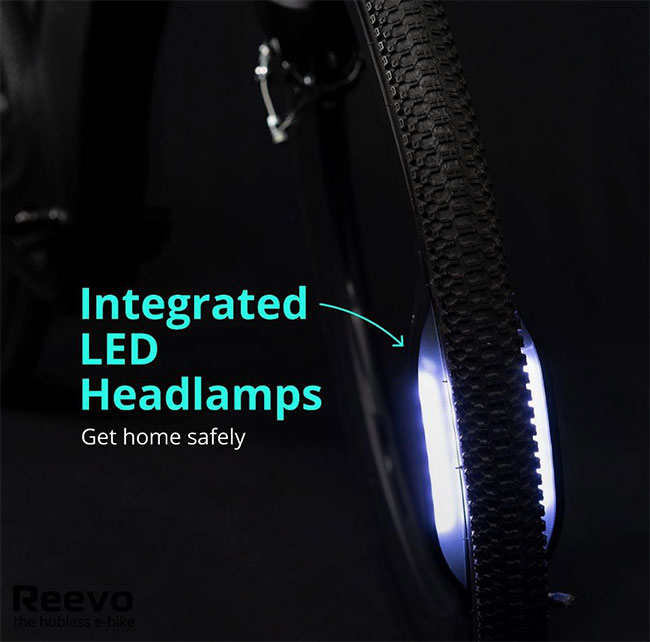
The taillights/turn signals and headlights are also integrated into the wheels, thus freeing up more space on the vehicle. Integrated light sensors detect darkness, allowing the headlights and taillights to automatically turn on and off flexibly depending on the time of day.
The taillights/turn signals and headlights are also integrated into the wheels. (Photo: @Beno Technologies).
In addition, the car also has dedicated turn signal lights, a highly advanced technology.
To operate, the Reevo Bike uses a removable 48V battery pack, located on top of the tubular frame. Other components are neatly packaged under the frame. The battery will fully charge in as little as three hours, and there are also very few visible cables on this electric bike.
Because such a beautiful bicycle would obviously attract a lot of attention and not rule out thieves, it is equipped with a unique anti-theft security sensor system called the Triple Barrier Anti-Theft System, which is three times more sensitive than similar technologies currently available.
Additionally, Reevo Bike is equipped with a one-touch fingerprint sensor for locking/unlocking the bike—a common security authentication technology found on many smartphones today.
The car has a motion detection feature that tracks movement via GPS. (Image: @Beno Technologies).
In short, one of the best things about Reevo Bike is its superior, advanced security features.
Additionally, the bike also features GPS-based motion detection. This means that in worst-case scenarios, users can track the bike on their phones within a designated area. Therefore, the bike's specific location can be monitored anytime, anywhere.
The car is equipped with an anti-theft security sensor system. (Photo: @Beno Technologies).
Currently, the specifications for the electric motor of the bike have not been revealed. However, there is information suggesting that Reevo Bike may equip it with a 250W motor for the European market or a more powerful 750W motor for the US market.
The price and official release date of the Reevo Bike have not yet been revealed, so tech enthusiasts may have to wait a little longer.
- The Japanese reveal 5 simple secrets to living a long and healthy life.
- Why does gravity exist?
- This terrifying snake species specializes in killing toads to eat their internal organs.