The stove is a type of cooking equipment that plays an important and indispensable role in every family. Currently , there are many popular and preferred types of stoves. These include gas stoves, induction cookers or electric stoves.
Each type of stove has a different form and operating mechanism . First of all, with gas stoves , which are also considered the oldest and most traditional type of stove. Users will turn on the stove through an electronic button or mechanical knob, at this time, gas from the tank will go through the gas pipe, up to the stove's nozzles under the fire divider. At the same time, a piezoelectric ceramic part or an electronic circuit will create a spark, catching the gas stream. From there, the gas will ignite into a flame, distributed to the nozzles.
With induction cookers and electric cookers, the operation process is somewhat simpler, users mainly control by electronic buttons, sensors. In electric cookers, when there is electricity going into the device, the cooker uses heat from the heating plate, the maso wire will be heated, from there the heat is transferred to the glass surface and then heats the pot, pan, cooking food. In induction cookers, it depends on electromagnetic induction through the use of Fuco electricity, to heat the bottom of the pot.
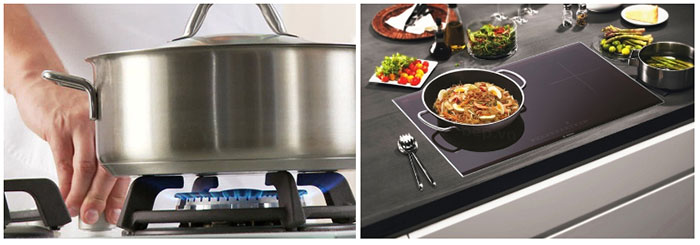
Gas stoves, electric stoves and induction stoves are popular in many households. (Illustration photo).
Report on safe stoves
Nowadays, many families are gradually switching from gas stoves to electric stoves and induction stoves because of their aesthetics and safety. In addition, electric stoves and induction stoves are also considered environmentally friendly. According to The Washington Post , about 2/3 of Americans cook with electric stoves.
However, in reality, are electric and induction cookers really safer than gas cookers? A report by the US National Fire Protection Association (NFPA) shows the opposite result.
Specifically, the NFPA report in 2020 wrote that households using electric and induction cookers had a fire rate 2.6 times higher than those using gas stoves. Equally surprising is that the death rate in accidents in households using electric and induction cookers was 3.4 times higher than those using gas stoves - and the injury rate was nearly 5 times higher.
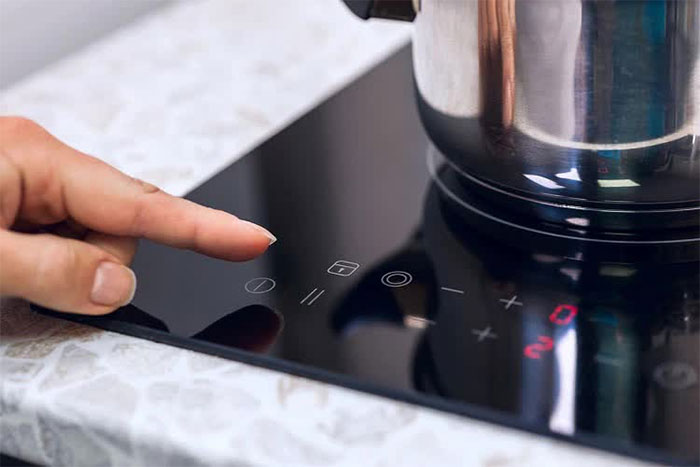
In the US, reports show that induction and electric stoves are inherently no safer than gas stoves. (Illustration photo).
The report also said that in the US, between 2014 and 2018, cooking activities caused the highest number of home fires and caused a relatively high number of injuries.
However, the above figures are only recorded in the US, reflecting in part the safety of stoves in today's households. In reality, all types of stoves, whether traditional or modern, have the same potential risks if users do not know how to use them properly or do not understand the safety precautions when using them.
Tasting Table website emphasizes that common mistakes that can lead to incidents or accidents when people use the stove include turning on the stove without human supervision, forgetting to turn off the stove, or placing inappropriate items on the stove.

All types of stoves have the same potential risk of accidents if users do not know how to use them properly (Illustration photo)
Notes when using the stove for more safety
With electric stove, induction stove
1. Completely disconnect the stove from power when not in use.
As mentioned above, the new generation of induction cookers and electric cookers are mainly controlled by electronic and touch buttons. This is an advantage but also has some potential risks.
Electronic and touch buttons not only help start the stove but also help adjust the heat level. When cooking is finished, if there is no need to use it anymore, many families just turn off the stove with these buttons, but according to experts, that is not enough.
Due to the induction nature, not only human hands but also any other object or animal feet when touching it can also cause the stove to start. There have been many incidents caused by such accidental cases, causing objects to catch fire or even causing burns to people.
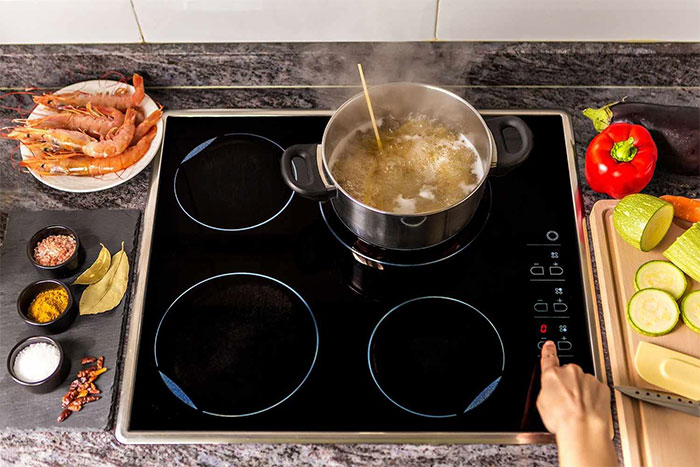
Don't just turn it off with the buttons, when not in use for a long time, completely disconnect the power to the electric stove or induction cooker. (Illustration photo).
Therefore, experts advise that if you do not need to use an electric stove or induction stove for a long time, for example overnight or a few days when no one is in the family, it is best to completely disconnect the power source by unplugging it or turning off the circuit breaker.
2. Use the stove at the right temperature
Do not use an induction or electric stove at the highest temperature continuously for a long time because this can increase the amount of electricity the device consumes and cause the stove to corrode more quickly.
Users should only use the stove at maximum temperature for the first few minutes of the cooking cycle, then switch to medium or low mode.
In addition, the stove also has many other modes to ensure safety, typically the "child lock" feature. Users, especially families with small children or pets, should use this feature regularly.

Limit the use of the highest heat level on induction cookers and electric cookers. (Illustration photo).
3. Choose the right pot
Users should equip themselves with a separate set of specialized pots for use on electric and induction cookers, to help cooking be both efficient and not waste electricity.
Specifically, pots for induction cookers should be made of stainless steel, cast iron, iron or stainless steel. In addition, priority should be given to choosing types with flat bottoms. The uneven bottom of the pot when decorated too much will also affect the ability to absorb and transfer heat from the stove to the pot, pan. From there, the food in the pot will be unevenly cooked, causing inconvenience during use.
When choosing a pot for an induction or electric stove, you should also consider the size of the stove. Do not buy a pot that is too big or too small for the stove.
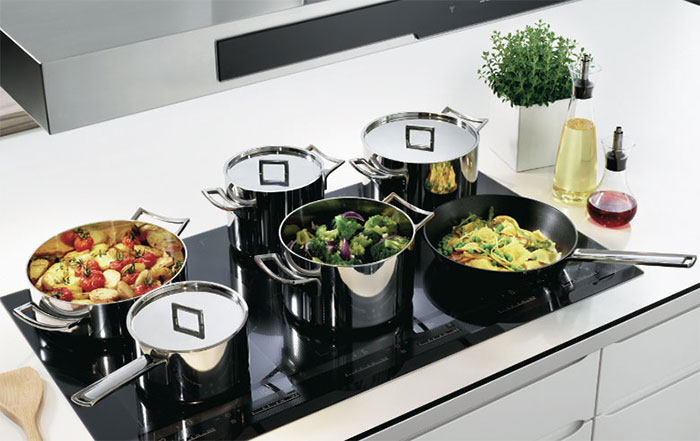
Pots for induction cookers should be made of stainless steel, cast iron, iron or stainless steel. (Illustration photo).
With gas stove
1. Close the gas cylinder valve when finished cooking.
There is one thing that distributors or gas tank and gas stove installers always remind users to ensure more safety during use. That is to close the gas tank valve after finishing cooking.
This not only helps ensure safety, but also prevents gas lines from wearing out, causing gas to leak out, and prevents gas from escaping into the air, causing waste.
The implementation is extremely simple as follows: After completing the cooking cycle, the user proceeds to turn off the gas cylinder valve, then let the fire on the stove burn out and then turn off the stove. It is necessary to ensure the correct cycle to ensure that the excess gas is consumed, no gas leaks outside the gas tank. In addition, it also helps that the next time you use it, when you turn on the stove, there will be no sudden flare-up.
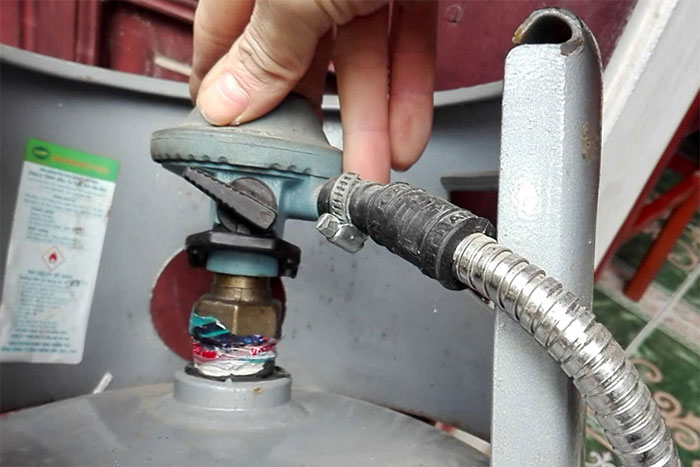
After finishing cooking, users should close the gas cylinder valve to ensure safety. (Illustration photo).
2. Place the stove in a safe location
As a type of stove that emits direct fire, the location of the gas stove is extremely important, directly affecting the safety of the user. Some basic criteria for the location of the gas stove include: the location must be airy but must avoid direct wind; the stove surface should not be made of flammable materials such as wood, bamboo or rattan but should be made of stone, cement or glass; the gas stove must be at least 1m from the ceiling, at least 15cm from the wall or other obstacles, away from objects, materials that are flammable or explosive, away from other electrical equipment; the gas tank must be placed vertically and lower than the gas stove, and also away from other power sources.
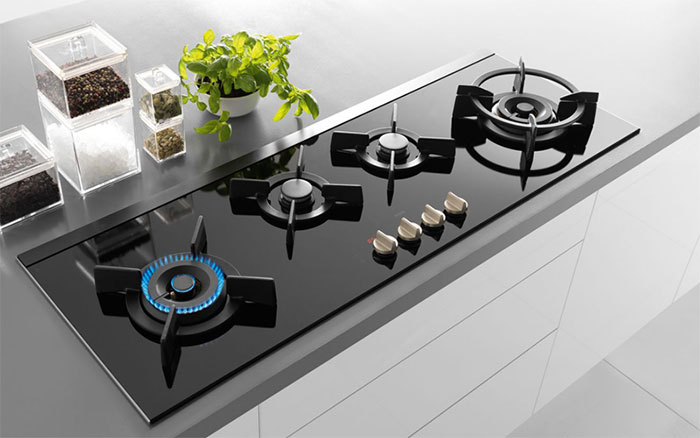
The location of the gas stove should be away from flammable objects. (Illustration photo).
For gas stoves, electric stoves and induction stoves, experts advise users to clean, check and maintain periodically, about every 6 months. If there is any damage, it needs to be repaired or replaced promptly.