It turns out that stepping on peanuts is not as harmful as many people think.
Peanuts (Arachis hypogaea) or peanuts are grown quite a lot in rural areas of Vietnam, with high economic efficiency, increasing soil fertility, and requiring little care. Peanuts can be grown twice a year, in the winter-spring crop and the summer-autumn crop; in the midlands where the land is high and well-drained, people can grow them in the autumn-winter crop.
In the world, there are more than 100 countries growing peanuts. Peanuts are the second largest crop after soybeans in terms of area and output. Peanuts are no longer strange to Vietnamese people. This is a type of grain grown in most localities and brings an output of 530,000 - 550,000 tons per year.
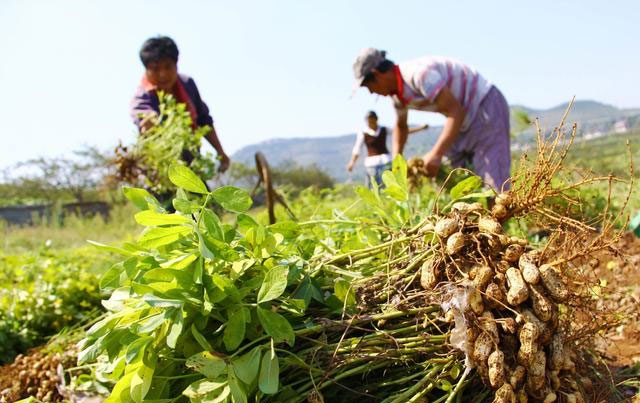
In the world, there are more than 100 countries growing peanuts due to high economic efficiency. (Photo: Sohu)
In China, peanuts are planned as one of the main crops in many localities. China is the world's largest peanut producer, mainly crushing peanuts for oil.
According to USDA, China is the second country after India in terms of peanut growing area with 5.1 million hectares, accounting for 22.4% of the world's total peanut growing area, but its peanut output ranks first in the world at 15.1 million tons.
Strange action in peanut field
In China, every time the peanut season comes, a very strange scene often occurs in the peanut fields. That is, farmers compete to step on the peanut plants . Why do they do this when the plants are about to bear fruit? Does this action have another meaning?
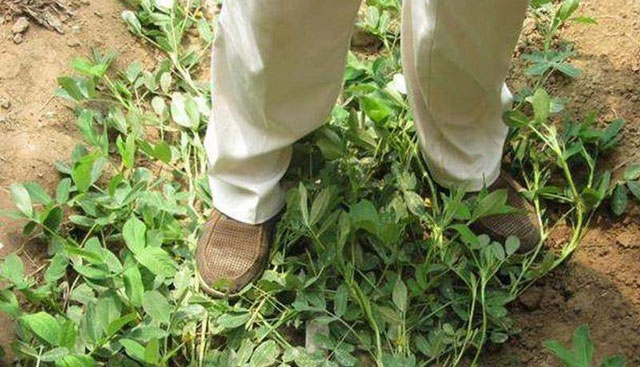
Every time the peanut season comes, farmers compete to step on the peanut plants. (Photo: Sohu)
According to peanut research experts, this method of farmers is not actually harmful but has 3 effects .
Firstly , it helps shorten the distance between the flower and the ground. Stepping on a peanut plant does not cause it to break because the stem is soft and flexible. On the contrary, when the peanut plant is stepped on close to the ground, it will increase the contact area, making it easier for pollen to be transported and promoting better fruit set.
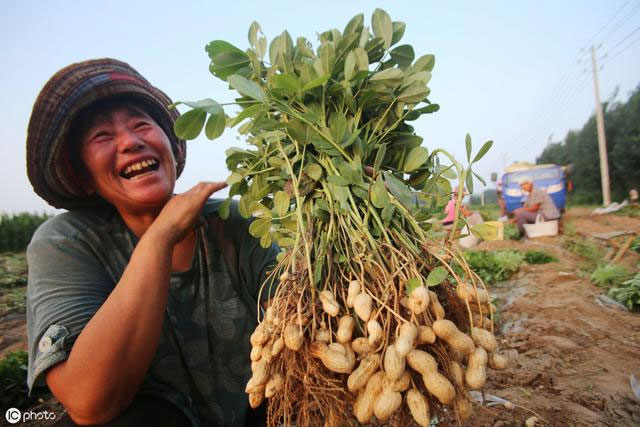
It is not harmful for farmers to step on peanut plants. (Photo: Sohu)
Second , control the growth rate of peanuts . Peanuts are like sweet potatoes and potatoes, their plants grow above ground and their fruits grow underground. This is not only a symbiotic relationship but also a competition for nutrients. If peanuts grow too fast, the fruit will lack nutrients and be of poor quality. For other crops, the treatment method is pruning, but for peanuts, it is trampling. Trampling on the trunk will damage the branches and leaves to a certain extent, but it will create conditions for nutrients to concentrate on the roots.
Third , promote the fruiting process. The way peanuts grow is somewhat special. Peanut flowers (usually yellow) grow on a rather low stem. After pollination, the flowers develop into a long stem tube, growing towards the ground. At the top of the stem tube are peanut tubers (fruits), which will penetrate straight into the ground and then hide there to develop. During the growth process, this post-pollination flower needs to grow horizontally above the ground. If the peanut plant grows too high, the pollinated flower will have difficulty sticking to the ground for the fruit to develop. Stepping on the plant can lower its height to the ground and thus the fruiting flowers can easily penetrate the ground, helping to achieve high yields.
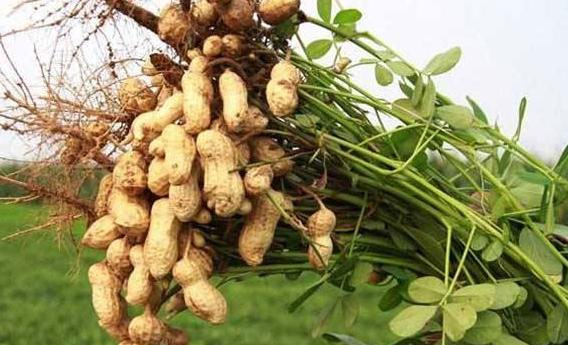
Trampling on peanut plants can help them increase their yield. (Photo: Sohu)
Best time to plant peanuts
In the book on plants, peanuts are considered a valuable source of protein and vegetable oil (second only to soybeans). Peanuts are a nutritious food. In 100g of peanuts, there are: water 7.5g; protein 27.5g; lipid 44.5g; glucid 15.5g; fiber 2.5g; ash 2.5g; minerals: Ca 68mg; P 420mg; Fe 2.2mg; Mg 176mg; Mn 2.1mg; K 658mg; Zn 3mg; Cu 0.7mg; vitamins: vitamin 5, 0.44mg; B2 0.12mg; pp 16mg; E 1mg; leucoanthocyanic substance has a hemostatic effect.
Peanuts are considered a valuable source of protein and vegetable oil. (Photo: Pixabay)
Oriental medicine believes that peanuts have the effect of strengthening the spleen and stomach, benefiting qi, nourishing blood and qi, stopping bleeding, moistening the lungs, eliminating phlegm, laxative, and increasing milk secretion. Peanut oil is suitable for people with poor appetite, malnutrition, stomach pain, cough with phlegm, bleeding, and postpartum women with low milk supply. Research shows that people who regularly eat peanuts are less likely to suffer from cardiovascular diseases. Peanuts have a richer source of protein than any other vegetable or bean. Therefore, this is a very necessary food for children's development, balancing nutrition for vegetarians and people with a low-meat diet.
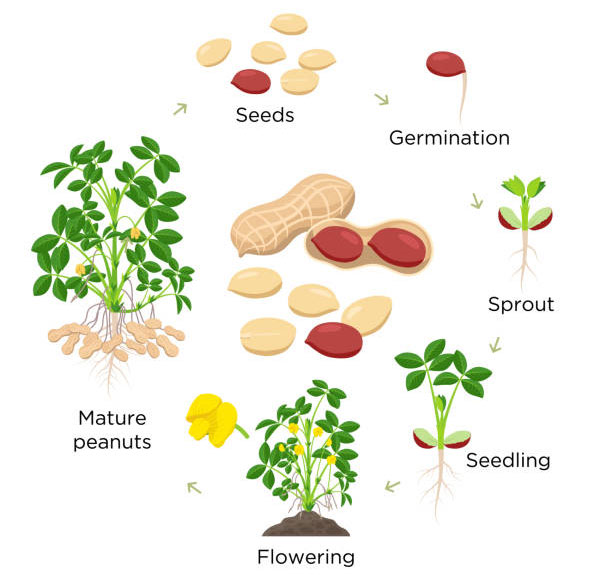
Peanuts are commonly grown by sowing seeds because of their high economic efficiency, low maintenance and widespread use in daily life. They are a short-term industrial crop, easy to grow, suitable for crop rotation, soil improvement and play an important role in the process of crop restructuring.
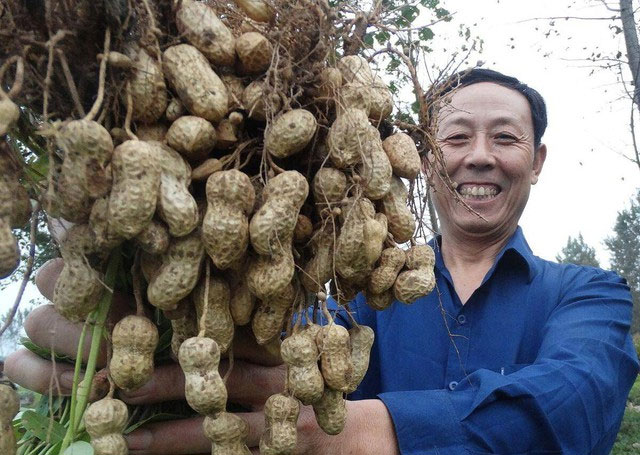
Peanuts are commonly grown by sowing seeds because of their high economic efficiency. (Photo: Sohu)
Peanuts have a growing period of about 100-130 days. Peanut tubers are the fruit of peanut plants that begin with flowering, pollination and fertilization on the ground to form fruit rays, then quickly penetrate the ground at a depth of 3-7 cm and swell horizontally to form tubers. In peanut growing techniques, it is necessary to create conditions for peanuts to flower concentratedly (the peak flowering period is only about 10-15 days) and create favorable conditions for fruit rays to develop.
The best time to plant peanuts for growth and development is winter-spring and summer-fall.
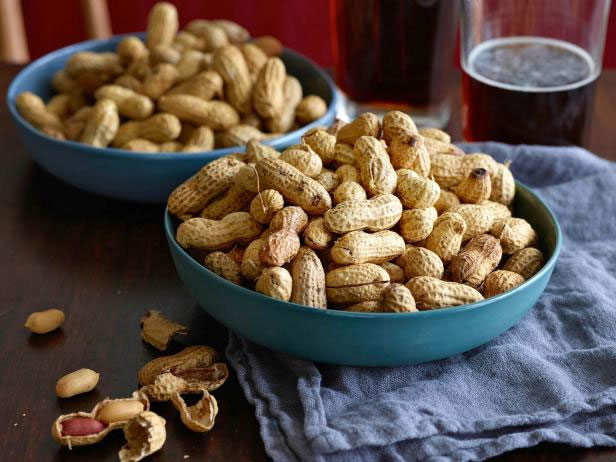
Peanuts have a richer source of protein than any other vegetable or bean. (Photo: Sohu).
The best time to step on peanuts is in the sunny afternoon, after 3pm . Because the peanuts are softer and more flexible after a morning of sun exposure, they will not break when stepped on. At this time, farmers can step on the peanuts straight down.
According to farmers, stepping on peanuts is laborious and can only be done if the quantity is not large, but this method does not harm health, saves pesticides, and especially does not require chemical agents to help peanuts achieve good yield. Chinese experts, after learning this information, also said that stepping on peanuts after the flowers are pollinated is a good tip to do.