LiDAR technology has revealed a cluster of great structures including a 25m high pyramid in the middle of the Mexican jungle, belonging to a Mayan city that has been lost for 1,000 years.
Research led by Mexico's National Institute of Anthropology and History (INAH) has revealed a Mayan city never before discovered by modern humans hidden beneath the dense canopy of the Balamkú Ecological Reserve in Campeche state.

Hundreds of large and small structures of the ancient city appear under LiDAR images - (Photo: INAH).
According to Heritage Daily, the city is called "Ocomtún" by scientists , meaning "stone pillars", because many cylindrical stone pillars have been discovered throughout the inner city area.
Previously, INAH had used LiDAR, a remote sensing technique that uses lasers to penetrate thick tree canopies and other natural obstacles, to search for hidden traces. However, discovering such a great city was something they had not dared to imagine before.

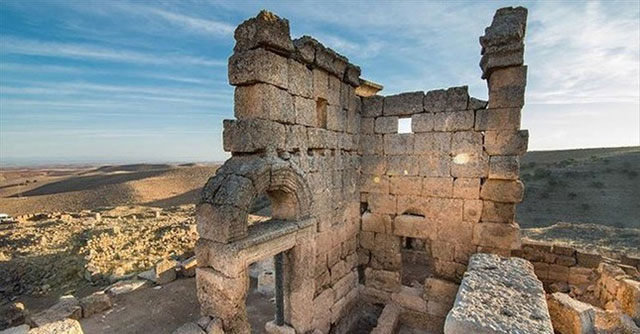
Remains of a structure with stone steps found during a direct survey - (Photo: INAH).
Ocomtún includes many characteristic Maya pyramids with an average height of 15m, the tallest reaching 25m; a large plaza with auxiliary structures arranged in concentric circles; a large embankment in the southeast, a neatly planned residential area.
The structures of Ocomtún show that it was built from 250 AD and was in use until 1000 AD.
During the years 800–1000, a series of large-scale construction activities were carried out, improving the cityscape with magnificent temples, ceremonial squares, and many terraced fields developed around the urban area.
This ancient city is the latest testament to the advanced level of construction, urban planning, and science and technology before the time of the Maya.
By the 10th century, the population had declined and the city was abandoned, sharing the fate of many other Maya cities of the same period, ending a powerful empire that had dominated Central America for centuries.