The animal considered the "living treasure" of the Mekong River - the longest river in Southeast Asia - is the Irrawaddy Dolphin (scientific name: Orcaella brevirostris).
International biologists consider this beautiful, small Irrawaddy dolphin to be a symbol of the majesty of the Mekong River, the 7th longest in Asia and 12th longest in the world (4,350 km) and its continuously high biodiversity.
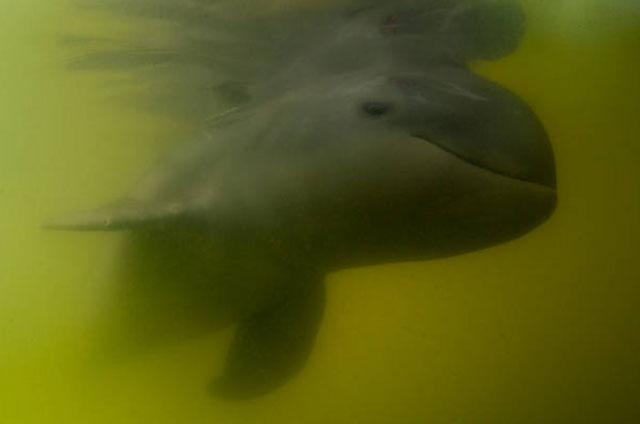
Image of rare dolphins living in the Mekong River. (Photo: Getty Images).
However, this creature is facing the risk of extinction in the wild. It is human activities that have caused the number of this species to decrease. Let's see what is the cause and what are our own efforts to correct the mistakes to protect the diversity of species on this planet.
"Living treasure" of the longest river in Southeast Asia
The Irrawaddy dolphin is discontinuously distributed in coastal waters of the tropical and subtropical Indo-Pacific region, and is primarily associated with freshwater sources, according to the IUCN.
According to a 2017 survey by IUCN, Irrawaddy dolphins are found in 12 Asian countries: Bangladesh; Brunei; Cambodia; India; Indonesia; Laos; Malaysia; Myanmar; Philippines; Singapore; Thailand; Vietnam ( also known as dugongs in our country ).
Coastal and estuarine populations occur from Borneo and the central islands of the Indonesian archipelago north to Palawan, Philippines, and west to the Bay of Bengal, including the Gulf of Thailand. There are also secondary freshwater populations in three major rivers: the Ayeyarwady in Myanmar (up to 1,400 km upstream from its mouth), the Mahakam in Indonesia, and the Mekong River flowing through Cambodia and Laos.
Currently, a 180km stretch of the Mekong River in northeastern Cambodia is the last intact habitat for the Irrawaddy dolphin.
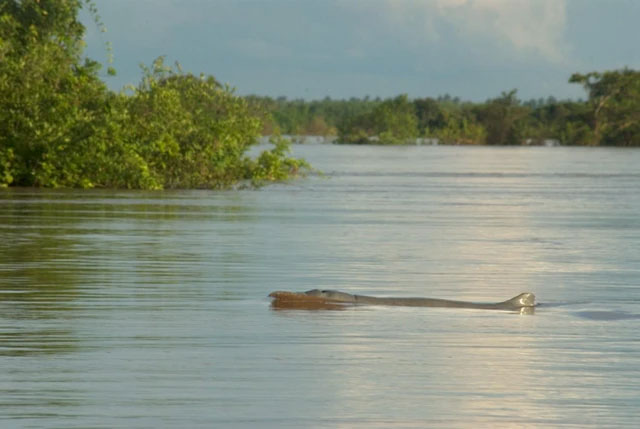
Irrawaddy dolphins live on the Mekong River in northeastern Cambodia, making up the largest population. (Photo: Thai National Parks).
This stretch of river is home to 89 Irrawaddy dolphins (according to a 2020 survey by the Cambodian Ministry of Agriculture, Forestry and Fisheries); and is also one of 35 priority conservation areas of the World Wide Fund for Nature (WWF) on a global scale.
Although there are only 89 individuals, it makes the Irrawaddy dolphin population living on the Mekong River in northeastern Cambodia the largest of the five remaining critically endangered freshwater populations of this species in the world.
Thai National Parks reports that one of the earliest recorded descriptions of the Irrawaddy dolphin was by British biologist Sir Richard Owen in 1866 based on a specimen found in 1852, in the harbor of Visakhapatnam on the east coast of India.
Genetically, the Irrawaddy dolphin is closely related to the killer whale (Orca) . This is the largest dolphin species and one of the world's most powerful predators, known as the 'ocean killer'. When hunting in a pod, the Orca can successfully kill a blue whale - the largest animal on Earth, according to National Geographic .
According to the World Wildlife Fund website, the Irrawaddy dolphin is a small, shy dolphin that is dark grey in colour with a paler underside, a small rounded dorsal fin and a blunt rounded head. It can grow up to 2.75 metres long, weigh up to 150 kilograms and usually lives in groups of up to six.
The Irrawaddy dolphin spends most of its time foraging. It is not a particularly active or acrobatic dolphin. It usually dives for less than 2 minutes , but will dive for a little longer when frightened. The lifespan of the Irrawaddy dolphin is around 30 years, and while some individuals reach adult size between the ages of 4 and 6, the exact age of maturity is unknown.
The Irrawaddy dolphin is one of three species of whales and dolphins that live in both fresh and salt water. The marine dolphin population inhabits coastal areas, especially muddy and brackish waters, while the freshwater dolphin population prefers the deeper waters of large lakes and rivers. The largest known population of marine dolphins is around 6,000 and is found off the coast of Bangladesh.
All five remaining freshwater dolphin populations number less than 100 individuals and are listed as Critically Endangered (CR) and Endangered (EN) by the International Union for Conservation of Nature (IUCN) Red List, depending on their distribution in different countries.
The Irrawaddy dolphin (Orcaella brevirostris) has been continuously assessed by IUCN since 1988. By 2017, this species was at risk of extinction when classified as Endangered (EN).
According to IUCN, Irrawaddy dolphins were previously found throughout the Mekong River from the Laos-Cambodia border down to the delta in Vietnam and in Tonle Sap Lake (Cambodia) - the largest freshwater lake in Southeast Asia.
The population and distribution range of this dolphin species have declined significantly over the past four decades . During the dry season from January to May when water levels are low, the dolphin population concentrates in nine deep pools in a 180 km stretch of the Mekong River from north of Kratie (eastern Cambodia) to the Lao border.
While these pools provide safe habitat for dolphins to rest and feed, such concentrations also leave dolphins vulnerable to human fishing activities.
Threats to Mekong River dolphin populations
The Irrawaddy dolphin's habitat preference for freshwater and coastal waters near river mouths makes the species particularly vulnerable to human overexploitation and exploitation (as human activities are often concentrated in these areas). Living in very restricted areas, freshwater populations are severely declining in range and size.
Traditionally, Irrawaddy dolphin populations have been decimated by hunting for meat and oil; strandings in fishing gear; dynamite fishing; and even use by many militaries as target practice.
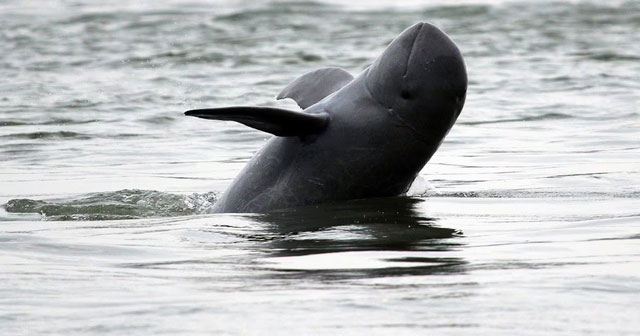
An Irrawaddy dolphin swims in the Mekong River in Cambodia's Kratie province, March 24, 2012. (Photo: AFP/Gerry Ryan/WWF-Cambodia).
Today, incidental mortality in small-scale fisheries – such as strandings in gill nets – is a major threat to adult Irrawaddy dolphins in the Mekong River, especially as fishing becomes increasingly intensive and cheap nylon gill nets replace thicker traditional nets that can be detected by the dolphins' echolocation equipment.
Other potential threats include habitat loss and degradation. Dam and irrigation construction (which reduces dolphin habitat); river pollution (from pesticides, heavy metals, plastics and other pollutants from industry and agriculture);
Finally, water transport (boat travel for travel and tourism causes stress to dolphins because they are very afraid of boats, which can easily lead to illness, even death due to collisions of dolphins through contact with propellers.
Corrected successfully!
The IUCN Convention on International Trade in Endangered Species of Wild Fauna and Flora (CITES) lists the Irrawaddy dolphin as a species in need of urgent protection.
In 2004, CITES moved the Irrawaddy dolphin from Appendix II to Appendix I, banning all commercial trade in the globally threatened species.
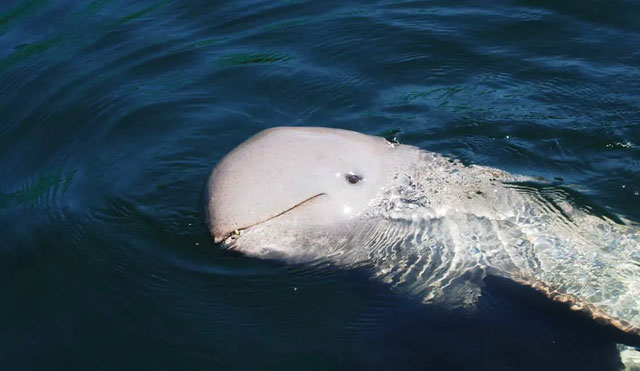
The number of dolphins in the Mekong River in Cambodia has increased from 89 to a total of 105 individuals. (Photo: Rainforestcruises).
In 2005, the World Wildlife Fund (WWF) established the Cambodia Mekong Dolphin Conservation Project (WWF-Cambodia) with the support of the government and local communities.
On 24 August 2012, the Cambodian government declared a 180km stretch of the Mekong River in northeastern Cambodia a fishing off-limits zone, prohibiting the use of floating houses, fishing cages and gillnets. The area is patrolled 24/7 by a network of River Police, specifically to protect the Irrawaddy dolphin.
In response to the relentless efforts to protect and conserve the Irrawaddy dolphins, in July 2024, the world received good news from the Cambodian Minister of Agriculture, Forestry and Fisheries: The number of dolphins in the Mekong River in Cambodia has increased from 89 to a total of 105 individuals, Phnompenh Post reported.
This is a huge effort from Cambodia (from the government, provincial authorities to local communities) as well as environmental organizations such as the World Wildlife Fund in Cambodia.
Since the stabilization of the Irrawaddy dolphin population in 2010, the number of newborn dolphins has increased significantly. At the same time, the mortality rate has continuously decreased: from 9 deaths in 2015 to 6 in 2016 and only 2 in 2017 (as of mid-November), with 9 dolphins born in the same year.
Contributing to these results is our highly skilled staff. Through training, their knowledge and skills enable the team to carry out conservation work effectively. This, together with close relationships with local media, government officials and villagers, has contributed to the overall success.
This effort shows how important protecting biodiversity on Earth is to the animal and plant world and to us humans.