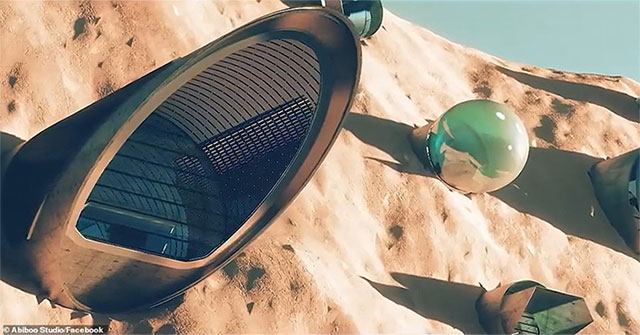
Interplanetary space images that have returned to Earth show a vast sand field quite similar to Earth, which NASA has revealed once had flooded streams and lakes.
According to Space , the newly released image comes with NASA's announcement that their "immortal" warrior - Curiosity - has reached an area believed to have formed billions of years ago, preserving its pristine state just before the water on Mars disappeared.
That's Mount Sharp , which preliminary reconnaissance data shows is rich in salty minerals that scientists believe were left behind by the last streams and lakes that once existed on the red planet.
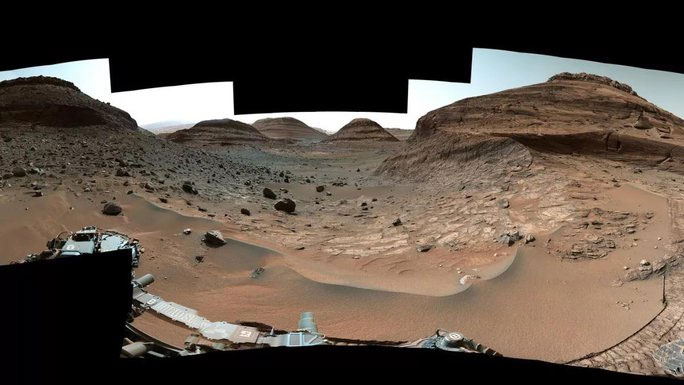
A panorama composite of multiple photos taken from different angles shows the entire Sharp Mountains region on Mars - (Photo: NASA)
As such, it could also hold surprising clues about how Mars' climate changed from an Earth-like state to the barren, frigid desert it is today.
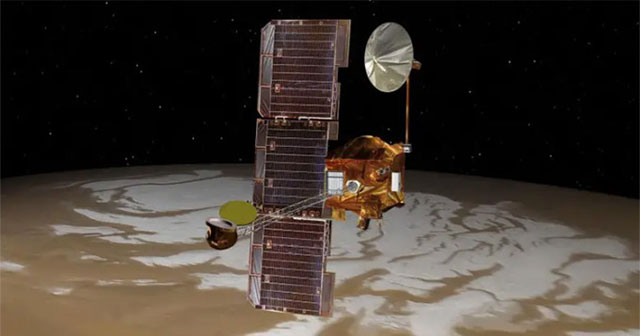
The region's rich salty minerals were first discovered by NASA's Mars Reconnaissance Orbiter (NRO) in 2012, but it took a long and unexpected journey for the Curiosity rover to reach them.
This was also an unexpected journey because Curiosity, a robotic rover, was supposed to end its mission a few years ago. However, this solar-powered warrior. just wouldn't "die" despite being inactive in a Martian dust storm. So NASA decided to map out new routes for it.
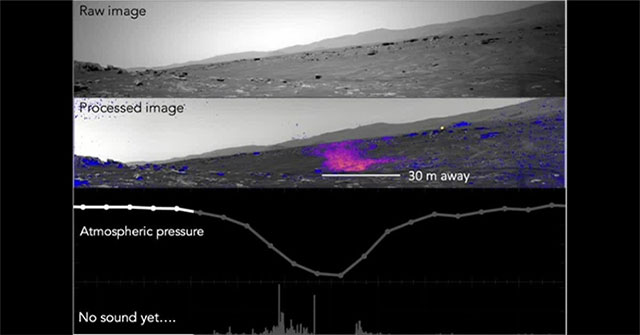
See also: The sound of a Martian dust devil 'swallowing' a NASA robot.
According to NASA, Curiosity's live data from Mount Sharp revealed a variety of interesting rocks and clear signs of past water, including popcorn-textured bumps and salty minerals like magnesium sulfate, calcium sulfate, and sodium chloride (aka table salt).
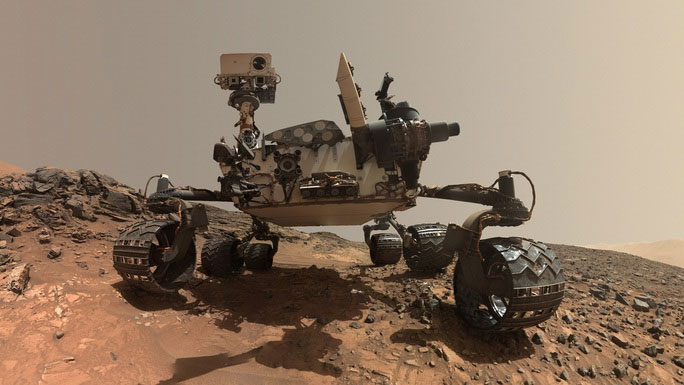
Alien life hunter Curiosity - (Photo: NASA)
Curiosity has selected a rock nicknamed "Canaima" to drill and collect its 36th Martian sample.
Curiosity project manager Kathya Zamora-Garcia said the mission was a success and the rock did not damage Curiosity's drill, as had been feared. They are now analyzing the sample using a remote-controlled mini "laboratory" on the rover.
Curiosity spent August traversing a narrow, treacherous stretch of road called Paraitepuy Pass to reach the area, overcoming concerns about getting " bogged down" in thick sand and steep terrain and hills that could hinder its ability to communicate with Earth and the NRO.
The places where NASA's first robot to Mars rolled through all contained signs of ancient rivers and lakes, because its main mission was to hunt for evidence of extraterrestrial life that NASA was almost certain had once existed and then gone extinct.
The Sharp Mountains have long been of interest because, with evidence of the last rivers and streams, they may have been the last refuge for Martian life before the planet became desertified, cooled, and all life became extinct.