That famously aggressive creature is the swordfish - the unrivaled hunter in the ocean.
Swordfish (Xiphias gladius) are large predatory fish found in warm and temperate oceans around the world.
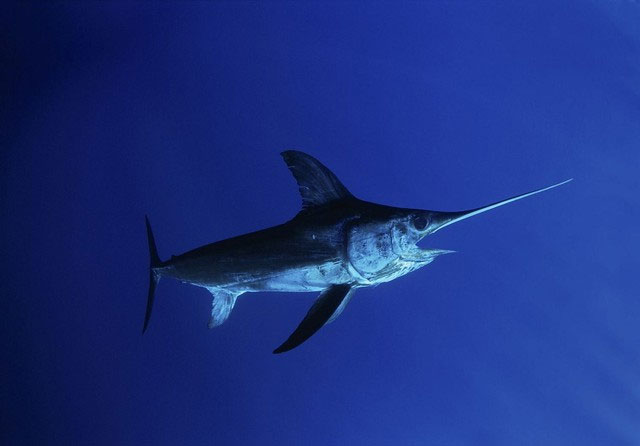
Image of a swordfish.
Although adult swordfish are the top predators of the ocean, they are not so mighty when they are young. In fact, newly hatched swordfish are actually very small, about the size of a grain of rice . So how did swordfish go from being the size of a grain of rice to being the top hunter?
From grain of rice to apex predator
The growth process of swordfish can be described simply as follows: In the early stages, they only eat plankton in the ocean. When they reach a certain size, they start eating small fish, shrimp. When they grow bigger, they start eating large marine creatures and gradually become the top hunter in the ocean.
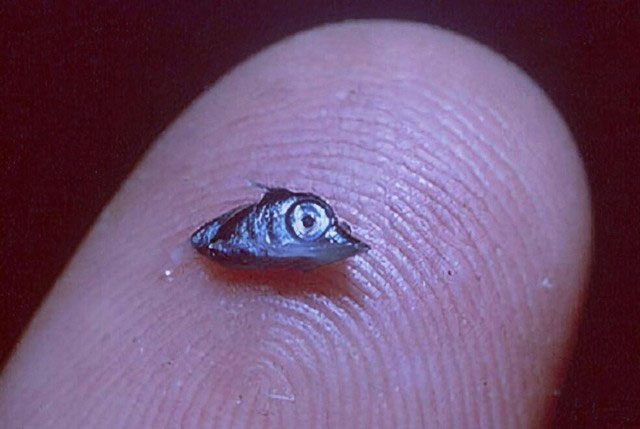
Swordfish when young, only the size of a grain of rice.
This apex predator can grow to a maximum weight of nearly half a ton and a body length of nearly 5 meters, according to the English Encyclopedia Britannica.
Of course, the large body is only part of the swordfish's "hunting machine". According to scientists, swordfish are the top hunters in the ocean and have no natural enemies in the true sense . The "weapon" that makes them invincible is the sharp "sword" extending from the snout, along with the terrible speed of this species.
Among known marine creatures, swordfish are the fastest swimmers and their speeds can reach 110 km/h (about 30 m/s).
Not only possessing speed and a sharp "sword" weapon, swordfish are also fierce and quick-tempered creatures. When they feel threatened, they never choose to escape but attack their enemies head-on. This makes many other ocean predators not dare to provoke them.
Submarine Crash
The swordfish's most powerful attack of course comes from its sharp snout, when it collides with a target at high speed, the destructive power from its snout can even penetrate a submarine. Here's proof.
On July 6, 1967, a small submarine named USS Alvin was attacked by a swordfish off the coast of Florida, USA.
According to researcher Edward Zarudzki, they were taking coral samples in the ocean at a depth of about 610 meters when they suddenly felt a "strong impact" . Then they discovered a swordfish hitting the starboard side of the submarine.
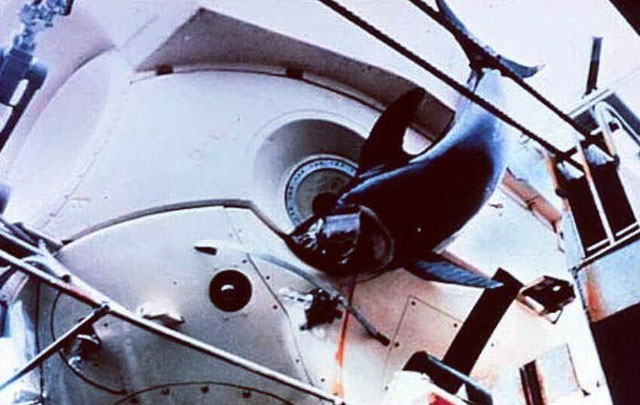
After surfacing, the entire swordfish, about 2.4 meters long and weighing 89 kg, could be seen, its snout piercing the submarine's fiberglass hull and getting stuck there. Fortunately, the submarine's inner hull was not completely penetrated, otherwise the consequences would have been catastrophic.
Fighting with humans
In fact, this ferocious swordfish even dares to fight humans.
For example, in 2015, the captain of the Kona, Randy Llanes, 47, spotted a juvenile swordfish swimming in Honokohau Harbor on the island of Hawaii at around 11 a.m. local time.
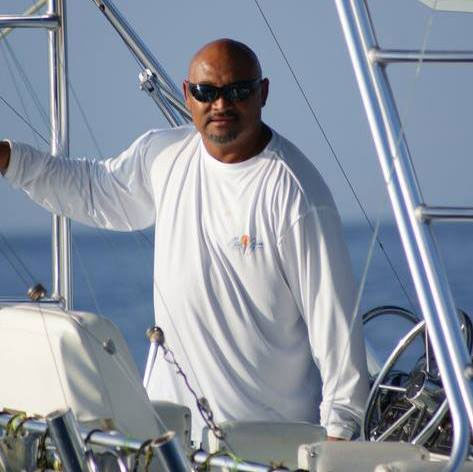
Fisherman Randy Llanes. (Source: HawaiiNewsNow).
Randy Llanes quickly used his speargun to shoot the fish. With 25 years of fishing experience, this man decided to jump into the water and try to kill it, but unexpectedly the injured swordfish used its remaining strength to attack Randy Llanes.
Officials said the swordfish weighed about 40 pounds and was 3 feet long. Nearby fishermen pulled Randy Llanes from the water after the horrific accident and attempted CPR, but he died of his injuries at a nearby hospital.
It can be seen that for us humans, catching swordfish indiscriminately is very risky, which is why many people who like to fish by boat will often avoid encountering them.