Space science
The first meteorite plunged into Earth during the year
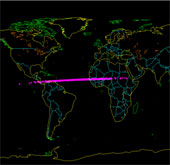
Astronomers say a small meteorite plunges into the atmosphere of Earth on January 2, after being discovered just a day earlier.
Explore astronomy, NASA missions, planets, galaxies, the Moon, the Solar System and discoveries that expand our understanding of the universe.
8,681 published items in this category and its subcategories.
Astronomers say a small meteorite plunges into the atmosphere of Earth on January 2, after being discovered just a day earlier.
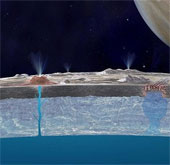
Scientists on December 13 said the new observations from the Hubble Space Telescope show that there are water jets erupting from the southern tip of Europa - the ice-cov…
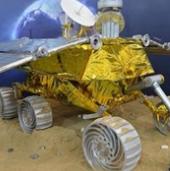
On December 14, Xinhua reported that China 's Hang Nga 3 spacecraft landed on the Moon.
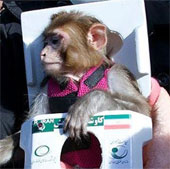
Iranian scientists have once again succeeded in bringing the second monkey into space and returning to Earth safely.
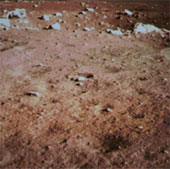
In the structure of the autonomous robot Jade Rabbit (Yutu) has been equipped with radar under the abdomen to detect minerals of the Moon shell, especially in the Rainbo…
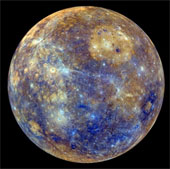
The smallest planet and the closest to the sun are shrinking in size faster than previously calculated by experts.
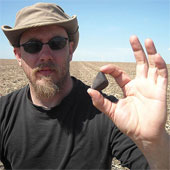
A rare meteorite was formed shortly after the pictorial solar system was forgotten for 140 years.
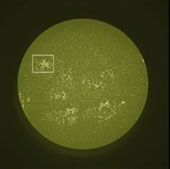
According to scientists, IRIS's findings may shed some light on the Sun's secrets.
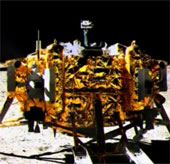
China is implementing a plan to launch the Russian moon lunar exploration ship 5 in 2017, Xinhua cited China 's Science, Technology and Defense Industry Committee.
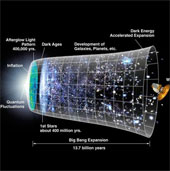
In 2034, the European Aeronautics Agency (ESA) will officially implement the eLISA mission.

The US space agency (NASA) has deployed space walks to repair the broken cooling pipe of the International Space Station (ISS).
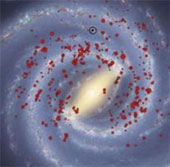
The study of giant stars has confirmed that the Milky Way has up to 4 spiral arms, ending the long-held argument that our galaxy has only two branches.
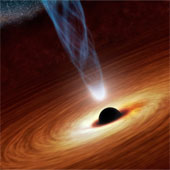
Astrophysicists argue that a giant black hole exists in the middle of the Milky Way. It is said to be 4 million times larger than our Sun.

Russian cosmic enthusiasts have reunited efforts in the Internet space and proved that even non-professionals can reveal the mysteries of the universe.
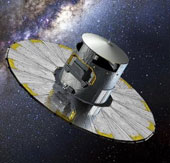
Gaia telescope has been launched thanks to the Soyuz-STB-Fregat rocket rocket from the Guyana space center of France.