Space science
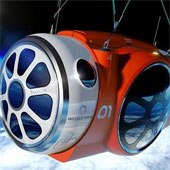
Cheap space travel
If you can't afford to spend $ 250,000 for a flight into space, you can choose a softer price if you just touch the edge of the space.
Explore astronomy, NASA missions, planets, galaxies, the Moon, the Solar System and discoveries that expand our understanding of the universe.
8,681 published items in this category and its subcategories.
If you can't afford to spend $ 250,000 for a flight into space, you can choose a softer price if you just touch the edge of the space.
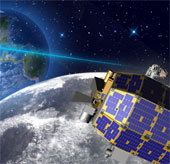
NASA recently reported that it has successfully carried out data transmission from the laser to the Moon at a speed of 622Mbps at a distance of 384,630km.
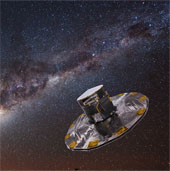
The European Space Agency (ESA) said it will postpone the mission to launch a galaxy mapping spacecraft due to a technical issue involving components on board, redOrbit…
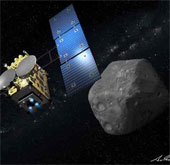
Japanese scientists have successfully tested a cosmic cannon used to bombard meteorites in search of the origin of the planets.
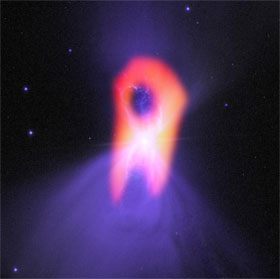
International astronomers have just confirmed the Boomerang nebula, 5,000 light-years from Earth, the coldest region in the universe with a temperature of about -272.2 d…
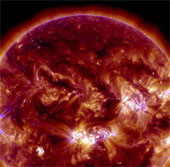
At the weekend, the sun released the first two X-level flares in five months, losing temporary radio waves on Earth.
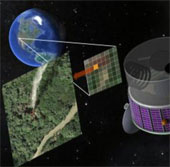
From the University of California, Berkeley, scientists designed the geostationary satellite line to bring sensors, cameras and analytical software to control forest fir…
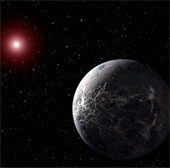
The appearance of the seventh planet around a distant star has turned it into one of the most planetary systems ever observed.
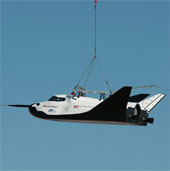
The new generation shuttle Dream Chaser has a free flight test for the first time on October 26 but was damaged because the landing unit had a problem.
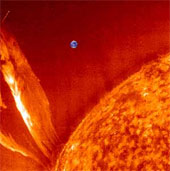
The Sun lies very far from Earth, making light need about 8 minutes 19 seconds to reach Earth.

Europe's fourth transport spacecraft brought record volumes to the International Space Station (ISS) that left the station and ended
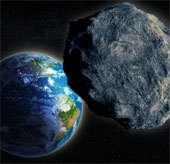
The United Nations General Assembly (UN) has just approved a plan to set up a team responsible for warning and dealing with the risk of meteorites hitting the earth.
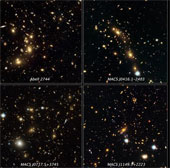
NASA's three most advanced space telescopes prepare to join forces to explore the deepest parts of the universe, opening new frontiers before humanity.
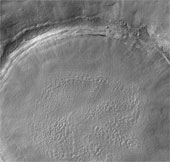
Russian scientists say there has been a huge ocean on Mars three billion years ago and can still observe its ruins.

To celebrate the 2013 Halloween festival (also known as the ghost festival), NASA released three unique, haunting space images taken by the Spitzer space telescope.