Space science
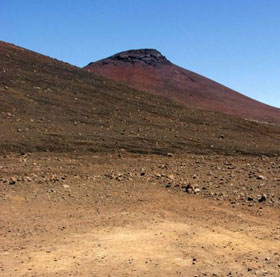
The soil on Mars is similar to that of the Hawaiian Islands
The American Curiosity autonomous robot analyzed soil samples on Mars and found it to be exactly the same state in Hawaii.
Explore astronomy, NASA missions, planets, galaxies, the Moon, the Solar System and discoveries that expand our understanding of the universe.
8,681 published items in this category and its subcategories.
The American Curiosity autonomous robot analyzed soil samples on Mars and found it to be exactly the same state in Hawaii.
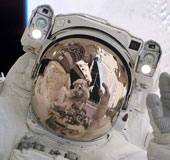
Sunita Williams (USA) and Akihiko Hoshide (Japan) are two astronauts who will be out of ISS at 12:15 on November 1 at GMT (19h15 on the same day as Hanoi). They will wor…
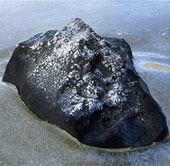
Polish geologists on October 30 reported successful excavations of the largest meteorite ever found in Eastern Europe. This is considered a new discovery that provides v…
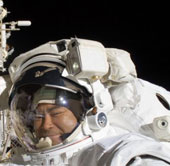
Japan Aerospace Exploration Agency said on the morning of November 2, astronaut Akihiko Hoshide worked on the International Space Station (ISS) ended his third space wal…
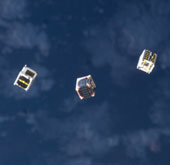
The charging circuit of the F-1 satellite had a problem, so it was not supplied with energy from the solar panel, and this could have caused it to not signal the earth a…
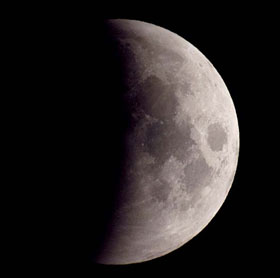
The half-moon eclipse will begin at 19h15 and end at 23h51, the maximum at 2133 (Vietnam time) on the evening of November 28.
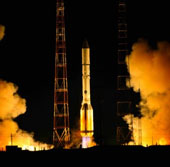
The 'Proton-M' rocket was launched from Baikonur space airport carrying Russian satellites 'Luch-5B' and 'Yamal-300K'. Representatives of Roskosmos this launch was made…

For the first time, American astronomers estimated the average distance between stars in the universe.
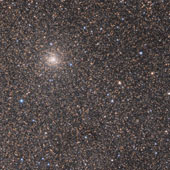
Astronomers have captured light from the first stars of the universe. Shortly after the Big Bang event about 13.7 billion years ago, the universe cooled down to allow at…
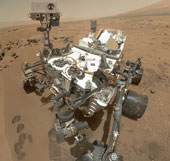
The Curiosity probe of the US Space Agency (NASA) did not detect methane in the first analysis of Mars's atmosphere.

Now you can watch the International Space Station (ISS) without using a telescope when it moves through your home, thanks to the new SMS service of the US Aeronautics an…
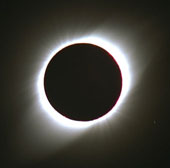
People around the world will have the opportunity to admire the total eclipse and partial eclipse this month.
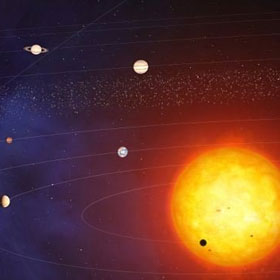
The meteorite belts are one of the ideal places in the Solar System that can find life, according to a newly published scientific hypothesis.
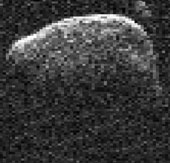
Scientists used NASA's giant radio telescope to capture the radar image of a 1.6-kilometer-wide asteroid hovering near the Earth.
