
Space science
There is liquid on Saturn's Titan satellite
The US Aerospace Agency has just released a photo showing the presence of a liquid in the northern hemisphere of Titan, Saturn's largest satellite.
Explore astronomy, NASA missions, planets, galaxies, the Moon, the Solar System and discoveries that expand our understanding of the universe.
8,698 published items in this category and its subcategories.
The US Aerospace Agency has just released a photo showing the presence of a liquid in the northern hemisphere of Titan, Saturn's largest satellite.

Blue Moon - an interesting phenomenon, will appear again on New Year's Eve to the new year 2010 after the last time 10 years ago.

The Russian Space Agency can launch a spacecraft to space to deflect the orbit of a large meteorite capable of colliding with the globe.

At the time of New Year's Eve in 2010, in Tuy Hoa city, Phu Yen province appeared a blue moon phenomenon.

Dutch astronomers measured the relative distance between the earth and the nearest black hole.

The Kepler Space Telescope of America has found five extrasolar planets whose surface temperatures are greater than boiling lava.

Russia Rocket and Space Corporation Energia on January 4 said Russia plans to launch 10 spacecraft in 2010.

Japanese scientists have recently discovered four small meteorites in Antarctica while exploring the Sorcerer Rondane Mountains.

The Government Office has just announced the Prime Minister Nguyen Tan Dung has agreed on the investment policy of VINASAT-2 project.

The equation that is still used to calculate the age of the solar system is at risk of being rewritten.

Yesterday morning 18-11, Leonids meteor shower appeared exactly as expected. However, due to bad weather, many places in Vietnam have not been able to observe this amazi…
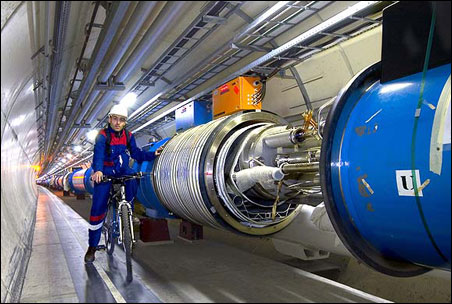
The large particle accelerator re-starts last night after a problem more than a year ago, and will begin the process of simulating the Big Bang explosion.

2009 will be remembered as a year when humans first found the presence of water right on the Moon. But a question arises, where does the moon's water come from?

On November 20, Russia successfully launched the Soyuz-U rocket carrying Cosmos-2455 military satellite into orbit from the Plesetsk space airport.

Europe's Smos satellite is launched into orbit with a mission to provide data for scientists to better understand the cycle of water on the earth.