Space science
India launched a Mars probe
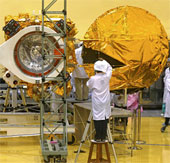
This afternoon November 5, India launched a spacecraft to explore Mars, an ambitious space program that has not been successfully implemented by any Asian country.
Browse ScienceInfo articles and explainers related to Earth.
6,625 published items.
This afternoon November 5, India launched a spacecraft to explore Mars, an ambitious space program that has not been successfully implemented by any Asian country.
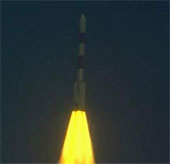
According to Indian national television, boosters carrying unmanned probes were launched at 9h08 GMT (16h00 Vietnamese time) from launchers in Sriharikota, Andhra Prades…

NASA scientists estimate that among planetary systems orbiting stars similar to the Sun, about 22% contain a life-sustaining planet.
Inventing telescopes, spectroscopic applications or for the first time predicting solar eclipses are memorable milestones of astronomical research history.

On November 6, researchers from the Czech Republic and Canada reported that meteorites fell on Chelyabin province in central Russia in mid-February, bigger and heavier t…
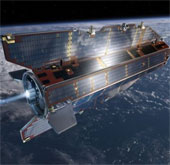
The European Space Agency (ESA) recently announced that an artificial satellite weighing about 1 ton is about to fall to Earth uncontrollably.
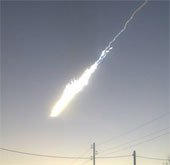
A study published in Nature confirms the risk of meteorites crashing into the earth as a meteorite explosion in Russia was much larger than previous forecasts.

Russian space agencies are studying a plan to deal with a giant meteorite that threatens to attack Earth in 2023.
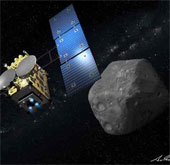
Japanese scientists have successfully tested a cosmic cannon used to bombard meteorites in search of the origin of the planets.
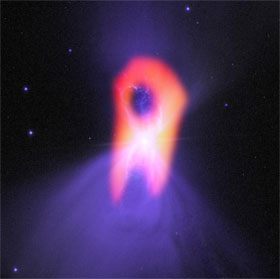
International astronomers have just confirmed the Boomerang nebula, 5,000 light-years from Earth, the coldest region in the universe with a temperature of about -272.2 d…
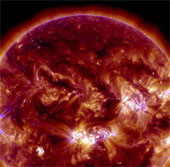
At the weekend, the sun released the first two X-level flares in five months, losing temporary radio waves on Earth.
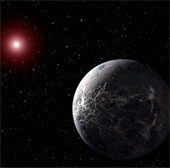
The appearance of the seventh planet around a distant star has turned it into one of the most planetary systems ever observed.
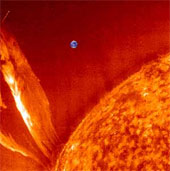
The Sun lies very far from Earth, making light need about 8 minutes 19 seconds to reach Earth.

Europe's fourth transport spacecraft brought record volumes to the International Space Station (ISS) that left the station and ended
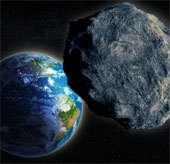
The United Nations General Assembly (UN) has just approved a plan to set up a team responsible for warning and dealing with the risk of meteorites hitting the earth.