Space science
Russian space exploitation and use
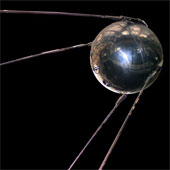
On October 4, 1957, the world aerospace history marked a new milestone with the Soviet Union launching its first satellite into space - Sputnik satellite.
Browse ScienceInfo articles and explainers related to History.
1,661 published items.
On October 4, 1957, the world aerospace history marked a new milestone with the Soviet Union launching its first satellite into space - Sputnik satellite.

According to Reuters, for the first time in history, the International Space Station (ISS) has a commander as a Japanese astronaut.
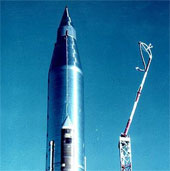
Score is considered to be the first contact satellite in the world, even though its contact is only one way.
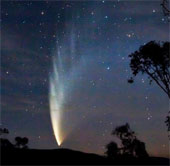
While waiting for the new comet to represent the 21st century, let's look back at the comet history over the past 500 years.
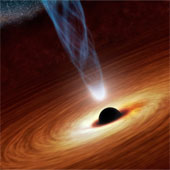
Astrophysicists argue that a giant black hole exists in the middle of the Milky Way. It is said to be 4 million times larger than our Sun.

Russian cosmic enthusiasts have reunited efforts in the Internet space and proved that even non-professionals can reveal the mysteries of the universe.
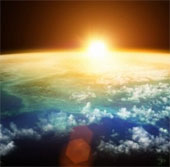
Inventing telescopes, spectroscopic applications or for the first time predicting solar eclipses are memorable milestones of astronomical research history.
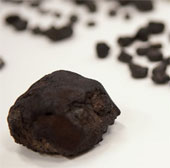
The meteorite that exploded in the sky of Russia in February was determined to be about 4.56 billion years old, equivalent to the age of the Solar System.

A sixth-grade student is about to make history because he was the first to have a beer model brought up to experiment on space.
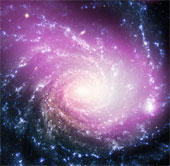
For the first time in history, Chandra X-ray Astronomical Observatory of the US Aerospace Agency (NASA) has captured a small galaxy crashing into a large galaxy located…
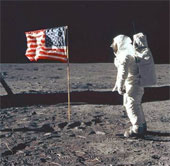
The US House of Representatives has just received a bill about turning Apollo's landing positions on the moon into a national historic park.
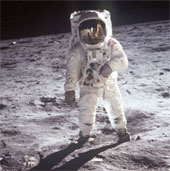
The Apollo train that brought people to the Moon went into human history. But the technology used in that journey, including the process of making astronaut suits, has j…

For the first time in history, scientists have accurately measured the distance from the Earth to the nearest galaxy.
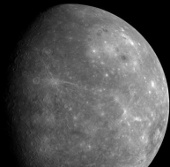
Mercury, the planet that is closest to the sun, may have owned a large ma-ocean ocean and curled up early in its 4.5-billion-year history.
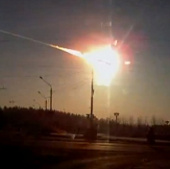
Many large and small devastations by meteorites have occurred throughout the history of tens of billion years of Earth existence. Many countermeasures have also been stu…