
Space science
NASA successfully launched the space celestial probe
On June 5, the US Space Agency (NASA) successfully launched a missile carrying a celestial observatory probe named CIBER with the aim of studying the formation of the fi…
Browse ScienceInfo articles and explainers related to Observatory.
325 published items.
On June 5, the US Space Agency (NASA) successfully launched a missile carrying a celestial observatory probe named CIBER with the aim of studying the formation of the fi…

IRNA news agency quoted Iranian defense minister, General Ahmad Vahidi, saying the center was set up to ensure Iranian space security, but Tehran is ready to share the i…
Chinese scientists built a telescope in the highest position in Antarctica in early 2012. This position is more than 4,000m above sea level. The main task of the glass i…
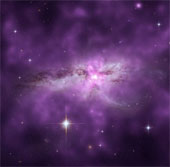
US scientists say the X-ray astronomical observatory of the US Aeronautics and Space Administration (NASA) on Earth's orbit Chandra has provided impressive details about…
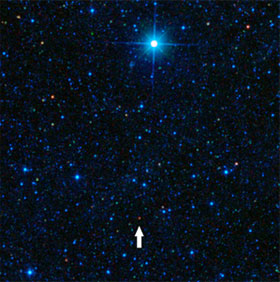
Astronomers have found a galaxy that turns gas into stars with a success rate of approximately 100%. Its name is SDSSJ1506 + 54.
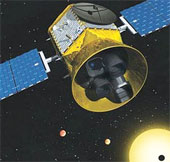
The central tool of the new mission will be the TESS space observatory, abbreviated from the Transit Planet Satellite Satellite, scheduled to orbit in 2017.
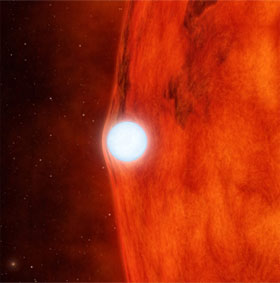
Space telescope Kepler and experts of the American Palomar Observatory found the super-solid white dwarf died in a binary star system.
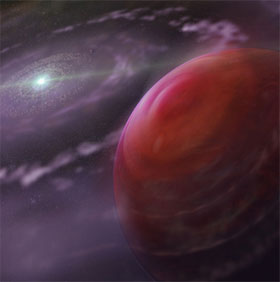
HR 8799c, the name of the planet, about 130 light-years from Earth. It is quite far from its own star so astronomers can observe it easily.
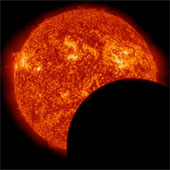
When the moon moved between the sun and an artificial satellite in the universe a few days ago, the satellite camera recorded that rare sight.
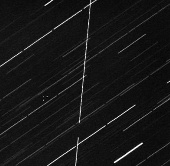
2013 EC meteorite was discovered by Mount Lemmon observatory in Arizona (USA) on March 2 last. It is about 10 to 17 meters in size - the size of meteorites exploding in…
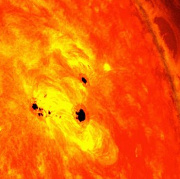
The Solar Dynamics Observatory satellite of the US Aerospace Agency discovered giant black spots on February 20.
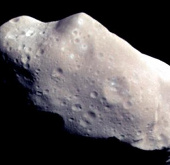
The asteroid 274,301, discovered by Ukrainian astronomers on August 25, 2008, has just been named Wikipedia in honor of this open encyclopedia.
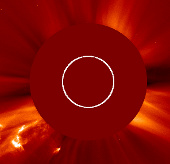
Notice by the US Aeronautics and Space Agency (NASA) on January 25 said a solar wind (CME) will fly to earth from the next 1-3 days.
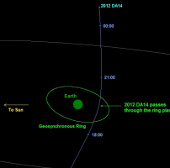
The meteorite is about the size of a football field flying quite close to Earth, and will approach the closest distance to our planet in the middle of next month.
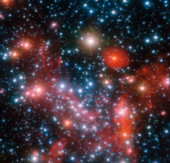
The central region of the Milky Way appears with subtle colors in a photo taken from the ground by a telescope.