Space science
10 Hubble telescope's top discoveries
Given orbit so unaffected by air turbulence, an advantage that no ground telescope has achieved, for the past 16 years, Hubble has made a huge amount of observations, be…
Browse ScienceInfo articles and explainers related to Supernova.
142 published items.
Given orbit so unaffected by air turbulence, an advantage that no ground telescope has achieved, for the past 16 years, Hubble has made a huge amount of observations, be…
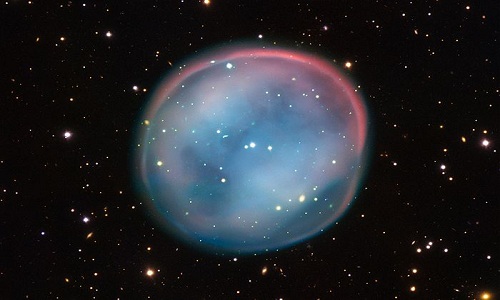
The dead star body glows like a giant bubble floating in the darkness of the universe.
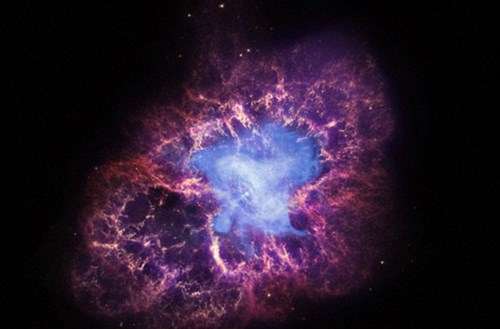
A supernova explosion will expel a myriad of giant dust clouds. These clouds contain lots of iron and move at very fast speeds. Israeli scientists believe that they are…
Two white dwarfs rotate very quickly around each other in a mysterious nebula. The distance between them is so small that they will surely become a star and explode.
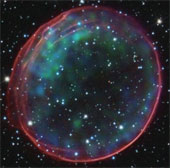
A series of supernova explosions, though not strong enough to kill life on earth, have wrapped the solar system in a hot air bubble and exist today.
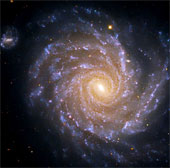
The earthquake and earthquake explosions in the universe may not always completely destroy the stars, but instead many cases will leave ruins called stars.
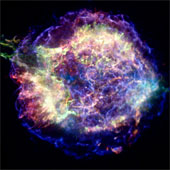
Scientists have used laser beams 60,000 billion times more powerful than laser pens to create a supernova explosion in a laboratory.
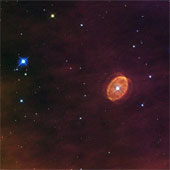
The US Aeronautics and Space Agency (NASA) is focusing its attention on a star that may soon become a supernova more than 20,000 light years from Earth.
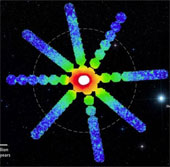
Elements of the universe, including iron, play a vital role in life, formed from the first phase of the universe and spread throughout the world.

The US and European Hubble Space Telescope discovered the remnant gas cloud of a supernova explosion in the Dorado constellation, which is 150,000 light years away from…
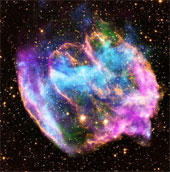
The specimen taken from the Pacific shelf may hold evidence of a distant supernova explosion, which rained high-energy particles on Earth several million years ago.
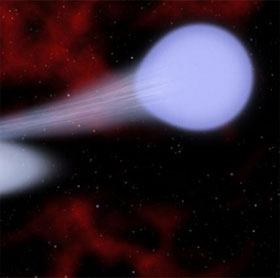
American astronomers say it has discovered a new form of supernova that is not the same as the previous two forms of this epic cosmic phenomenon.
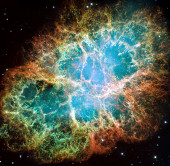
New research results are challenging the current hypothesis about the formation of the solar system, which suggests that a supernova explosion has triggered everything.
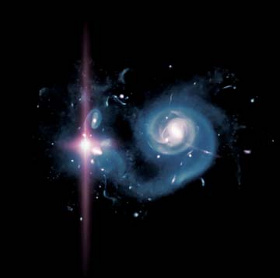
The astronomical industry welcomed the impressive discoveries in 2012, which changed the way people knew about the universe, and pushed some devices to the critical leve…
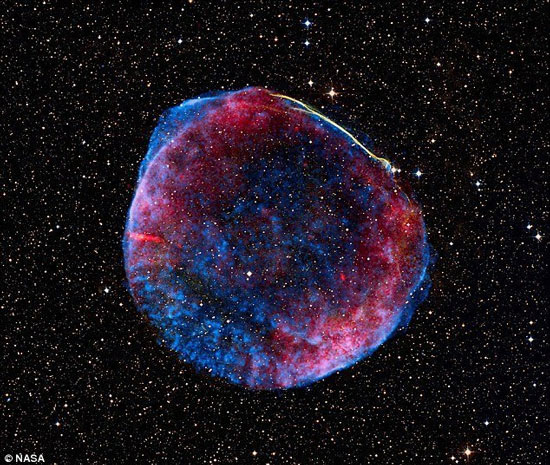
In 1006, the whole world stalled and stared at the sky when a giant star 7,000 light-years away from Earth,