Space science
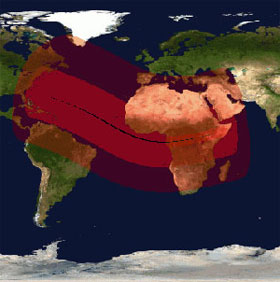
Eclipse will sweep across Africa, Europe and the United States
An eclipse will sweep across Africa, Europe and the United States on November 3 until the moon passes over the sun, obscuring all or part of the sun depending on the reg…
Browse ScienceInfo articles and explainers related to Astronomical.
425 published items.
An eclipse will sweep across Africa, Europe and the United States on November 3 until the moon passes over the sun, obscuring all or part of the sun depending on the reg…
The asteroid 2013 TV135 will probably hit Earth on August 26, 2032, and cause a big explosion.
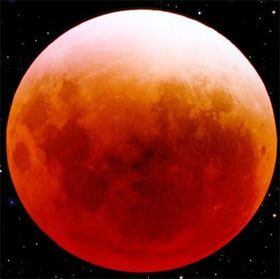
In the morning of October 19, astronomers in Vietnam will have a chance to observe a part of the phenomenon of half-dark eclipse.
For the first time in history, Chandra X-ray Astronomical Observatory of the US Aerospace Agency (NASA) has captured a small galaxy crashing into a large galaxy located…
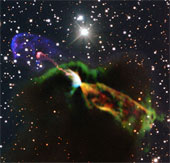
A huge telescope system in Chile has captured wonderful images of an amazing astronomical phenomenon: a star is born.
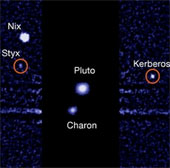
The International Astronomical Society (IAU) has decided to officially name the two new moons of Pluto, Kerberos and Styx.
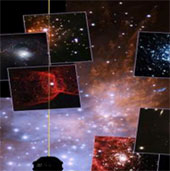
Experts in Chile have published seven super-sharp, wide-spectrum images of the device that are expected to revolutionize astronomical observations.
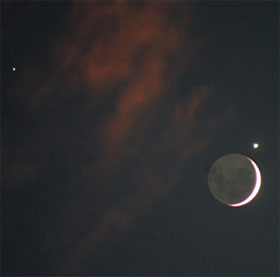
Astronomers will have the opportunity to admire the moon, Venus and Mercury in the night sky on June 10.
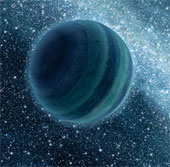
Chinese scientists built a telescope in the highest position in Antarctica in early 2012. This position is more than 4,000m above sea level. The main task of the glass i…
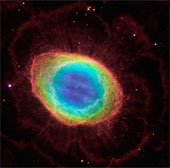
NASA scientists used the Hubble astronomical telescope to determine the 3D structure of the Ring Nebula. Thereby, its structure is shaped like a frozen donut located in…
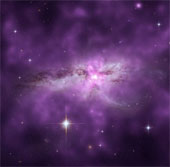
US scientists say the X-ray astronomical observatory of the US Aeronautics and Space Administration (NASA) on Earth's orbit Chandra has provided impressive details about…
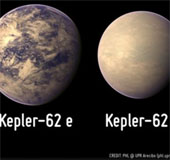
A University of Washington expert (USA) has announced the discovery of a pair of planets with the most similarities with Earth thanks to the work of the Kepler telescope.
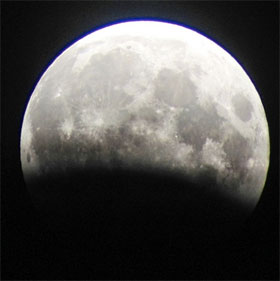
In April there are many interesting astronomical phenomena such as the eclipse of April 26, meteor shower on April 21-22, Saturn near Earth most in April 28th.

The asteroid 274,301, discovered by Ukrainian astronomers on August 25, 2008, has just been named Wikipedia in honor of this open encyclopedia.
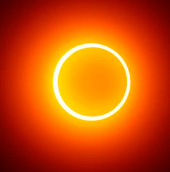
In 2013, followers of the sky will enjoy colorful parties with outstanding astronomical phenomena such as eclipses, eclipses, meteorites, the reunion of planets.