Space science
What happens when a person dies in the universe?
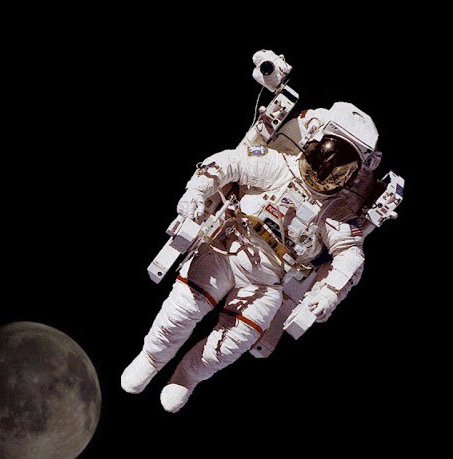
Basically, he will be turned into dry ice in the icy vacuum of the universe. Water in the body turns ice and eventually disappears.
Browse ScienceInfo articles and explainers related to Birth.
1,007 published items.
Basically, he will be turned into dry ice in the icy vacuum of the universe. Water in the body turns ice and eventually disappears.
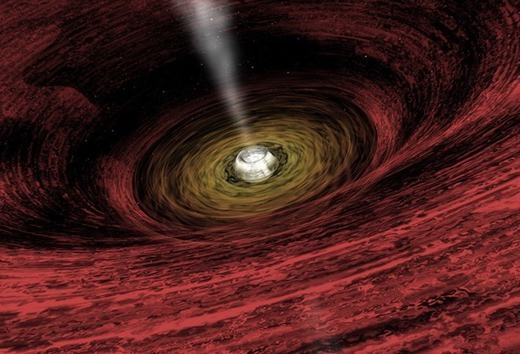
Astronomers have just published a shocking information when it discovered how the largest cosmic elliptical galaxies continue to produce stars despite the

Maggie Lieu, who can be chosen as a Martian resident under the Mars One project, wishes to become the first mother on the planet.
For the first time astronomers have captured the fleeting image of a giant galaxy in the newly formed phase when the universe is about 3 billion years old.

Australian experts are studying the prehistoric phase of the solar system, in an effort to understand the events that led to the birth of the planet's central star.
The Hubble Space Telescope captures stunning images of the birth of a distant star.
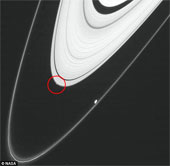
Astronomers believe that the Cassini cruise ship witnessed the birth of a baby moon at the belt of Saturn.
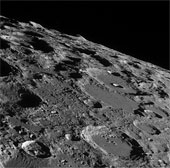
The moon appears about 95 million years after the Solar System was formed from a planetary collision.
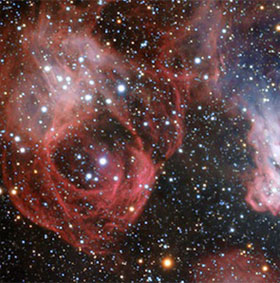
The Southern European Astronomical Observatory has just captured a photograph of the formation and death of stars at the Large Magellanic Clound (the large Magellanic Ne…
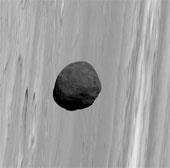
Russia will make its second attempt to bring back dust samples from Phobos, one of Mars's two moons.
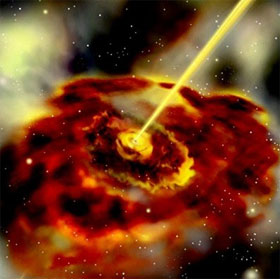
Astronomers have found a solution to the birth of these

Besides the Big Bang, astronomers have just published a new hypothesis about the origin of the universe, in which the universe can be created after a star collapses into…
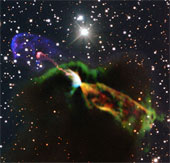
A huge telescope system in Chile has captured wonderful images of an amazing astronomical phenomenon: a star is born.
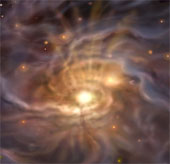
Astronomers are eager to observe the image of the largest known star in the Milky Way, thanks to modern telescopes in Chile.
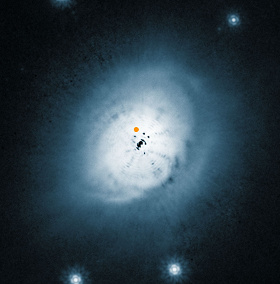
Chilean astronomers said that for the first time they observed directly a planet picturing inside a disk of gas and thick dust at the star system 335 light years away.